
Comparing Sedation Options: Nitrous, Oral, and IV Sedation
Going to the dentist can make many people feel nervous or scared.
Sedation dentistry offers three main options to help patients feel calm and comfortable during dental work: nitrous oxide, oral sedation, and IV sedation.
Each type works differently and has its own benefits.

Choosing the right sedation option can feel confusing.
Some people need just a little help to relax, while others want to feel very sleepy during their treatment.
The best choice depends on how anxious you feel, what dental work you need, and your health history.
Key Takeaways
- Nitrous oxide is the mildest sedation option and wears off quickly after treatment.
- Oral and IV sedation provide deeper relaxation for more anxious patients or longer procedures.
- The right sedation choice depends on your anxiety level, procedure type, and medical history.
Understanding Sedation Techniques for Dentistry
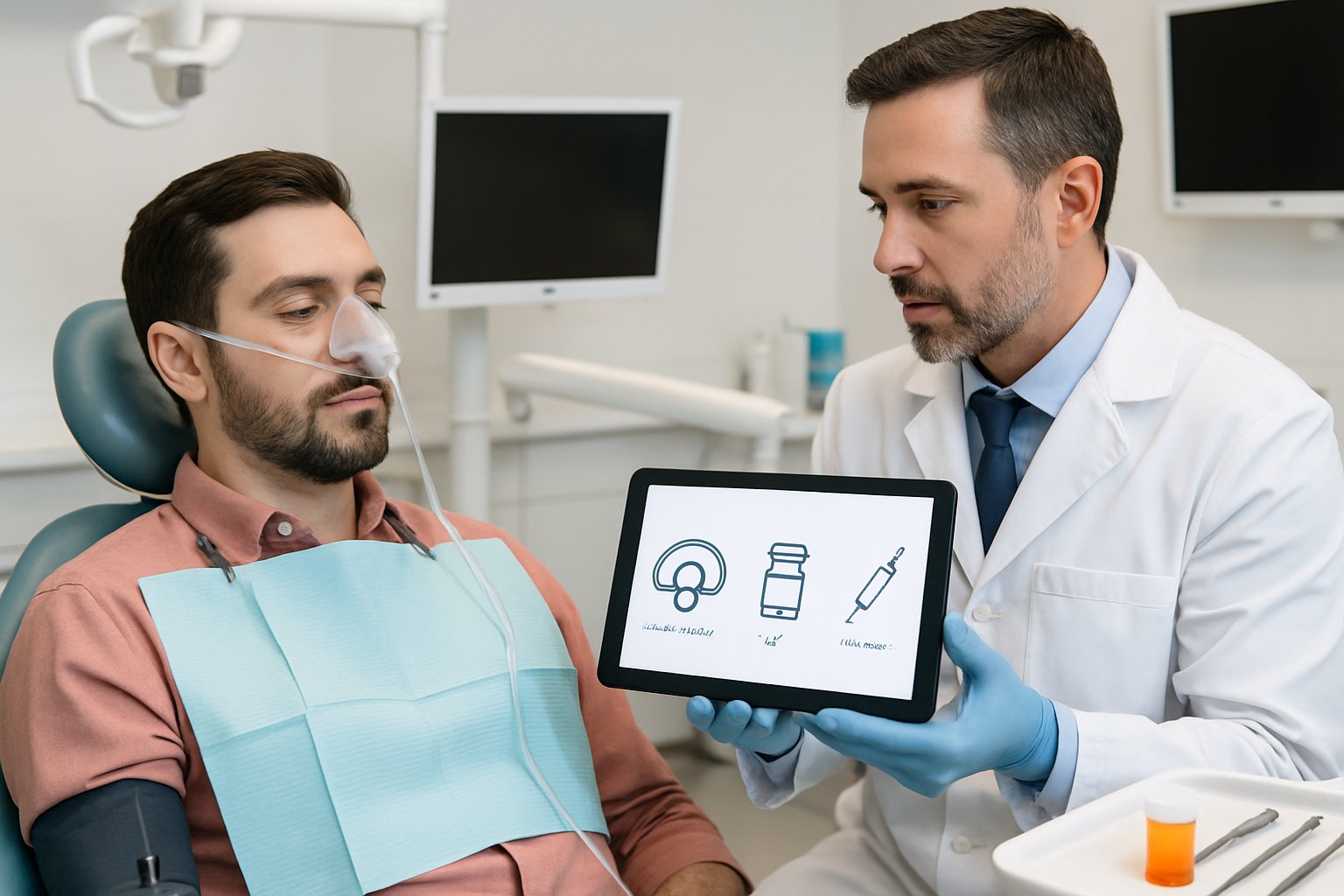
Sedation techniques help patients feel calm and comfortable during dental work.
These methods reduce anxiety and control the gag reflex.
They range from light relaxation to deeper states where patients remain conscious but very relaxed.
Levels of Sedation Explained
We classify sedation into four main levels based on how deeply they affect consciousness and awareness.
Minimal sedation keeps patients awake but relaxed.
You can still talk normally and respond to questions.
This light level works well for routine cleanings or simple procedures.
Moderate sedation makes you drowsy and less aware of your surroundings.
You might not remember parts of the procedure.
Your speech may become slurred, but you can still follow directions.
Deep sedation brings you to the edge of consciousness.
You can barely respond to commands and may not remember the procedure.
This level requires careful monitoring of breathing and heart rate.
General anesthesia makes patients completely unconscious.
We rarely use this level for routine dental work.
It requires special equipment and training to monitor vital signs.
How Sedation is Used in Dental Procedures
We combine sedation with local anesthesia to provide complete comfort during dental work.
Local anesthesia blocks pain in the treatment area while sedation relaxes your mind and body.
A sedation dentist evaluates each patient before choosing the right method.
We consider your anxiety level, medical history, and the type of procedure planned.
For simple cleanings, we might use minimal sedation through nitrous oxide gas.
More complex procedures like root canals often need moderate sedation through pills or IV medications.
We monitor your breathing, heart rate, and blood pressure throughout the procedure.
Oxygen levels stay stable with proper equipment and trained staff present.
Benefits of Sedation for Dental Anxiety and Gag Reflex
Dental anxiety affects millions of people and keeps them from getting needed care.
Sedation helps make appointments feel less stressful and more manageable.
Patients with a strong gag reflex benefit greatly from sedation techniques.
The relaxed state reduces throat sensitivity and allows us to work more effectively.
Sedation also helps with:
- Difficulty sitting still for long periods
- Sensitive teeth and gums
- Fear of needles or dental tools
- Past traumatic dental experiences
We can complete more work in fewer visits when patients feel comfortable.
This saves time and reduces the total number of appointments needed for complex treatments.
Nitrous Oxide Sedation: Laughing Gas
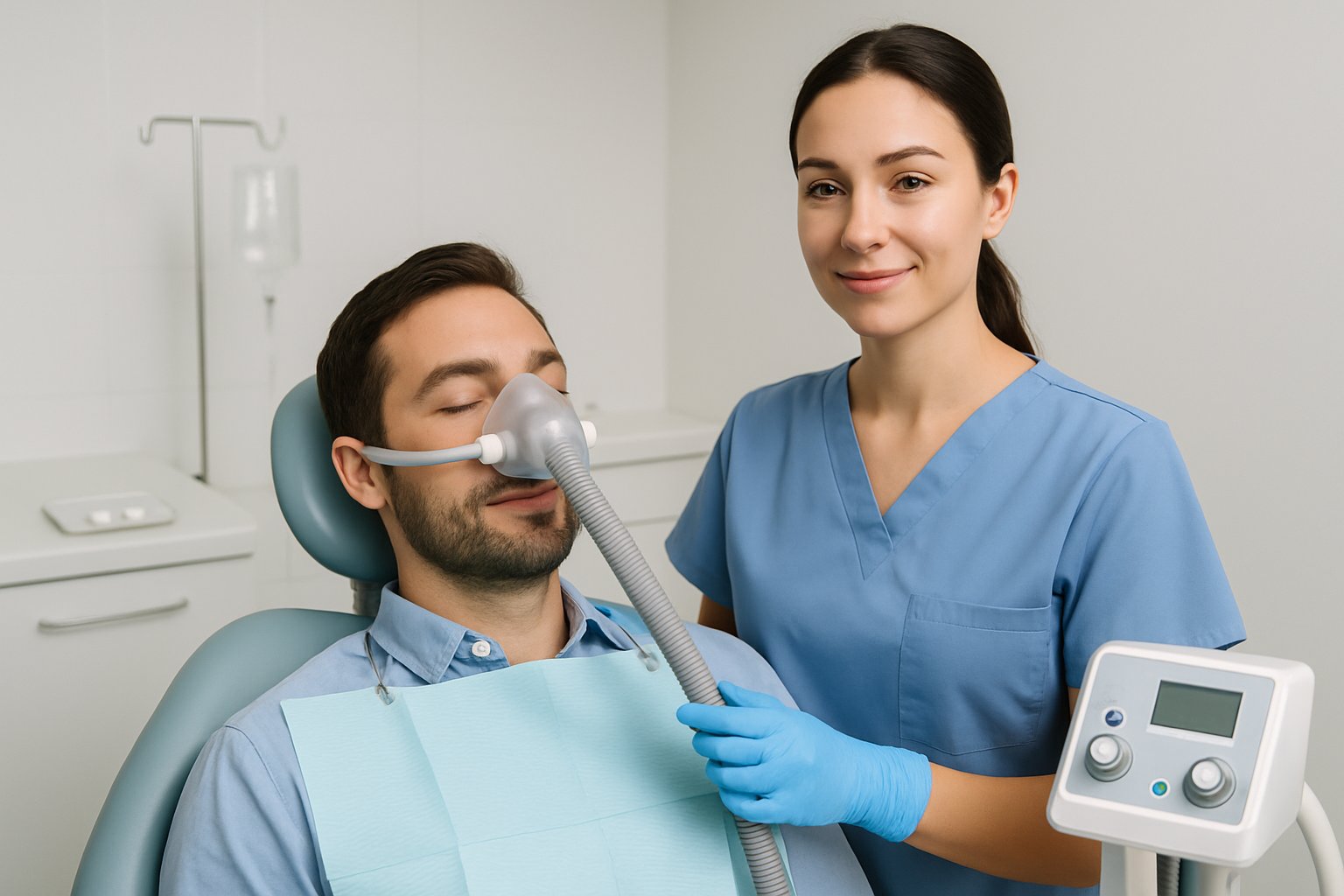
Nitrous oxide blocks pain signals and creates a calm, relaxed feeling during dental visits.
We can adjust the gas levels throughout your procedure, and you stay awake the entire time.
Mechanism and Administration
Nitrous oxide enters your bloodstream through your lungs when you breathe it in.
The gas blocks certain receptors in your brain that process pain and anxiety signals.
We deliver laughing gas through a small mask that fits over your nose.
You breathe normally while receiving a mixture of nitrous oxide and oxygen.
Administration Process:
- Place comfortable nose mask
- Start with 100% oxygen for 2-3 minutes
- Gradually add nitrous oxide in 10-20% increments
- Monitor your comfort level every 2-3 minutes
- Maintain steady gas flow throughout procedure
The effects begin within 3-5 minutes of breathing the gas.
We can increase or decrease the concentration based on how you feel.
At the end of your dental procedure, we give you 100% oxygen for 5 minutes.
This clears the nitrous oxide from your system completely.
Ideal Candidates and Contraindications
Nitrous oxide sedation works well for patients with mild to moderate dental anxiety.
We recommend it for routine dental procedures like cleanings, fillings, and crown preparations.
Good Candidates Include:
- Adults and children over age 4
- Patients with dental phobia
- Those needing multiple procedures
- People with strong gag reflexes
- Patients who prefer to stay awake
Medical Conditions That May Prevent Use:
- Severe respiratory disease
- Recent eye surgery with gas bubbles
- Pregnancy (first trimester)
- Severe mental health conditions
- Recent middle ear surgery
You must be able to breathe through your nose to receive nitrous oxide.
Patients with severe nasal congestion cannot use this sedation method.
Advantages and Common Side Effects
Key Benefits:
- Takes effect quickly (3-5 minutes)
- Wears off completely within 5-10 minutes
- You can drive yourself home afterward
- No injection required
- Safe for most children and adults
Nitrous oxide sedation allows you to respond to our instructions during treatment.
You remain conscious and can communicate throughout your dental visit.
Common Side Effects:
- Slight dizziness or lightheadedness
- Tingling in hands or feet
- Mild nausea (rare)
- Euphoric or giggly feeling
- Dry mouth
Most patients experience no side effects.
The few who do find them mild and short-lasting.
We monitor you closely throughout the procedure.
If you feel uncomfortable, we can adjust the gas concentration immediately or stop the nitrous oxide entirely.
Oral Sedation and IV Sedation Compared

Oral sedation uses pills taken before treatment.
IV sedation delivers medication directly into the bloodstream.
Both methods offer deeper relaxation than nitrous oxide.
IV sedation provides faster onset and more precise control.
How Oral Sedation Works
Oral sedation involves taking prescribed medication by mouth about one hour before your dental appointment.
We commonly prescribe medications like Valium or similar anti-anxiety drugs.
The pills slow down your central nervous system.
This creates a calm, drowsy feeling that helps reduce fear and anxiety.
Timing is important with oral sedation:
- Take medication 60-90 minutes before treatment
- Effects peak during your appointment
- Drowsiness can last 4-6 hours after taking the pill
You stay awake during treatment but feel very relaxed.
Most patients remember little about the procedure afterward.
You need someone to drive you to and from your appointment.
The medication affects your reflexes and judgment for several hours.
Oral sedation works well for most dental procedures.
We can adjust the dose based on your anxiety level and the length of treatment.
Understanding IV Sedation
IV sedation delivers medication directly into a vein through a small needle in your arm or hand.
We control the amount of medication throughout your entire procedure.
The effects start within minutes of injection.
You feel deeply relaxed but remain conscious and can respond to our instructions.
Key features of IV sedation:
- Immediate onset of effects
- We can adjust medication levels during treatment
- Faster recovery than oral sedation
- More predictable results
We monitor your breathing, heart rate, and blood pressure continuously.
This makes IV sedation very safe when performed by trained professionals.
You need someone to drive you home after IV sedation.
Most patients feel normal within 2-4 hours after treatment ends.
IV sedation works best for complex dental procedures or patients with severe dental anxiety.
Differences in Effectiveness and Recovery
Effectiveness varies between these sedation methods:
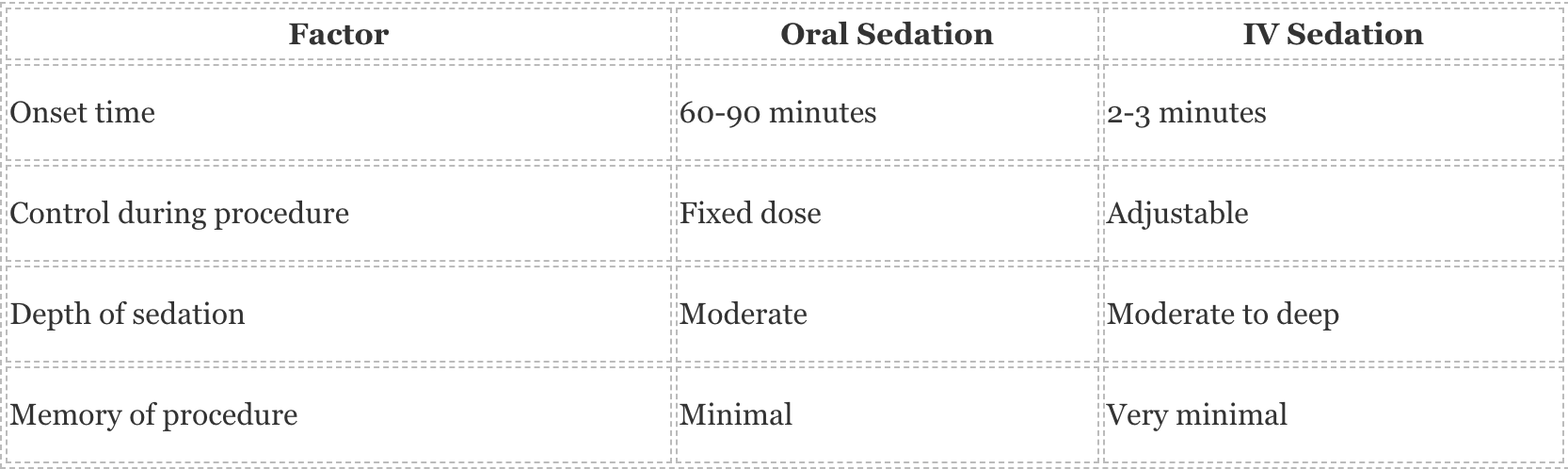
IV sedation offers more precise control.
We can increase or decrease medication as needed during your treatment.
Oral sedation provides consistent effects but cannot be adjusted once you take the pills.
This works well for shorter appointments with predictable timing.
Recovery differences are significant:
Recovery from IV sedation happens faster.
Most patients feel alert within 2-4 hours.
Oral sedation effects last longer.
You may feel drowsy for 6-8 hours after taking the medication.
Both methods require someone to drive you home.
We recommend taking the rest of the day off work with either option.
Complex dental procedures often work better with IV sedation because we can maintain comfort levels throughout longer treatments.
Choosing the Right Sedation Option
The best sedation method depends on your specific needs, the dental procedure, and your medical history.
Your sedation dentist will consider these factors along with safety requirements to recommend the most suitable option.
Assessing Patient Needs and Dental Treatment
We start by looking at your anxiety level and the type of dental work you need.
Simple cleanings might only need nitrous oxide.
Complex procedures like oral surgery often require IV sedation or general anesthesia.
Your medical history plays a big role in choosing sedation options.
We check for allergies, heart conditions, and breathing problems.
Some medications can affect how sedation works.
Procedure Length Matters:
- Short visits (under 30 minutes): Nitrous oxide
- Medium procedures (30-90 minutes): Oral sedation
- Long treatments (over 90 minutes): IV sedation
We also consider your past dental experiences.
Patients with severe dental phobia often need deeper sedation levels.
Those with mild anxiety do well with lighter options.
Your ability to follow instructions affects our choice too.
Oral sedation requires you to take pills at specific times.
IV sedation needs you to stay still during needle placement.
Safety Considerations and Monitoring
We must monitor you closely during all sedation types.
Each method has different safety requirements and risks.
Your age, weight, and health determine which options are safest for you.
Monitoring Requirements:
- Nitrous oxide: Basic vital signs, oxygen levels
- Oral sedation: Heart rate, blood pressure, breathing
- IV sedation: Continuous monitoring, emergency equipment ready
We check your breathing and heart function throughout dental procedures.
IV sedation needs the most careful watching because it works faster and deeper.
Certain health conditions make some sedation options unsafe.
Heart problems, sleep apnea, and liver disease affect which methods we can use.
We review your complete medical history before deciding.
Recovery time varies between sedation types.
Nitrous oxide wears off in minutes.
Oral and IV sedation can last several hours.
We plan your schedule around these differences.
Consulting Your Sedation Dentist
We discuss all available sedation options with you during your consultation. Your sedation dentist explains the benefits and risks of each method.
This conversation helps us pick the best choice together. We answer your questions about how each type works.
Many patients want to know about side effects and recovery time. Others ask about costs and insurance coverage.
Questions to Ask:
- Which sedation fits my procedure?
- What are the side effects?
- How long is recovery time?
- Do I need someone to drive me home?
We create a sedation plan based on your needs and preferences. Some patients prefer being more awake during treatment.
Others want to remember nothing about the visit. Your comfort level with different methods matters too.
We respect your concerns and work within your limits. Our goal is to make dental care possible and comfortable for you.
Frequently Asked Questions
Patients often ask how nitrous oxide, oral sedation, and IV sedation differ in effects, safety, and recovery. These three sedation methods vary in onset time, depth of sedation, and how long their effects last.
What are the primary differences between nitrous oxide and IV sedation for dental procedures?
Nitrous oxide takes effect within 2-3 minutes and provides light sedation while keeping you fully conscious. You can respond to instructions and feel relaxed but aware.
IV sedation works faster, usually within 30-60 seconds. It creates moderate to deep sedation depending on the medication dosage.
We can easily adjust your nitrous oxide sedation level during the procedure by changing the gas mixture. IV sedation requires more careful monitoring because we cannot reverse its effects as quickly.
Recovery from nitrous oxide happens immediately when we turn off the gas. IV sedation recovery takes 1-2 hours and you need someone to drive you home.
How does oral sedation compare to nitrous oxide in terms of recovery time?
Oral sedation takes 30-60 minutes to start working and can last 2-6 hours after your appointment. You will feel drowsy for several hours and need someone to drive you home.
Nitrous oxide stops working within 5-10 minutes after we turn off the gas. Most patients can drive themselves home and return to normal activities right away.
Oral sedation affects your memory and judgment for hours after the procedure. Nitrous oxide clears from your system quickly and does not affect your thinking afterward.
What are the safety considerations when choosing between IV sedation and oral sedation?
IV sedation requires us to monitor your heart rate, blood pressure, and oxygen levels throughout the procedure. We can quickly adjust medication levels or give reversal drugs if needed.
Oral sedation is harder to control once you take the medication. We cannot easily change the sedation level or reverse its effects during treatment.
Both methods are safe when we administer them properly. IV sedation poses slightly higher risks because of deeper sedation levels and the use of needles for medication delivery.
Patients with certain heart conditions, breathing problems, or medication allergies may not be good candidates for either option. We review your medical history carefully before recommending any sedation type.
Can you describe the varying levels of consciousness under nitrous, oral, and IV sedation?
Nitrous oxide provides minimal sedation, keeping you awake and able to respond to questions. You feel relaxed and may giggle or feel euphoric, but you remain fully conscious.
Oral sedation usually creates moderate sedation. You stay awake but feel very drowsy and may not remember much of the procedure.
IV sedation can range from moderate to deep sedation depending on the medications used. Some patients fall asleep completely, while others remain drowsy but responsive.
With deeper IV sedation, you may not remember the procedure at all. Your reflexes slow down more compared to lighter sedation methods.
What factors should patients consider when deciding between nitrous, oral, and IV sedation?
Your anxiety level plays a major role in choosing the right sedation. Mild nervousness often responds well to nitrous oxide, while severe dental phobia may require oral or IV sedation.
The length of your procedure matters. Short appointments work well with nitrous oxide, but longer treatments may need oral or IV sedation for comfort.
Your work schedule affects recovery planning. Nitrous oxide lets you return to work immediately, while oral and IV sedation require taking the rest of the day off.
Medical conditions and current medications influence which options are safe for you. We evaluate your health history to determine the best choice.
Cost differences exist between the three methods. Nitrous oxide usually costs less than oral or IV sedation options.
How does the duration of effects vary between nitrous oxide, oral sedation, and IV sedation?
Nitrous oxide effects end within 5-10 minutes after you stop the gas flow. You can drive yourself home and resume normal activities right away.
Oral sedation effects last 4-8 hours. You may feel drowsy for 2-6 hours after your appointment.
This medication can affect your coordination and judgment during that time.
IV sedation effects usually last 1-4 hours, depending on the specific medications. Most people feel normal within 2-4 hours.
You should not drive for at least 6-8 hours after IV sedation.
The onset time also differs between these methods. Nitrous oxide works in 2-3 minutes.
Oral sedation takes 30-60 minutes to take effect. IV sedation works within 1-2 minutes.
📞 Contact Kaufman Dentistry Today
Give us a call at (310) 838-7780 to schedule your appointment and take the first step towards a stunning smile.
You can find us at 10760 Washington Blvd., Culver City, CA 90232. We look forward to welcoming you to our practice and helping you achieve the smile of your dreams!