
Zirconia vs. Titanium Dental Implants
Dental implants come in two main materials: titanium and zirconia.
Titanium implants are metal-based and have been used for decades. Zirconia implants are ceramic, metal-free, and offer a white color that blends better with natural teeth.
Both materials can replace missing teeth, but they work differently in your mouth.
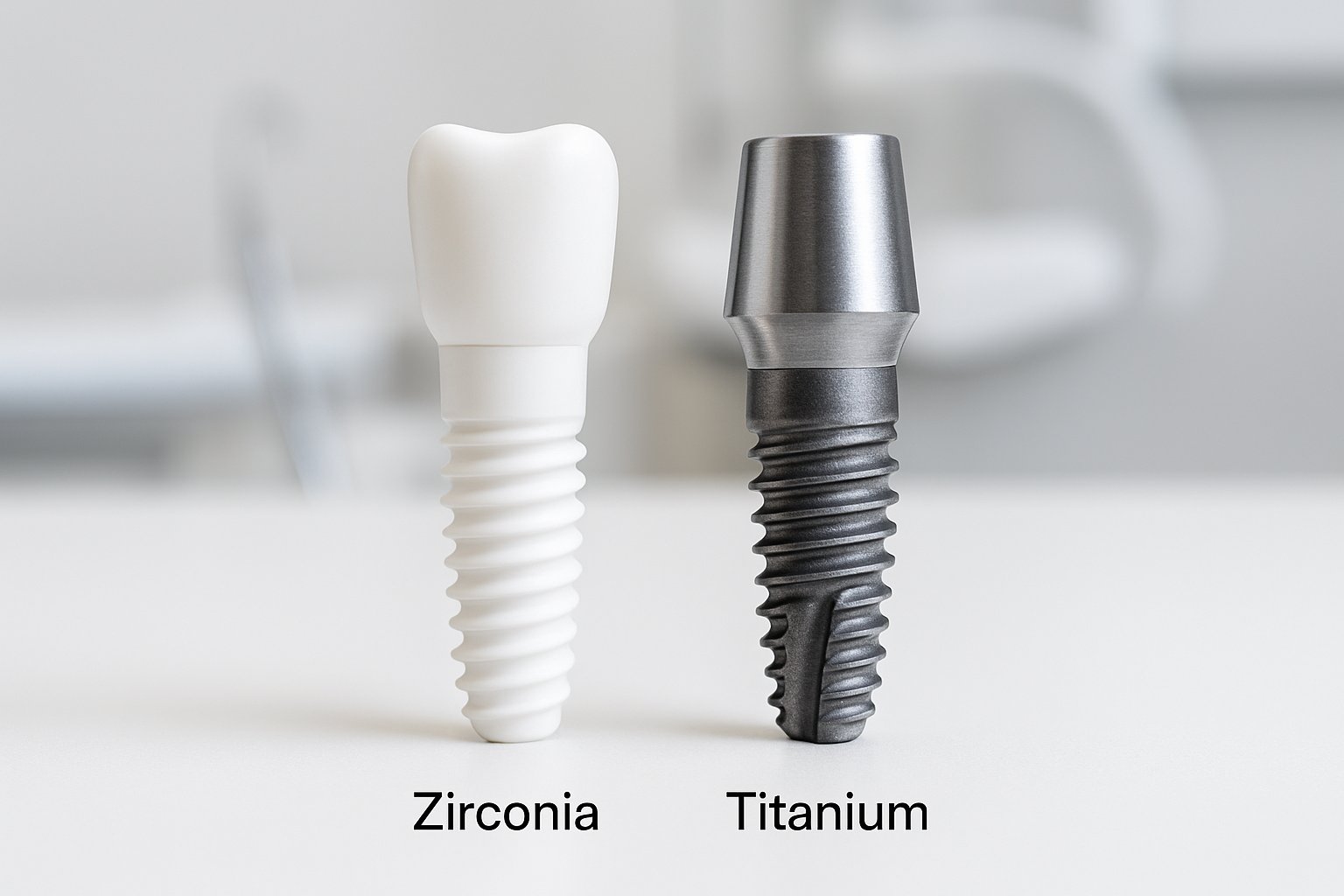
Several factors influence your choice between these implants. Your oral health, aesthetic goals, and budget all matter.
Some people pick zirconia to avoid metal. Others choose titanium for its long history of success.
We will explain the main differences between these implant materials. You will learn about their strength, how your body responds to them, their appearance, and their cost.
This information will help you discuss your options with your dentist.
Key Takeaways
- Titanium implants have a longer history of use. Zirconia offers a metal-free alternative with better color matching.
- Both materials are strong and safe. They differ in how they integrate with bone and gum tissue.
- Your choice depends on your aesthetic preferences, any metal sensitivities, and your budget.
Key Differences Between Zirconia and Titanium Dental Implants
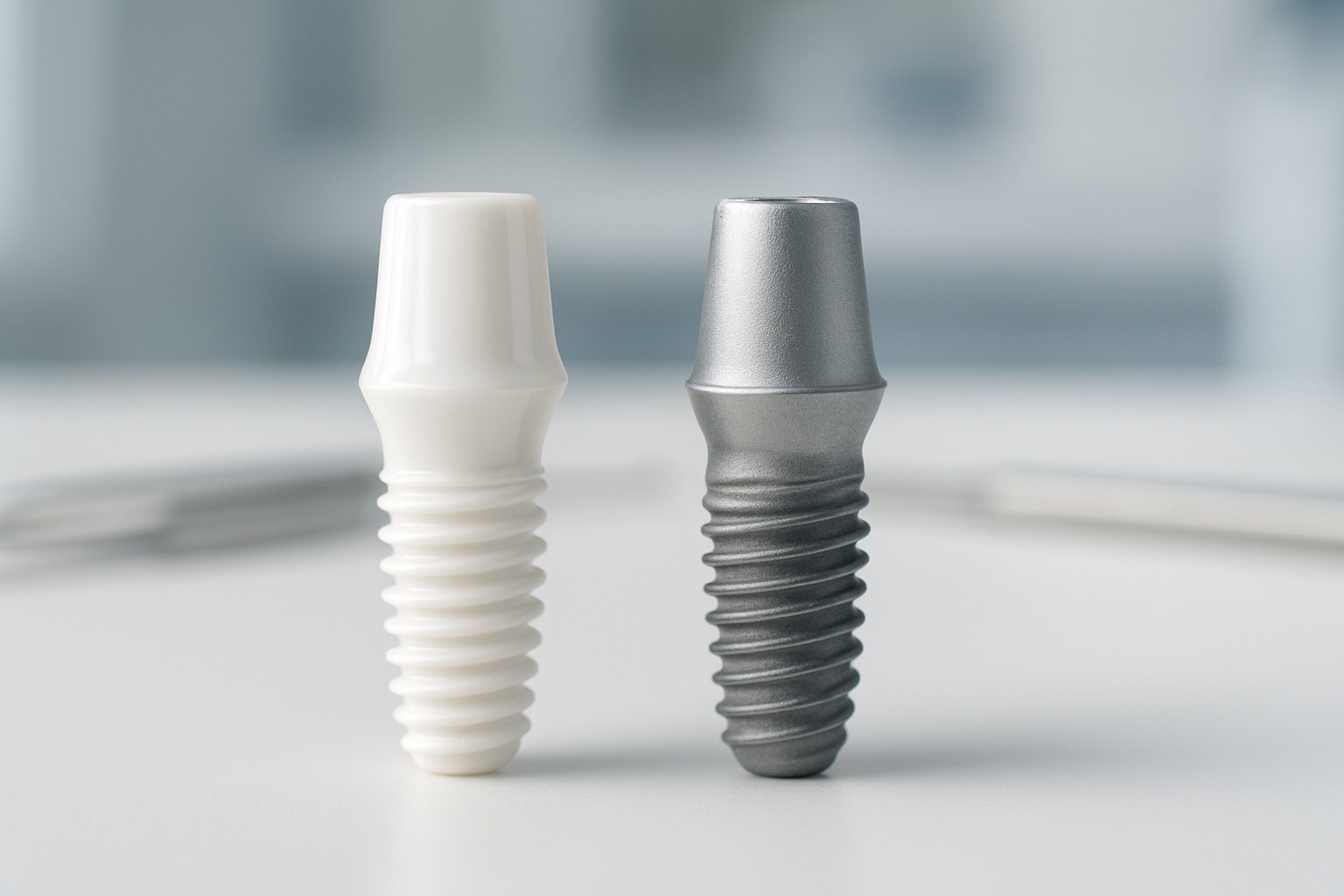
Zirconia and titanium dental implants differ in material composition, structural design, and appearance. These differences affect how dentists place them and how they look in your mouth.
Materials and Construction
Manufacturers make titanium implants from pure titanium or titanium alloy. Dentists have used this metal in dental implants for over 50 years.
Titanium is strong and bonds well with bone tissue.
Zirconia implants use zirconium dioxide, a type of ceramic material. This white material is newer in dentistry but is gaining popularity.
Zirconium dioxide is extremely hard and resistant to wear.
Titanium is lighter and more flexible than zirconia. Zirconia is harder and more rigid.
Both materials are biocompatible, so your body accepts them well. Some people prefer zirconia because it contains no metal.
Design Variations and Components
Titanium dental implants usually come in two parts. The implant body screws into your jawbone, and the abutment connects on top to hold the crown.
Zirconia implants are usually one solid piece. The implant body and abutment are made together as a single unit.
This design removes the connection point between parts.
Titanium systems offer flexibility in choosing different abutment sizes and angles. This lets dentists customize the fit for your needs.
The two-piece design also allows for adjustments during treatment.
The one-piece zirconia design is simpler but less adjustable. Once placed, we cannot change the angle or position of the abutment.
This requires more precise planning before placement.
Color and Aesthetic Impact
Titanium has a dark gray metallic color. This can sometimes show through your gums, especially if you have thin gum tissue.
The metal may create a gray shadow at the gum line.
Zirconia is naturally white, similar to natural teeth. It blends better with your gums and teeth.
We don’t see dark lines or shadows with zirconia implants.
The white color of zirconia makes it ideal for front teeth where appearance matters most. Titanium implants work well for back teeth where color is less visible.
If you have thin or receding gums, zirconia implants provide better aesthetics.
Performance Comparison: Durability, Biocompatibility, and Safety
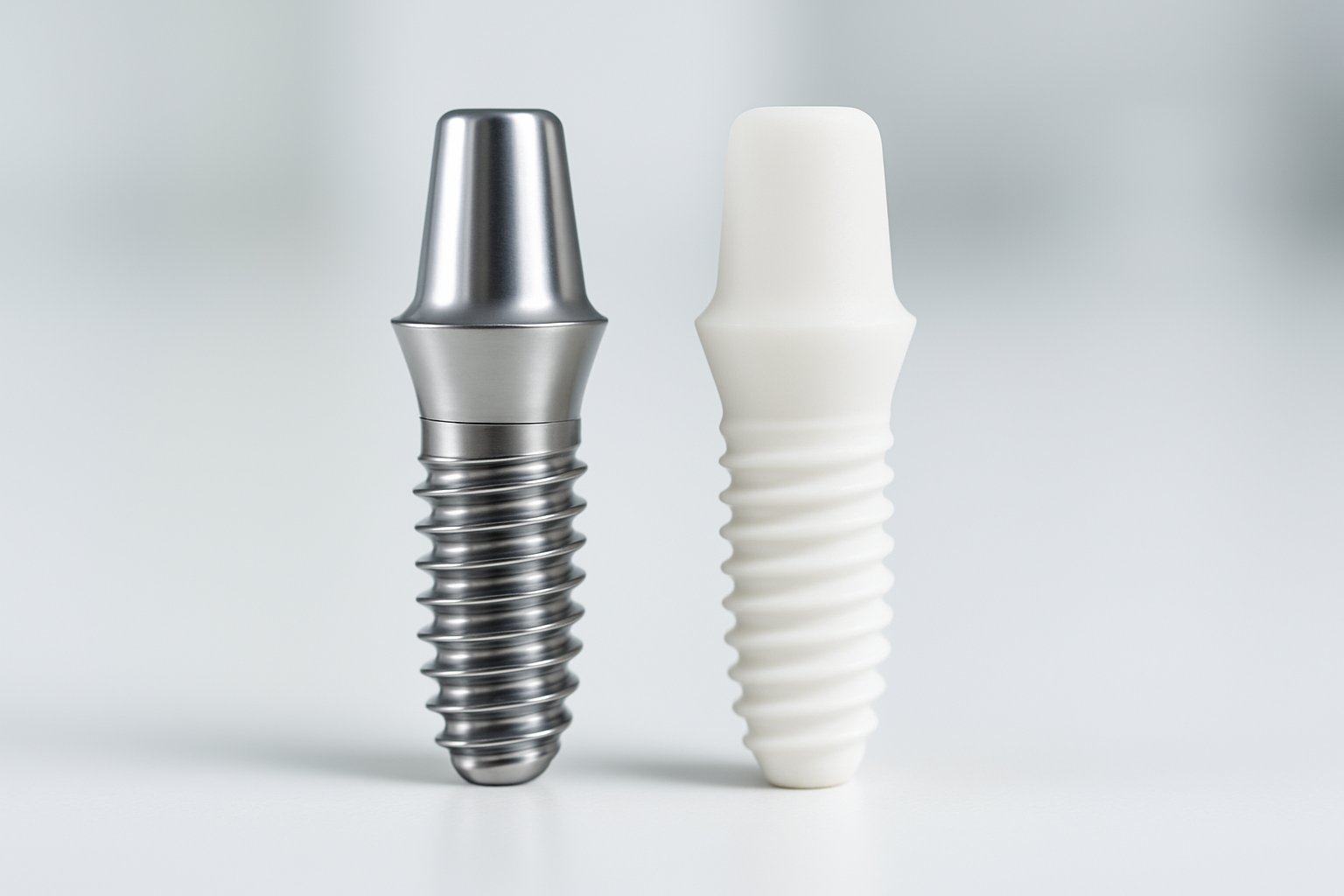
Both titanium and zirconia dental implants bond with jawbone and provide long-lasting tooth replacement.
Titanium has decades of research backing its use. Zirconia offers a metal-free option for patients with sensitivities.
Osseointegration and Bone Integration
Titanium dental implants achieve osseointegration when bone cells grow directly onto the implant surface. This process takes 3-6 months and creates a strong foundation for the replacement tooth.
Zirconia implants also achieve bone integration. The ceramic surface allows bone to attach and grow around the implant.
Studies show zirconia can achieve osseointegration rates similar to titanium.
Key differences in bone integration:
- Titanium forms a direct chemical bond with bone tissue.
- Zirconia relies more on mechanical interlocking with bone.
- Both materials show predictable healing patterns.
- Integration timeframes are similar for both options.
Long-Term Durability and Success Rates
Titanium implants have success rates of 95-98% over 10 years. These implants can last 20-30 years or longer with proper care.
Titanium resists fracture well because it can flex slightly under pressure.
Zirconia implants show success rates of 92-95% in current studies. These ceramic implants are more rigid than titanium, which can make them more prone to fracture under extreme force.
Newer zirconia formulations have improved strength.
We have fewer long-term studies on zirconia because it is newer. Most research covers 5-10 year periods for zirconia.
Biocompatibility and Metal Allergies
Both materials are biocompatible and do not harm surrounding tissues. Titanium allergies are rare, affecting less than 1% of patients.
Symptoms can include implant failure, inflammation, or skin reactions around the surgical site.
Zirconia provides a completely metal-free option for patients with metal allergies or sensitivities. The ceramic material does not trigger immune responses like metals can.
This makes zirconia appealing for patients with known titanium allergies or multiple metal sensitivities.
Neither material causes toxic reactions in the body. Both resist corrosion and remain stable in the mouth.
Clinical Track Record and Research Data
Titanium implants have over 50 years of clinical use and thousands of published studies. We have extensive data on how they perform in different bone types, patient ages, and medical conditions.
This research helps us predict outcomes with high confidence.
Zirconia implants entered widespread use in the early 2000s. Research continues to grow, with hundreds of studies now available.
The data shows promising results, but we do not have as much long-term follow-up as we do for titanium.
Most dental professionals feel confident using titanium for any implant case. Zirconia use is increasing as more research confirms its reliability.
Aesthetic and Functional Considerations
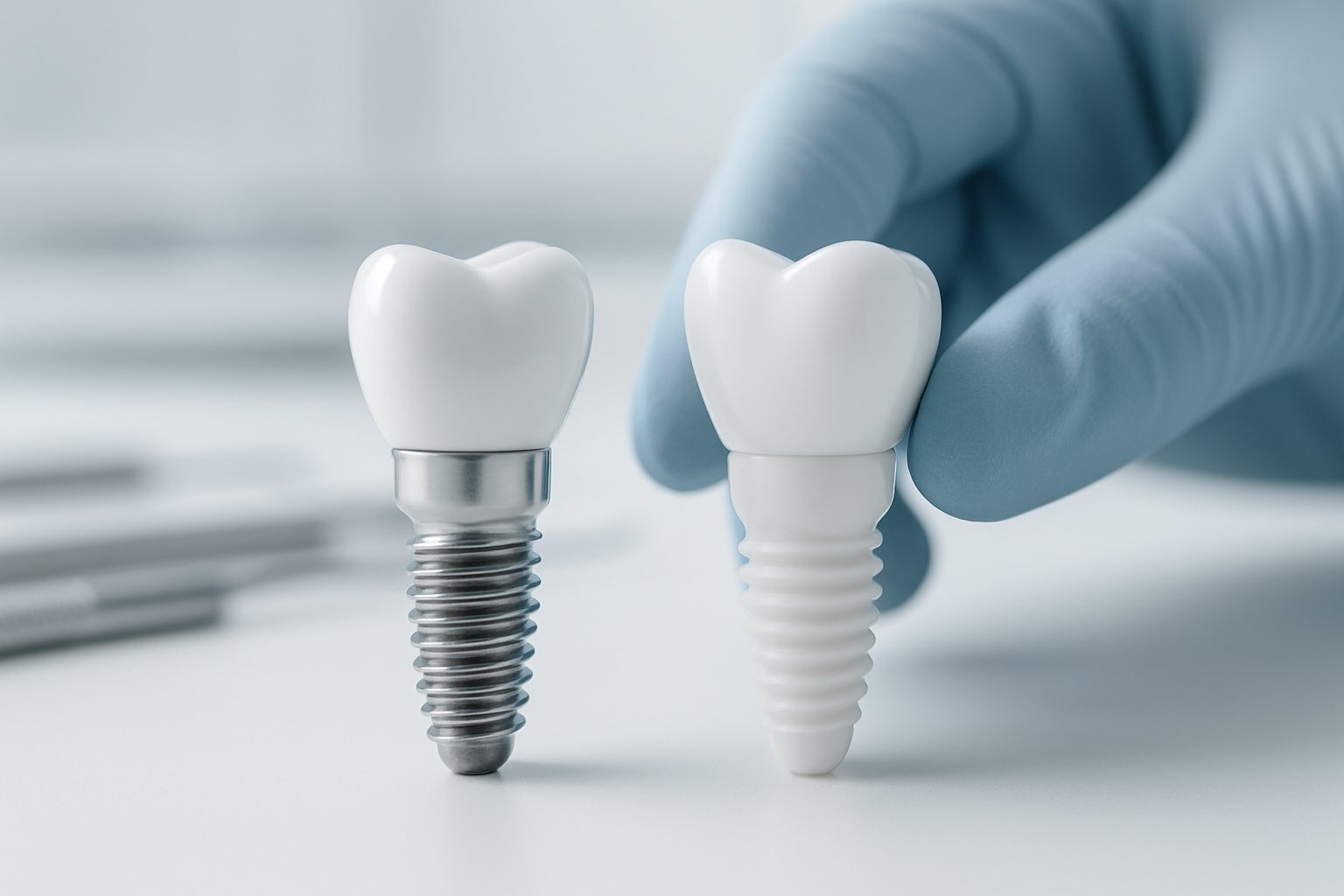
Both implant materials interact differently with your mouth’s tissues and affect how your new tooth looks. Zirconia’s white color and tissue compatibility offer advantages in visible areas.
Titanium’s proven track record influences restoration options.
Gum Tissue Response and Esthetic Zones
Zirconia implants provide a clear advantage in the front of your mouth. The white ceramic material does not show through if your gum tissue is thin or recedes over time.
Titanium implants can create a gray shadow near the gum line, which becomes visible when you smile.
Gum tissue responds differently to each material:
- Zirconia: Less plaque buildup and healthier tissue attachment.
- Titanium: More potential for inflammation in some patients.
We see better results with zirconia in the esthetic zone, which includes your front teeth and any area visible when you smile. The material allows light to pass through like natural teeth.
This matters most if your gum tissue is naturally thin and translucent.
Effect on Dental Restorations
The implant material affects which dental restorations we can place. Titanium implants work with all types of dental crowns, including metal, porcelain-fused-to-metal, and all-ceramic options.
We connect the dental crown to the implant using a metal abutment or adapter piece.
Zirconia implants usually use ceramic abutments that match the implant color. This creates an all-white foundation for your restoration.
However, we have fewer attachment options compared to titanium. Most zirconia implants require ceramic crowns for the best appearance.
The connection between implant and crown differs. Titanium uses a screw or cement, while zirconia often relies on cement alone.
Functional Performance in Daily Use
Both materials handle normal chewing forces well. Titanium implants flex slightly under pressure, which mimics natural tooth roots.
Zirconia is more rigid and transfers force directly to your jawbone.
We observe these differences:
- Titanium absorbs impact better during grinding or clenching.
- Zirconia may stress the bone more in heavy-bite situations.
- Both materials last for decades with proper care.
Titanium’s flexibility means it rarely breaks, though the screw connection can loosen. Zirconia’s one-piece design eliminates loose parts but can fracture under extreme force.
We consider your bite strength and habits when recommending a material.
Choosing the Right Implant: Practical and Cost Considerations
Several factors affect which implant type works best for you, including medical history, budget, and your dental provider’s expertise.
The price gap between materials and your specialist’s skill play major roles in this decision.
Factors Influencing Implant Selection
We consider multiple factors when choosing between zirconia and titanium implants. Your medical history is important, especially if you have metal allergies or sensitivities.
Patients with metal reactions usually do better with zirconia.
The location of the missing tooth also matters. Front teeth may benefit from zirconia’s white color, which won’t show through thin gums.
Back teeth handle more chewing force, and titanium’s longer track record makes some specialists more comfortable using it there.
Your bone density affects which implant your dental specialist recommends. Patients with weaker jawbones might need titanium implants because we have more research on their success in these cases.
The dental implant procedure also differs slightly between materials, with titanium offering more flexibility for complex cases.
Cost Differences and Affordability
Zirconia implants usually cost more than titanium ones. The price difference ranges from $1,000 to $1,500 more per implant in most dental practices.
This higher cost comes from specialized manufacturing and newer technology. Fewer dental labs produce zirconia implants, which keeps prices higher.
The materials themselves also cost more.
Titanium implants cost less because they have been manufactured for decades. More companies make them, so competition lowers prices.
Most dental insurance plans that cover implants base their coverage on titanium prices. Patients might pay more out-of-pocket for zirconia.
Role of the Dental Implant Specialist
Your dental implant specialist’s experience and training determine which options they can offer. Not all dentists work with both materials.
Many have more experience placing titanium implants.
Ask your specialist how many implants of each type they have placed. A dentist who regularly works with both materials can better explain which suits your needs.
They should discuss success rates, possible complications, and why they recommend one material over another.
Some specialists only offer titanium implants because they have not trained for zirconia placement. Others might prefer zirconia for aesthetic cases but choose titanium for complex procedures.
Your specialist’s honest assessment of their skills and experience should guide your decision as much as the implant material itself.
Frequently Asked Questions
Zirconia and titanium implants differ in their material composition, which affects their longevity, compatibility with the body, aesthetic results, and cost.
We address the most common questions patients ask when deciding between these two implant types.
What are the key differences in longevity between zirconia and titanium dental implants?
Titanium implants have a long history of use, with over 50 years of data showing success rates of 95-98% after 10 years. Decades of long-term studies confirm their durability.
Zirconia implants entered the dental market more recently, with widespread use starting around 2004. Current research shows success rates of 92-95% over 5-10 years.
We have less long-term data on zirconia implants beyond 10 years compared to titanium. Titanium’s long-term performance is better supported by evidence.
How do zirconia dental implants compare to titanium in terms of biocompatibility?
Both zirconia and titanium are biocompatible, so they work well with human tissue. Titanium bonds with bone through osseointegration, a process that has proven reliable for decades.
Zirconia also connects successfully with bone. Some research finds that zirconia may attract less plaque than titanium, which could help gum health.
The body accepts both materials without harm. Neither material dissolves or breaks down in the mouth over time.
Can patients have allergic reactions to titanium dental implants, and are zirconia implants a safer alternative?
True titanium allergies are very rare and affect less than 1% of people. Some patients report metal sensitivity, but confirmed titanium allergies are uncommon.
Zirconia is a ceramic and contains no metal. For patients with documented metal sensitivities or allergies, zirconia provides a metal-free choice.
Most patients can safely receive either type of implant. We suggest testing for metal allergies only if you have a history of reactions or other concerns.
What are the aesthetic considerations when choosing between zirconia and titanium dental implants?
Zirconia implants are white or tooth-colored, which can improve aesthetics. The white color does not show through the gums, even if they are thin or recede.
Titanium implants are gray and may show through in patients with thin gum tissue. This mainly affects front teeth where the gum line is visible.
For front teeth with thin gums, zirconia usually looks more natural. For back teeth, the color difference is less important since these areas are not visible.
How does the cost of zirconia dental implants compare to traditional titanium options?
Zirconia implants usually cost 20-30% more than titanium implants. The higher price reflects the newer technology and more complex manufacturing.
A single zirconia implant may cost $2,000-$3,000. Titanium implants usually range from $1,500-$2,500.
Prices vary by location and dentist experience. Insurance coverage is similar for both types, and most dental plans cover part of the cost regardless of the material.
What are the potential complications or problems associated with zirconia dental implants?
Zirconia implants can fracture under extreme force because ceramic is more brittle than metal. Patients who grind their teeth or have heavy chewing pressure face a higher risk.
Early zirconia implants failed more often because of design issues. Modern one-piece zirconia implants perform better, but dentists can’t adjust them if placement isn’t perfect the first time.
Titanium implants allow corrections because the crown attaches separately. With zirconia’s one-piece design, dentists have less flexibility to fix positioning problems.
Fewer dentists have training with zirconia implants. This may limit your options for treatment.
📞 Contact Kaufman Dentistry Today
Give us a call at (310) 838-7780 to schedule your appointment and take the first step towards a stunning smile.
You can find us at 10760 Washington Blvd., Culver City, CA 90232. We look forward to welcoming you to our practice and helping you achieve the smile of your dreams!