
What Is an Implant-Supported Bridge?
Missing teeth can make eating difficult and affect how you smile. Many people look for stable, long-lasting solutions that feel natural and work well for daily life.
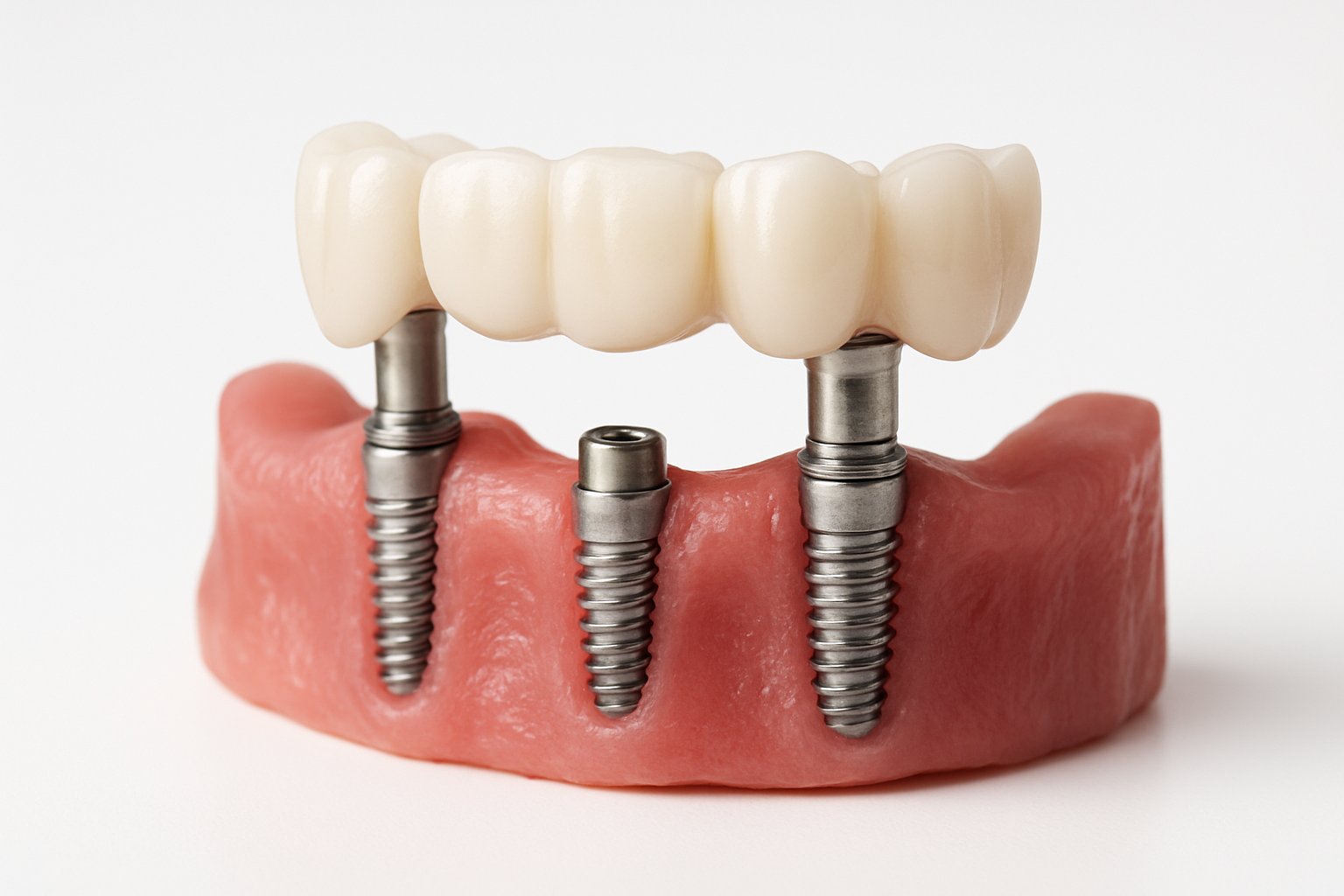
An implant-supported bridge is a dental restoration that uses titanium posts in the jawbone to hold replacement teeth. This eliminates the need to grind down healthy teeth.
Unlike traditional bridges that attach to natural teeth, this option relies on dental implants for support. This makes it a strong choice for replacing several missing teeth in a row.
This guide helps you understand how implant-supported bridges work. You’ll learn about the process, benefits, and what to expect from this treatment.
Key Takeaways
- Implant-supported bridges use dental implants instead of natural teeth to support replacement teeth.
- This option preserves healthy teeth and provides a stable, long-lasting solution for multiple missing teeth.
- The treatment involves placing implants in the jawbone and attaching a custom bridge after healing.
What Is an Implant-Supported Bridge?
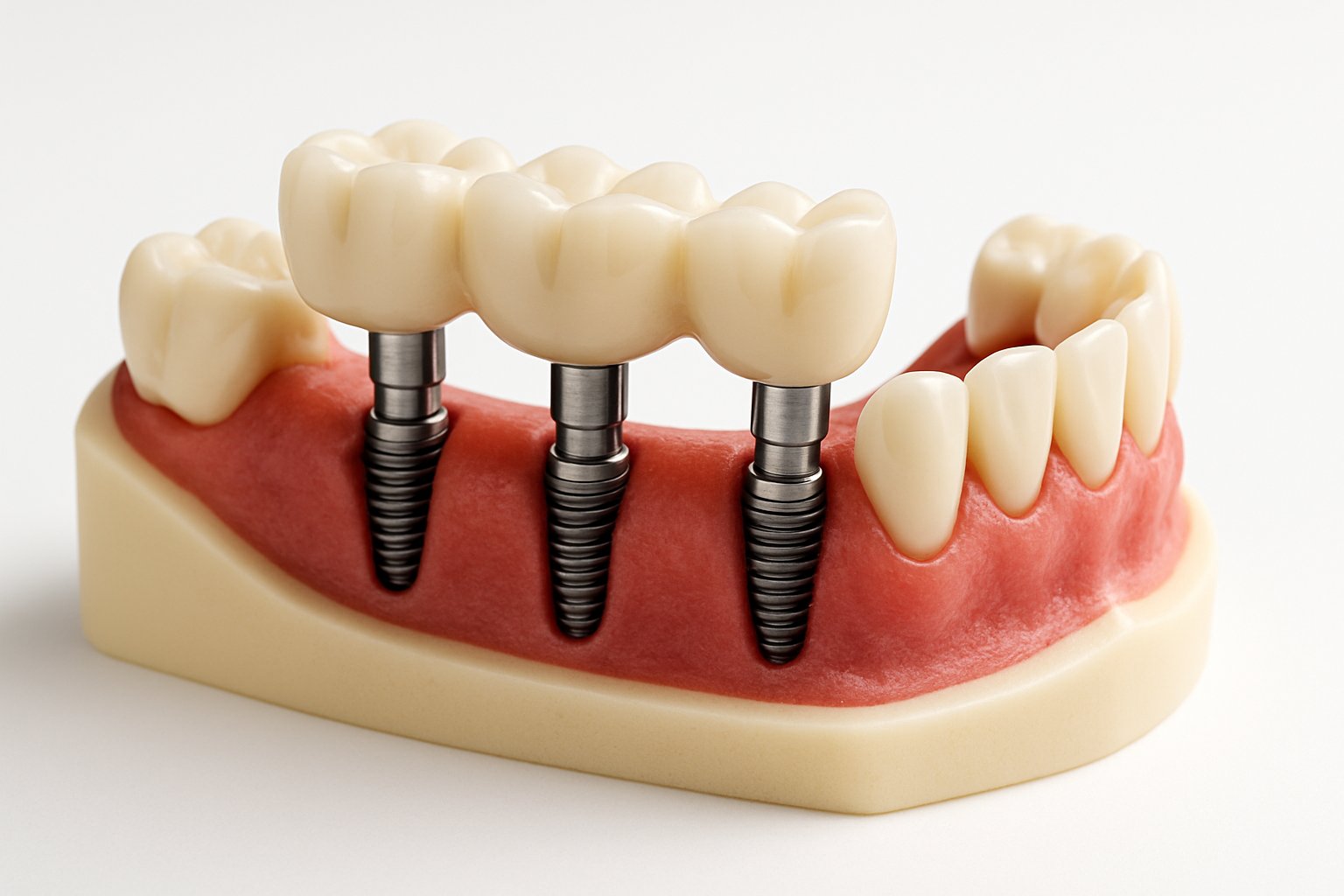
An implant-supported bridge uses dental implants placed in the jawbone to hold a fixed bridge in place. This option provides stability without using natural teeth for support.
Key Features of Implant-Supported Bridges
Implant-supported bridges attach directly to dental implants instead of existing teeth. We place titanium posts into the jawbone during a surgical procedure. These posts act as artificial tooth roots.
The implants go through osseointegration, which means the bone fuses with the implants over several months. The bone grows around the implant and holds it firmly in place.
Once osseointegration finishes, we attach the bridge to the implants. The connection stays permanent and you do not need to remove it for cleaning. An implant-supported bridge works like natural teeth for eating and speaking.
Implant-Supported vs. Traditional Bridges
Traditional dental bridges rely on natural teeth on either side of the gap for support. We must file down these healthy teeth to place crowns on them.
Implant-supported dental bridges don’t require us to alter adjacent teeth. The dental implants provide all the support needed.
A traditional dental bridge can last 5 to 15 years with proper care. Implant-supported bridges often last longer because the implants stimulate the jawbone. This stimulation helps prevent bone loss that can happen with missing teeth.
Structure and Components
An implant-supported bridge has three main parts. The first part is the dental implants—titanium posts placed in the jawbone.
We usually use two to six implants, depending on how many teeth need replacement. The second component is abutments that connect to the top of each implant.
These small connectors stick up through the gums and provide attachment points for the bridge. The third part is the fixed bridge itself, which contains the replacement teeth.
We custom-make this bridge to match your natural teeth in size, shape, and color. The bridge attaches securely to the abutments and stays in your mouth permanently.
Benefits and Advantages
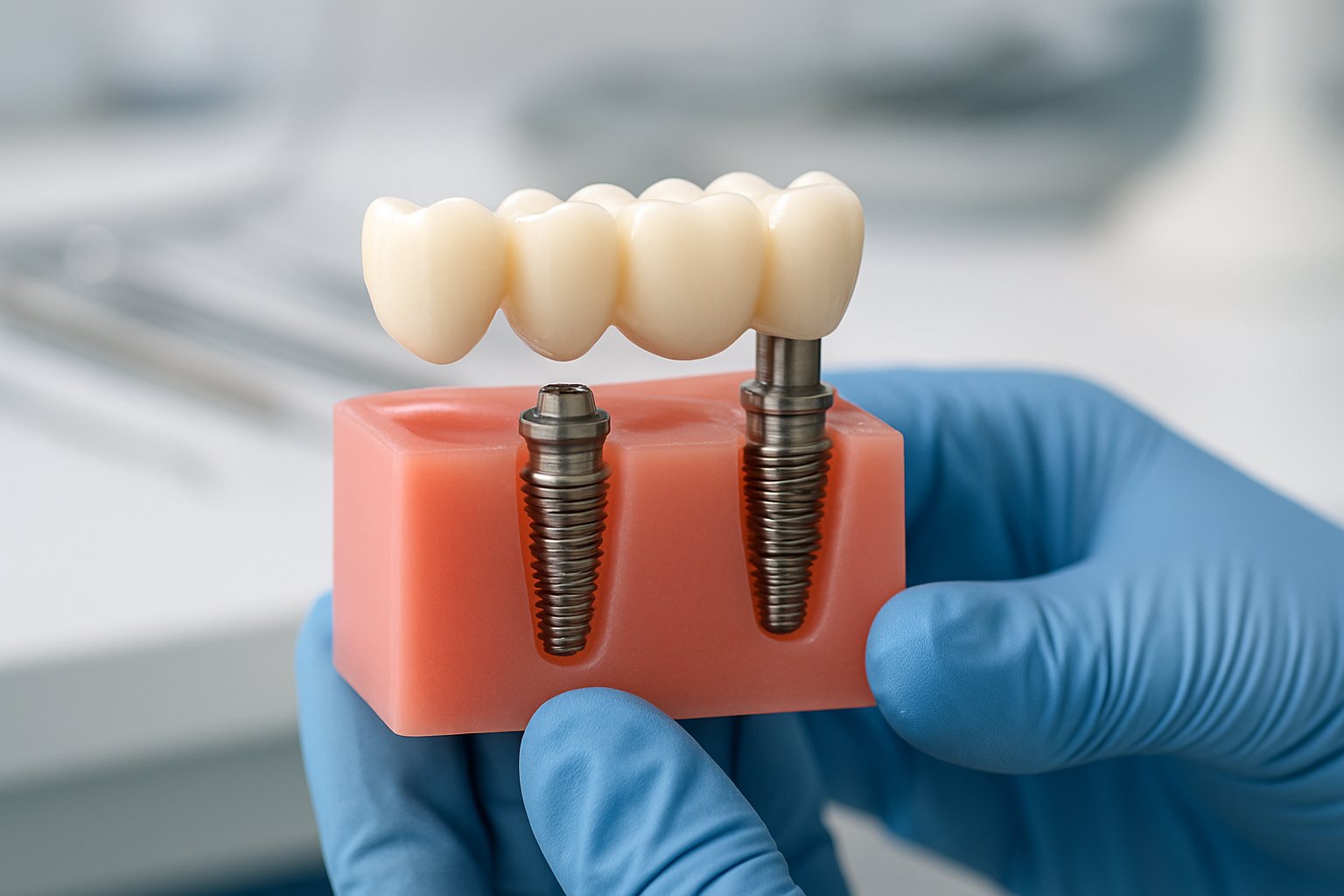
Implant-supported bridges offer several key health benefits. They protect the jawbone, provide long-term stability, and keep nearby teeth healthy.
Preservation of Jawbone and Bone Density
When we lose teeth, the jawbone beneath them starts to break down over time. The bone needs pressure from tooth roots to stay strong and healthy.
Traditional bridges sit on top of the gums and cannot stop this bone loss. Implant-supported bridges work differently.
The titanium posts go into the jawbone and act like natural tooth roots. They put pressure on the bone when we chew and bite, which keeps the bone active and healthy.
This process is called bone preservation. It helps maintain jawbone density and prevents facial changes that can happen after tooth loss.
Stability and Durability
Implant-supported bridges stay firmly in place because they attach directly to the jawbone. You don’t need to worry about them slipping or moving when you eat or talk.
The dental restoration can last 15 years or longer with proper care. Many patients find their implant-supported bridges last even longer.
The implants themselves often last a lifetime. This stability also makes oral hygiene easier.
We can brush and floss around the bridge more effectively than with traditional options. Better cleaning leads to better oral health.
Protection of Adjacent Teeth
Traditional bridges require grinding down healthy teeth on both sides of the gap. These teeth must be filed down to support the bridge, which removes healthy tooth structure permanently.
Implant-supported bridges do not touch or damage nearby teeth. The implants go directly into the jawbone where the missing teeth used to be.
This means our healthy teeth stay untouched and strong. We keep more of our natural tooth structure, which helps those teeth last longer.
Procedure and Treatment Process
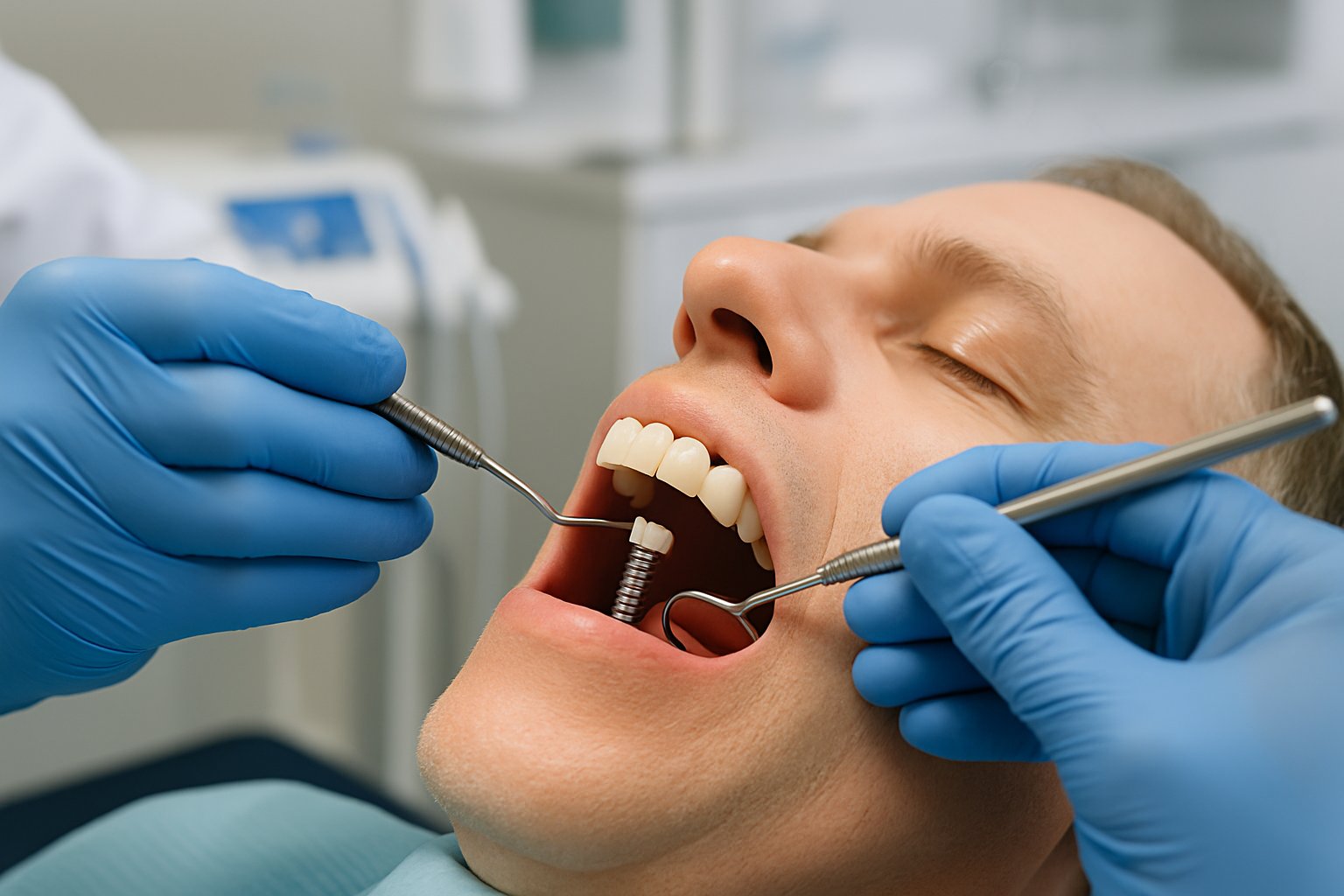
Getting an implant-supported bridge involves several steps over a few months. The process includes evaluating your oral health, placing dental implants, waiting for healing, and attaching the custom bridge.
Initial Consultation and Candidacy
We start by examining your mouth to see if you’re a good candidate for dental implants. We take X-rays and 3D scans to check your jawbone health and density.
We look for specific conditions:
- Enough jawbone volume to support implants
- Healthy gums without active periodontal disease
- Good overall health for surgery
If your jawbone lacks enough density, we may recommend bone grafting before implant placement. Bone grafting adds material to strengthen weak areas and create a solid foundation.
We also treat any periodontal disease first since infections can lead to implant failure. During this visit, we discuss your medical history and medications.
Certain conditions, like uncontrolled diabetes, may affect healing and osseointegration.
Dental Implant Placement and Healing Period
We surgically place the dental implants into your jawbone during an outpatient procedure. The number of implants depends on how many teeth the bridge will replace, usually requiring two to four implants per bridge.
After implant placement, the healing period begins. This phase usually lasts three to six months.
During this time, osseointegration occurs as your jawbone fuses with the titanium implants. We may place temporary teeth while you heal.
You’ll need to follow care instructions and eat soft foods at first. Regular follow-up appointments help us monitor healing and watch for complications.
Fabrication and Placement of the Bridge
Once osseointegration is complete, we take impressions of your mouth. These impressions go to a dental lab, where technicians create your custom bridge.
The bridge fabrication takes about two to three weeks. We design it to match your natural teeth in color, shape, and size.
At your final appointment, we attach the bridge to the implants using abutments. We check your bite and make adjustments for comfort.
The bridge locks securely in place and functions like natural teeth. You do not need to remove it for cleaning.
Variations and Alternatives
Implant-supported bridges work well for some patients, but other implant options may suit different needs. All-on-4 and All-on-6 systems replace full arches with fewer implants, while overdentures offer a removable option that still uses implants for stability.
All-on-4 and All-on-6 Concepts
The All-on-4 concept uses four dental implants to support a full arch of replacement teeth. Two implants go in the front of the jaw, and two are placed at angles in the back.
This design avoids areas with less bone density and may eliminate the need for bone grafting. All-on-6 works similarly but uses six implants instead of four.
The extra implants provide more support and distribute bite forces across more anchor points. We usually recommend All-on-6 for patients with good bone quality who want extra stability.
Both options replace an entire upper or lower arch of missing teeth in one procedure. Patients often receive temporary teeth the same day as implant placement.
The final prosthesis attaches permanently to the implants and only a dentist can remove it.
Implant-Supported Overdenture
An implant-supported overdenture is a removable denture that snaps onto or clips to implants. We usually place two to four implants in the jaw as anchor points.
The denture attaches to these implants with special connectors like locator attachments or bars. This option offers more stability than traditional dentures.
The implants prevent the denture from slipping or moving while eating or talking. Patients can remove the overdenture for cleaning, which some people prefer over fixed options.
Implant-supported overdentures cost less than fixed bridges or All-on-4 solutions. They also require fewer implants, making them suitable for patients with moderate bone loss.
Other Tooth Replacement Options
Traditional dental bridges don’t use implants. They attach to natural teeth on either side of the gap left by missing teeth.
The dentist must reshape these adjacent teeth to place crowns that support the bridge. Removable partial dentures replace several missing teeth without surgery.
Metal clasps hook onto remaining natural teeth to hold the partial denture in place. Complete dentures rest on the gums and replace all teeth in an arch.
Tooth Replacement Comparison:
| Option | Fixed or Removable | Surgery Required | Durability |
|---|---|---|---|
| Implant-Supported Bridge | Fixed | Yes | High |
| Traditional Bridge | Fixed | No | Moderate |
| Partial Denture | Removable | No | Low to Moderate |
| Complete Denture | Removable | No | Low to Moderate |
Frequently Asked Questions
Implant-supported bridges cost more upfront but offer better jawbone health and longevity. They can replace multiple teeth and last decades with proper care.
How does the cost of a traditional dental bridge compare to an implant-supported bridge?
Traditional dental bridges typically cost between $2,000 and $5,000 for a three-unit bridge. Implant-supported bridges cost more, ranging from $5,000 to $15,000 or higher depending on how many implants we need.
The higher cost comes from the surgical placement of titanium implants into the jawbone. Traditional bridges only require preparing the teeth on either side of the gap.
Many patients find the extra cost worth it because implant-supported bridges last longer. We also don’t need to alter healthy teeth next to the gap.
What are the long-term benefits of choosing an implant-supported bridge over a Maryland bridge?
Implant-supported bridges prevent bone loss in the jaw. When we place implants, they stimulate the jawbone like natural tooth roots.
Maryland bridges don’t stop bone loss because they only attach to neighboring teeth with metal wings. Over time, the jawbone shrinks where teeth are missing.
We find that implant-supported bridges also stay in place better. Maryland bridges can come loose or detach from the supporting teeth, especially in areas with heavy chewing forces.
Implant-supported bridges typically last 15 years or longer. Maryland bridges often need replacement after 5 to 10 years.
Can an implant-supported bridge replace multiple missing teeth, and how many can it support?
A single implant-supported bridge can replace three to four missing teeth in a row.
We usually place one implant at each end of the gap to support the bridge.
For larger gaps, we may add more implants in the middle for extra support.
A bridge supported by three or four implants can replace five to six teeth.
The number of implants depends on the location in your mouth.
Back teeth handle more chewing force, so we may recommend more implants there.
We check your jawbone density and overall oral health to create the best plan.
Each case is different and depends on your individual needs.
What is the expected lifespan of an implant-supported bridge?
Implant-supported bridges usually last 15 to 20 years with good care.
The titanium implants can last a lifetime if they stay healthy.
The bridge may need replacement over time due to normal wear.
We examine the bridge at regular dental visits to find any problems early.
Good oral hygiene helps your bridge last longer.
Patients who brush, floss, and get regular cleanings see better results.
Teeth grinding, smoking, and gum disease can shorten the lifespan.
We help you manage these issues if needed.
What is involved in the procedure for placing an implant-supported bridge?
The procedure happens in several stages over a few months. First, we surgically place titanium implants into your jawbone where teeth are missing.
You need to wait three to six months for the implants to fuse with the bone. This process, called osseointegration, creates a strong foundation.
After you heal, we attach small connectors to the implants.
📞 Contact Kaufman Dentistry Today
Give us a call at (310) 838-7780 to schedule your appointment and take the first step towards a stunning smile.
You can find us at 10760 Washington Blvd., Culver City, CA 90232. We look forward to welcoming you to our practice and helping you achieve the smile of your dreams!