
Digital Impressions vs. Traditional Molds
Getting dental impressions once meant biting down on trays filled with gooey material that often triggered your gag reflex. Now, dentists can scan your teeth with a small digital wand in just minutes.
Both methods create models of your teeth, but they use very different approaches.
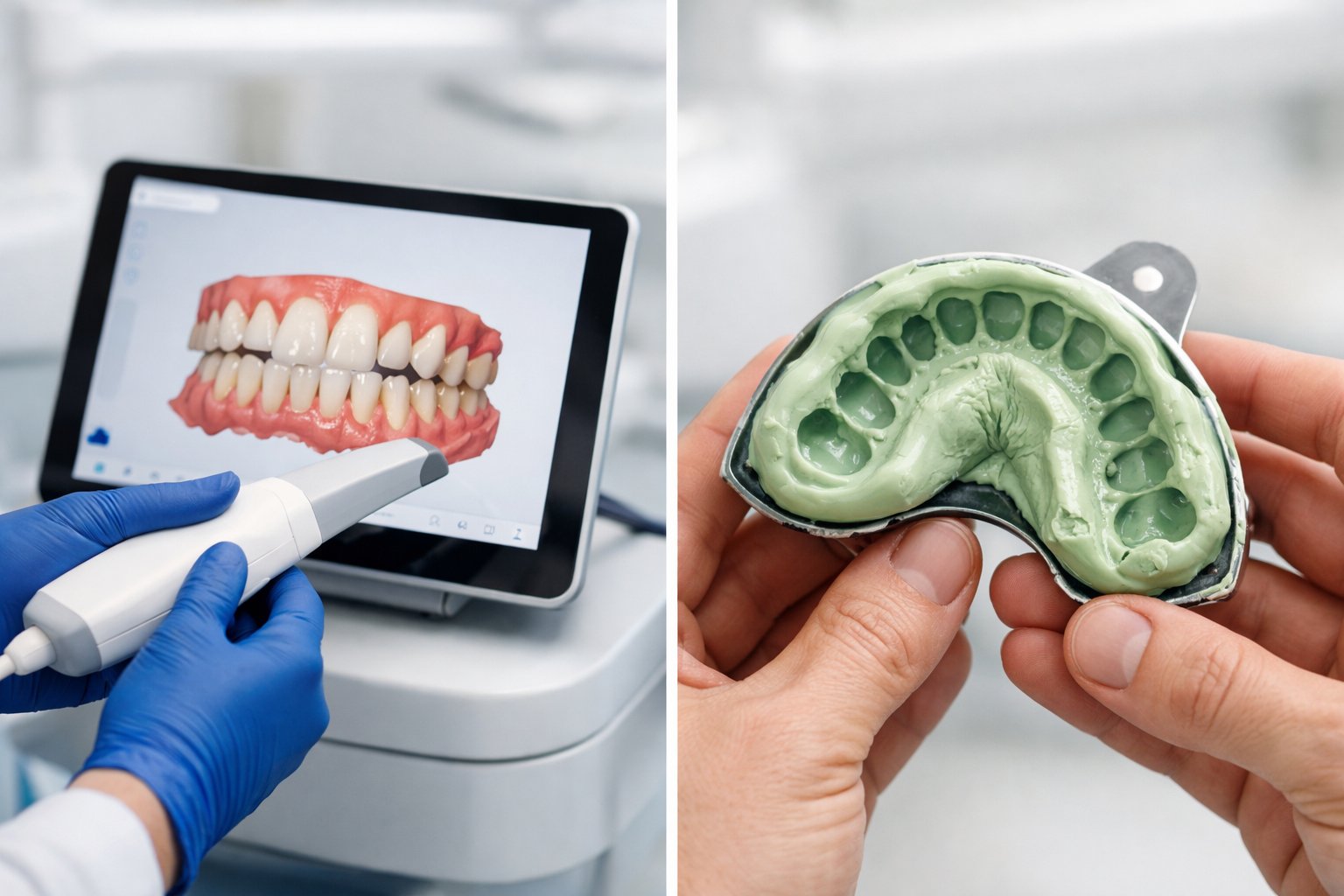
Digital impressions use 3D scanning technology to capture your teeth without messy materials. Traditional molds require physical putty that sets in your mouth.
The method your dentist chooses affects your comfort and how quickly you receive your final restoration. Each approach offers clear advantages in different situations.
Knowing the differences helps you prepare for your next dental visit. The impression method shapes your experience, whether you need a crown, bridge, or clear aligners.
Key Takeaways
- Digital impressions eliminate messy materials and provide faster results than traditional molds.
- Both methods can create accurate models, but they differ in comfort and efficiency.
- The right choice depends on your dental needs, available technology, and type of restoration.
Fundamental Differences Between Digital Impressions and Traditional Molds
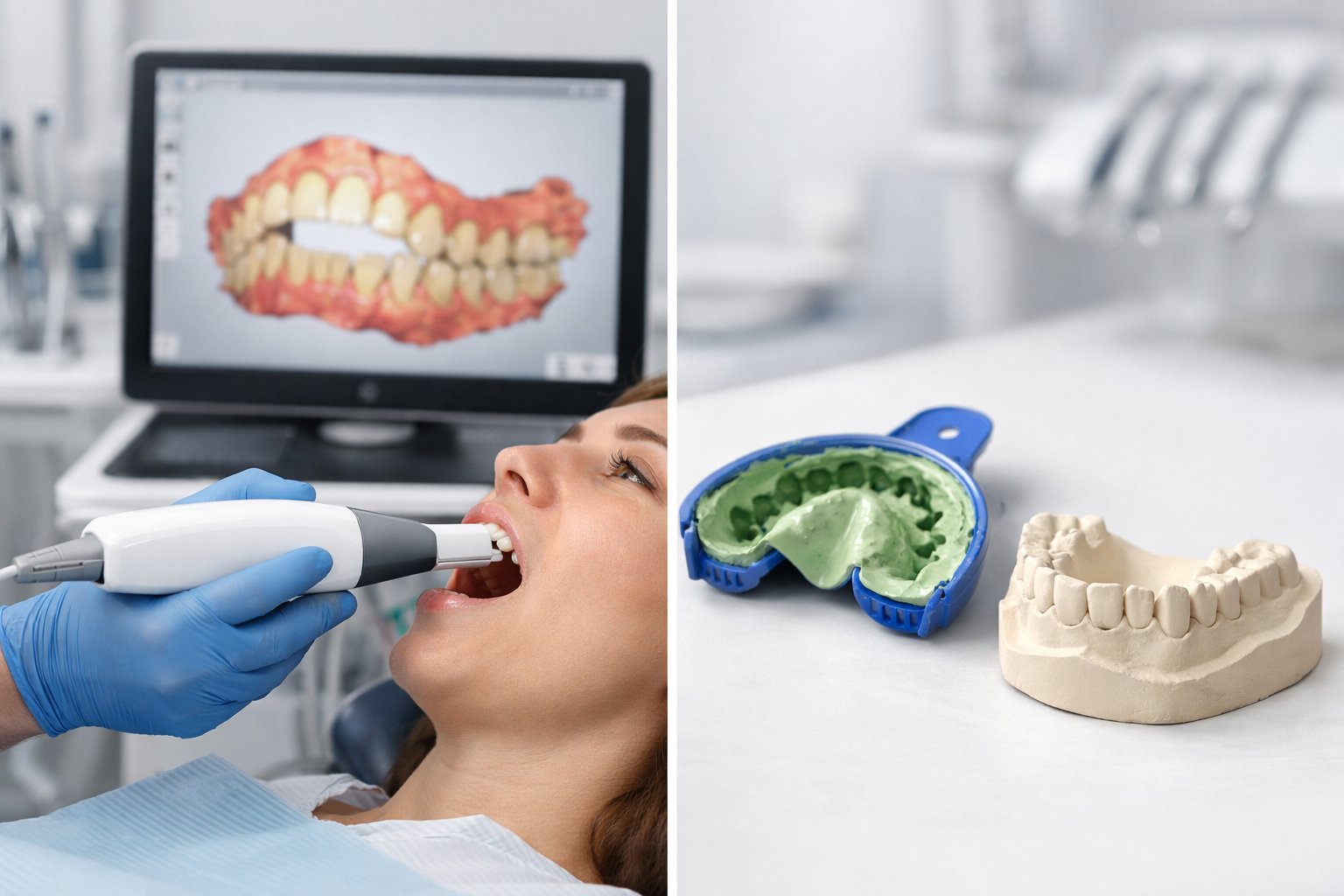
Digital impressions use optical scanning technology to capture teeth. Traditional molds use impression materials and trays to create a physical replica of your mouth.
How Digital Impressions Work
We use an intraoral scanner, a small wand, to capture digital impressions of your teeth and gums. The scanner takes thousands of photos per second using optical technology.
The scanner projects light onto your teeth, and cameras capture the reflected patterns. Software processes these images to build a 3D model of your mouth in real time.
You can watch the digital scan appear on a computer screen during the process. The entire scan usually takes 5 to 15 minutes.
If we miss any areas, the software highlights them so we can rescan immediately. We send the digital file to a dental lab instantly through secure connections.
We also store digital scans in your patient records for future reference.
How Traditional Molds Are Taken
We select an impression tray that fits your mouth. Then we mix impression material, such as alginate or polyvinyl siloxane, and load it into the tray.
You bite down on the filled tray and hold it steady for several minutes while the material sets. Staying still is important for capturing accurate details.
After the material hardens, we remove the tray to create a negative mold of your teeth and gums. We ship this physical mold to a dental lab for further work.
Traditional impressions can cause gagging due to the material’s bulk and taste.
Technologies Behind Digital and Conventional Methods
Digital scanning uses optical cameras to capture surface details. LED or laser light sources provide illumination.
Processing software stitches images into 3D models. Color sensors record tooth shades.
Traditional methods rely on chemistry-based materials. Alginate sets through a chemical reaction with water.
Polyvinyl siloxane and polyether cure when two components mix. These materials set through chemical processes.
Digital impressions create files we can edit, share, and store electronically. Traditional molds are physical objects that may break or distort over time.
Dental labs need different equipment based on the type of impression they receive.
Comparative Analysis: Accuracy, Comfort, and Workflow
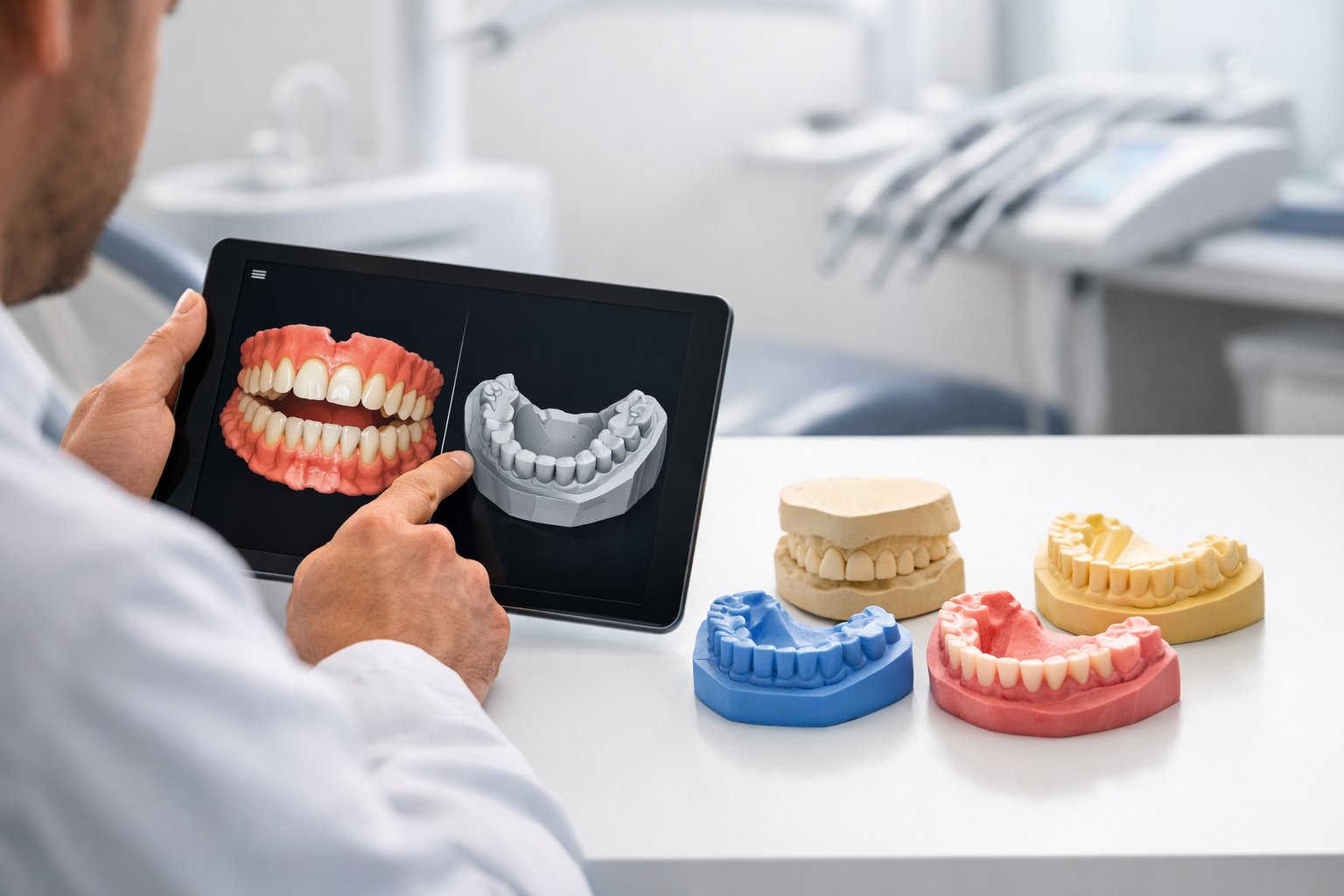
Digital impressions capture more precise measurements than traditional molds. Patients also feel less discomfort during digital scanning.
Clinical workflows become faster and more efficient with digital systems.
Impression Accuracy and Precision
Digital scanners capture measurements within 20-50 microns of accuracy. Traditional molds usually achieve 50-100 microns of precision.
This difference matters when creating crowns, bridges, and orthodontic appliances. We see fewer remakes with digital impressions because we can spot errors in real time.
With traditional molds, the lab may only find problems after processing the impression. Material distortion can occur during setting and shipping with traditional methods.
Temperature changes and pressure can alter the shape of a traditional mold. Digital files do not degrade or change during transmission.
Key Accuracy Factors:
- Digital: Real-time verification, no material distortion, consistent quality
- Traditional: Material shrinkage, possible air bubbles, handling errors
Patient Comfort and Experience
Most patients prefer digital scanning. The scanner wand moves around your mouth without triggering the gag reflex.
Traditional trays filled with material often cause gagging and discomfort. We complete digital scans in 3-5 minutes per arch.
Patients can breathe normally and take breaks if needed. Traditional impressions require holding still for 5-7 minutes while the material sets.
Digital technology removes unpleasant tastes from impression materials. Patients with strong gag reflexes or anxiety usually find scanning easier.
Speed and Clinical Efficiency
Digital impressions remove several workflow steps. We send files to the dental lab instantly through secure networks.
Traditional molds need disinfection, packaging, and shipping. Digital cases reach the lab within minutes, while traditional cases take days.
Labs start fabrication immediately after receiving digital files. We save chair time by skipping material mixing and waiting for it to set.
We can store digital records indefinitely without using physical storage space.
Applications and Clinical Considerations
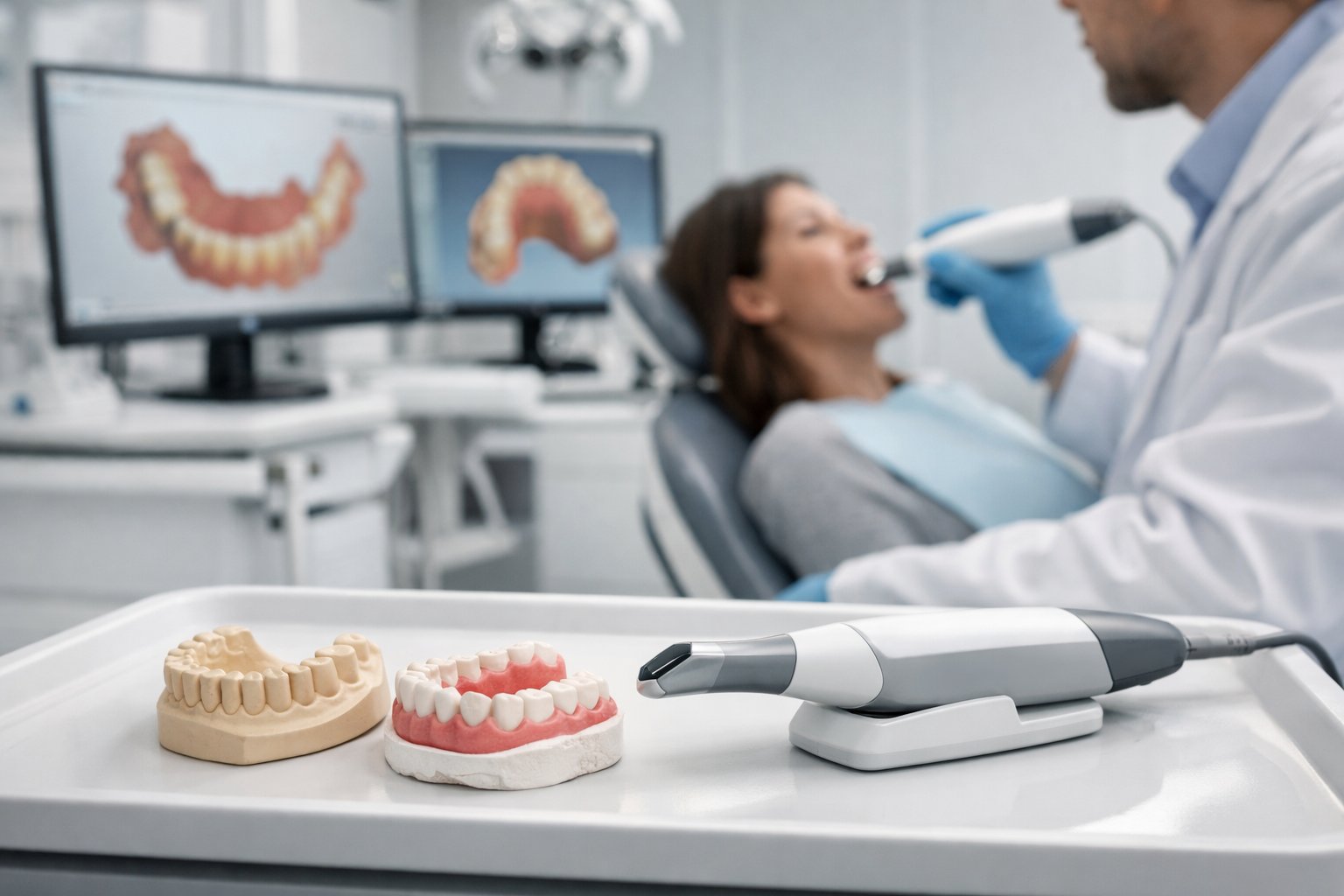
Digital impressions have changed how we approach dental procedures, from simple crowns to complex implants. Each specialty has unique benefits and challenges when choosing between digital scanning and traditional molds.
Restorative and Cosmetic Dentistry
Digital impressions work well for single crowns, bridges, and veneers. The scanners capture tooth details and margins with high accuracy.
We use these scans with CAD/CAM systems to design and mill restorations in a single visit or send them to labs digitally. Digital workflows reduce the chance of distortion that can happen with impression materials.
Scans show subgingival margins clearly if we manage tissue properly. For veneers, digital impressions let patients preview results virtually.
Scans also preserve the original tooth structure digitally for future reference. Large cases like full-mouth reconstructions require careful scanner selection, since some scanners are less accurate over bigger spans.
Implantology and Prosthodontics
Digital impressions streamline implant workflows. We capture implant positions using scan bodies attached to implants or abutments.
Software translates these positions into precise 3D coordinates for designing restorations. Virtual planning software uses digital scans to plan implant placement before surgery.
We assess bone volume, design surgical guides, and predict final restoration positions. This improves accuracy and reduces surgical risks.
For denture cases, digital impressions have some limits. Complete dentures still often require traditional methods to capture functional movements.
We use digital scans for implant-supported overdentures where precise implant positions are needed.K
Clear Aligners and Orthodontics
Clear aligner therapy relies on digital impressions. We scan teeth and use software to plan tooth movements virtually.
Digital models generate a series of aligners that gradually shift teeth. Traditional molds can distort, cause gagging, and require storage space.
Digital scans avoid these problems and let us simulate outcomes before starting treatment. We can monitor progress by taking new scans and comparing them to the original.
This helps us track if teeth are moving as planned.
Case Selection and Limitations
Not every case works with digital impressions. Deep subgingival margins, heavy bleeding, or too much saliva can block clear images.
Traditional molds might work better in these cases because impression materials displace fluids. Patients with limited mouth opening or strong gag reflexes often prefer digital scanning.
The scanner wand is smaller and requires less time in the mouth. Some patients with braces or temporary restorations can be harder to scan.
Best uses for digital impressions:
- Single or multi-unit crowns and bridges
- Implant-supported restorations
- Orthodontic treatment planning
- Diagnostic models and study casts
Better uses for traditional molds:
- Complete denture impressions needing functional borders
- Cases with excessive moisture or bleeding
- When digital equipment is unavailable
Digital Impression Technology: Integration, Costs, and Future Trends
Digital impression technology connects directly with design software and lab workflows. Costs vary based on scanner type and practice volume.
New advances in artificial intelligence and sensor technology continue to improve speed and accuracy.
Integration with CAD/CAM and Dental Labs
Digital impression technology works with computer-aided design and manufacturing systems. When we capture a scan, the data transfers to CAD software within minutes.
In-office milling units use these digital files to produce restorations the same day. This can eliminate the wait for lab work.
We also send digital files to dental labs through secure cloud platforms. Technicians design and fabricate restorations using the precise measurements from our scans.
Scanners and design software now use standard file formats like STL or PLY. Labs benefit from receiving digital impressions that do not degrade over time.
Cost Factors and Accessibility
Initial scanner purchases range from $15,000 to $40,000, depending on brand and features. Systems with faster speeds and larger scan areas cost more.
Annual software licensing fees range from $1,500 to $3,000. Some manufacturers charge per scan, which suits practices with fewer patients.
Maintenance contracts add $500 to $2,000 each year. Smaller practices may find these costs high at first.
Over time, practices save money by eliminating impression material purchases and reducing remakes. Busy practices usually break even within two to three years.
Advancements and Emerging Technologies
New dental technology focuses on faster processing and smaller scanner wands. Some models capture full-arch scans in under 60 seconds.
Artificial intelligence now helps detect preparation margins automatically and flags scanning errors in real time. Some scanners add color imaging to capture soft tissue details and match tooth shades.
Emerging scanners combine features like caries detection and gingival analysis during routine scans. Wireless scanner models are expected to become standard soon, improving comfort and ergonomics.
Frequently Asked Questions
Digital impressions use intraoral scanners to create 3D images of teeth. Traditional methods rely on putty-like materials placed in trays.
Digital systems cost more upfront but save time. Each approach has specific advantages depending on the situation.
How do digital dental impressions differ from traditional impression methods?
We capture digital impressions by moving a small handheld scanner around inside the mouth. The scanner takes thousands of photos per second and creates a 3D computer model.
Traditional impressions use a tray filled with impression material. Patients bite into the tray for several minutes.
The digital process feels more comfortable because there’s no bulky tray or sticky material. We can see scan results immediately on a screen and retake specific areas if needed.
With traditional molds, we wait for the material to set. Then we send the physical impression to a dental lab.
What are the benefits of using digital scanners for dental impressions?
Digital scanners remove the gagging and discomfort many patients feel with traditional materials. We can complete scans faster, often in just a few minutes per arch.
We transfer digital files instantly to labs, speeding up the creation of crowns, bridges, and aligners. These scanners let us show patients exactly what we see during the appointment.
We can zoom in on specific teeth and explain treatment plans more clearly. Digital files do not degrade or get damaged like physical molds can during shipping or storage.
What are the cost implications when opting for digital impressions over traditional molds?
Digital impression systems cost between $20,000 and $40,000 to purchase. We also pay annual software licensing fees and maintenance costs.
Traditional impression materials cost only a few dollars per patient. Over time, digital systems can save money by reducing retakes and eliminating shipping costs for physical molds.
We save on storage space since digital files stay on computers instead of shelves. For practices that take many impressions each week, the efficiency gains often justify the higher upfront investment.
Are there any drawbacks or limitations to digital impressions in dentistry?
Digital scanners have trouble capturing clear images if moisture or blood is present. We need to keep the area dry during scanning.
Some scanner models struggle to capture images below the gum line or in hard-to-reach areas. Dental staff need training to use the technology effectively.
Learning to position the scanner and recognize good scan quality takes practice. Traditional impressions work in situations where digital scanners can’t access certain areas or when patients cannot keep their mouth open for long periods.
How accurate are digital impressions compared to traditional impression techniques?
Digital impressions achieve accuracy within 20 to 50 microns for most intraoral scanners. Traditional impressions using polyvinyl siloxane materials reach similar accuracy levels of 25 to 50 microns.
The accuracy of traditional impressions depends on proper technique and material handling. Errors can happen if the material sets too quickly, traps air bubbles, or gets distorted during removal.
Digital scans maintain consistent accuracy if we follow proper scanning protocols and keep the area dry.
Can you explain the different types of trays used for taking dental impressions?
Stock trays come in pre-made sizes. We choose small, medium, or large trays based on the patient’s mouth.
These trays are disposable. We can use them immediately.
Custom trays are made for each patient’s mouth using a preliminary impression or digital scan.
We create these trays from acrylic materials in our lab. Custom trays fit precisely and often give more accurate impressions, especially for complete dentures or complex cases.
Triple trays capture both upper and lower teeth at the same time, along with the bite.
We use triple trays mainly for crown and bridge work. They save time by recording several details in one impression.
📞 Contact Kaufman Dentistry Today
Give us a call at (310) 838-7780 to schedule your appointment and take the first step towards a stunning smile.
You can find us at 10760 Washington Blvd., Culver City, CA 90232. We look forward to welcoming you to our practice and helping you achieve the smile of your dreams!