
The Link Between Oral Health and Alzheimer’s Disease
Your mouth connects to your brain in ways you might not expect. Scientists have found that poor oral health can increase the risk of developing Alzheimer’s disease.
This connection means brushing and flossing your teeth might do more than prevent cavities.
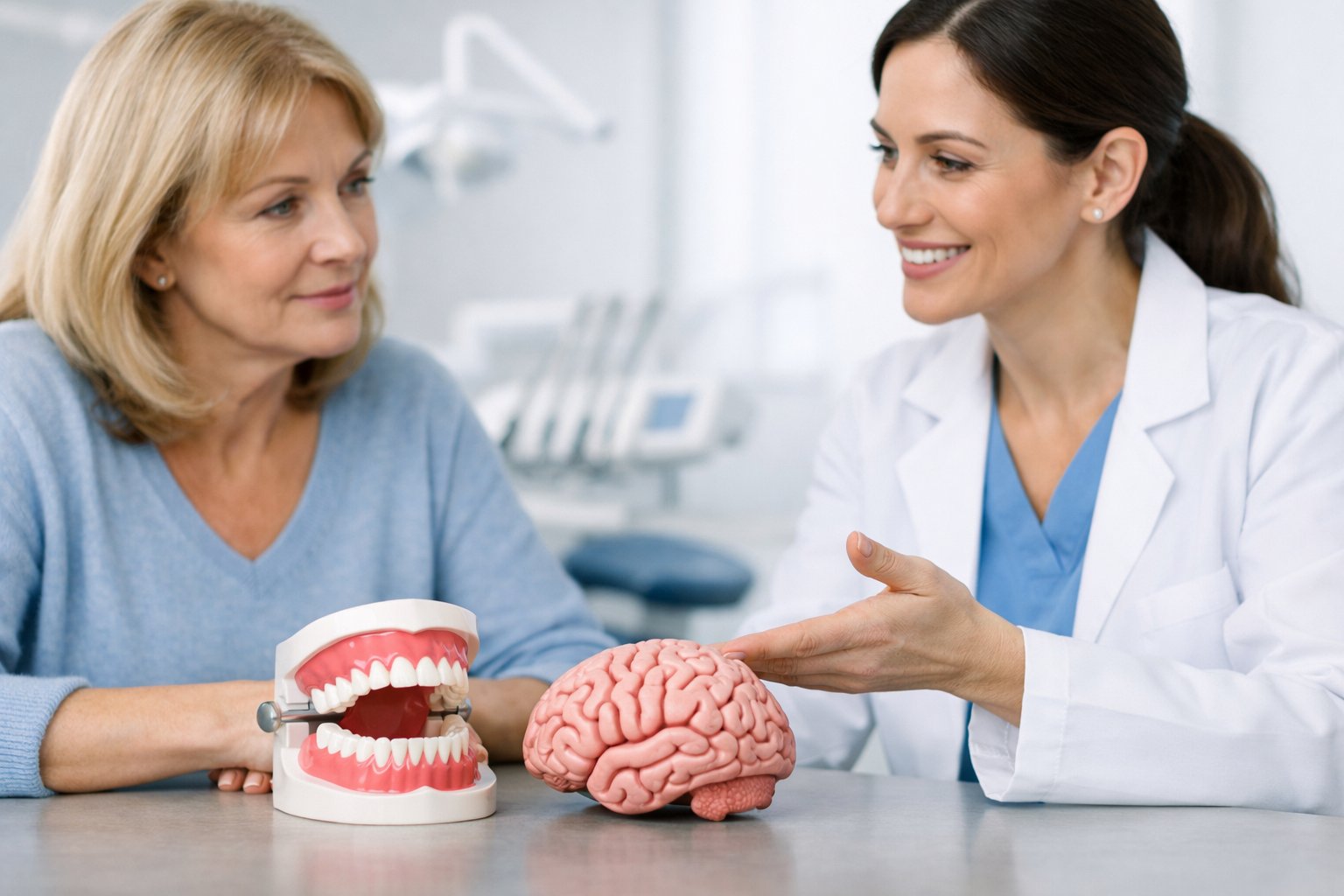
Bacteria from gum disease can travel to the brain and may contribute to the inflammation and damage seen in Alzheimer’s disease. The link between what happens in our mouths and what happens in our brains is stronger than most people realize.
Understanding this connection helps us take better care of both our teeth and our minds. Oral health is not separate from the rest of our body’s health.
The bacteria and inflammation in our gums can affect our blood vessels and organs, including our brain. Taking care of our teeth might help protect us from cognitive decline as we age.
Key Takeaways
- Poor oral health and gum disease may increase the risk of developing Alzheimer’s disease and dementia
- Bacteria from mouth infections can reach the brain and cause inflammation that damages brain cells
- Maintaining good oral hygiene through regular brushing, flossing, and dental visits may help protect cognitive health
Mechanisms Linking Oral Health and Alzheimer’s Disease
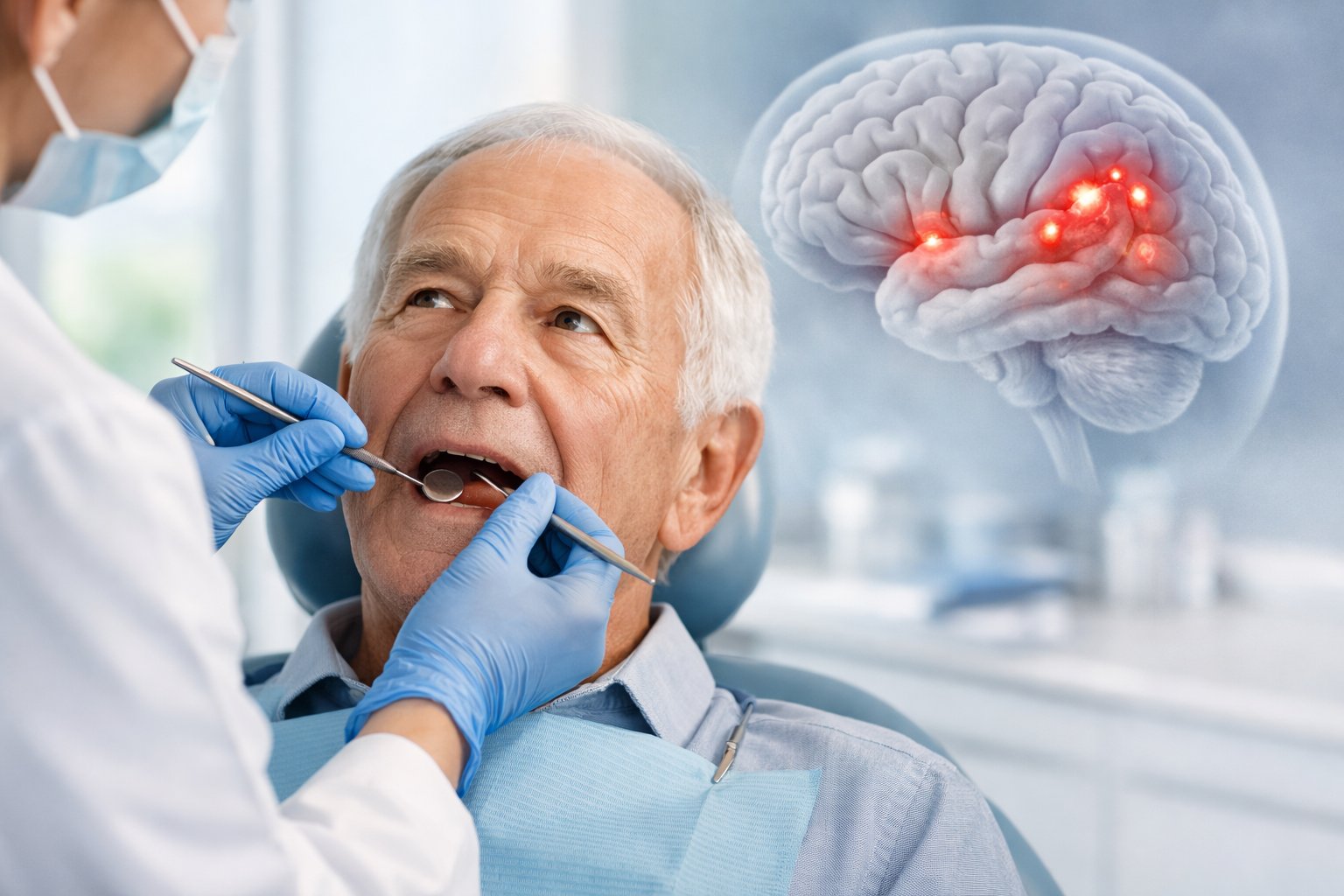
Scientists have identified several biological pathways through which oral infections may contribute to brain changes seen in Alzheimer’s disease. These mechanisms involve bacterial invasion, body-wide inflammation, breakdown of protective barriers in the brain, and direct communication between the mouth and nervous system.
Neuroinflammation and Systemic Inflammation
Periodontal disease triggers inflammation that extends beyond the mouth. Oral bacteria form biofilm on teeth and gums and release harmful substances called lipopolysaccharides that enter the bloodstream.
This process activates the immune system and causes inflammation throughout the body. The inflammation produces signaling molecules such as IL-6, IL-1β, and TNF-α.
These inflammatory markers travel through the blood and can reach the brain. Once these molecules cross into brain tissue, they trigger microglial activation.
Microglia are the brain’s immune cells, and when constantly activated, they damage neurons instead of protecting them. People with severe periodontal disease have higher levels of these inflammatory markers in their blood.
This chronic inflammatory state creates an environment that may speed up the development of Alzheimer’s disease.
Oral Pathogens and Bacterial Invasion
Specific oral bacteria have been found in the brains of people with Alzheimer’s disease. Porphyromonas gingivalis is the most studied periodontal pathogen linked to brain infection.
This bacterium produces toxic enzymes called gingipains that destroy tissue and help the bacteria spread. Researchers have detected P. gingivalis DNA and gingipains in brain tissue from Alzheimer’s patients.
Other periodontal pathogens like Fusobacterium nucleatum and Treponema denticola have also been found in affected brain regions. These oral bacteria can enter the bloodstream through damaged gum tissue during chewing or brushing.
From there, they travel to various organs, including the brain. The presence of these periodontal pathogens in brain tissue suggests they may directly contribute to neurodegeneration.
Blood–Brain Barrier Disruption
The blood–brain barrier normally protects our brain from harmful substances and pathogens in the bloodstream. Chronic periodontal disease can weaken this protective barrier.
Inflammatory molecules from oral infections damage the cells that form the blood–brain barrier. This damage creates gaps that allow bacteria and toxins to enter brain tissue.
Lipopolysaccharides from oral bacteria directly harm the barrier’s structure. Once the barrier is compromised, it cannot effectively filter out periodontal pathogens or inflammatory markers.
This breakdown explains how oral bacteria gain access to the brain and establish infections that may trigger Alzheimer’s-related changes.
Oral–Brain Axis Communication
The oral–brain axis is a two-way communication system between the oral microbiome and the central nervous system. This pathway involves blood circulation, nerve connections, and immune signaling.
Our oral microbiome contains hundreds of bacterial species that can influence brain health. When periodontal disease disrupts the balance of oral bacteria, harmful species dominate and produce toxins that affect neuroinflammatory pathways.
The trigeminal nerve, which connects directly from the mouth to the brain, may serve as a route for bacterial spread. Changes in the oral microbiome also affect the types of inflammatory signals sent to the brain, which may influence cognitive function over time.
The Impact of Oral Diseases on Alzheimer’s Disease Risk

Poor oral health may increase the chances of developing Alzheimer’s disease. Conditions like periodontitis, chronic gum disease, and tooth loss have direct links to cognitive decline and dementia risk.
Periodontitis and Cognitive Impairment
Periodontitis is a serious gum infection that damages the soft tissue and bone supporting our teeth. When we have periodontitis, bacteria from periodontal pockets can enter our bloodstream and potentially reach the brain.
Studies show that people with chronic gum disease face a higher risk of mild cognitive impairment. The bacteria Porphyromonas gingivalis, commonly found in periodontal pockets, has been detected in the brains of Alzheimer’s patients.
This suggests a direct pathway between oral infection and brain health. We measure periodontitis severity through pocket probing depth and clinical attachment loss.
Deeper pockets (over 4mm) indicate more severe disease. Research found that individuals with pocket probing depth greater than 5mm showed faster cognitive decline over time.
The relationship between oral health and cognitive function becomes clearer when we look at markers like gingival inflammation and gingival bleeding, which signal active infection.
Gum Disease and Dementia Risk
Gum disease creates ongoing inflammation in our bodies. This chronic inflammation may trigger changes in the brain that lead to dementia.
A 2020 study found that people with gum disease for 10 or more years had a 70% higher risk of developing Alzheimer’s disease. The gingival index, which measures gum health, can predict dementia risk.
Higher scores on the gingival index indicate worse gum health and greater inflammation. Chronic gum disease also causes attachment loss, where gums pull away from teeth.
Greater attachment loss correlates with lower cognitive test scores. We see similar patterns with other oral conditions like oral lesions, oral mucosal lesions, and stomatitis, though the evidence is strongest for periodontal disease.
Tooth Loss and Neurodegeneration
Tooth loss often results from untreated gum disease or dental caries. People with more missing teeth show higher rates of cognitive decline.
Edentulism, the complete loss of teeth, carries the highest risk. Individuals with no teeth have a 48% higher chance of developing dementia compared to those with 20 or more teeth.
Each missing tooth increases our risk by about 1.4%. Tooth loss reduces our ability to chew properly, which affects brain stimulation and blood flow.
Missing teeth also indicate long-term oral infection and inflammation. Conditions like candidiasis and xerostomia become more common with tooth loss, creating additional oral health challenges that may impact brain health.
Biological Pathways and Markers in the Oral Health–Alzheimer’s Connection

Bacteria from gum disease can enter the bloodstream and trigger brain changes linked to Alzheimer’s. These changes involve the buildup of harmful proteins, increased inflammation, and measurable markers we can detect in saliva.
Amyloid-Beta and Plaque Formation
Oral bacteria, especially Porphyromonas gingivalis from gum disease, can travel to the brain and trigger amyloid-beta production. Amyloid-β builds up into sticky plaques between brain cells, which is a main sign of Alzheimer’s disease.
People with chronic periodontitis have higher levels of Aβ42 compared to those with healthy gums. This specific form of amyloid-beta is especially toxic to brain cells.
The bacteria release enzymes called gingipains that damage brain tissue and speed up plaque formation. Oral pathogens can be found in the brain tissue of Alzheimer’s patients.
The immune response to these bacteria causes more amyloid-β to form as a defense, but this creates a harmful cycle that damages neurons over time.
Tau Protein Hyperphosphorylation
Inflammation from oral infections affects tau protein inside brain cells. When tau undergoes hyperphosphorylation, it detaches from cell structures and clumps together to form neurofibrillary tangles.
These tangles prevent nutrients and signals from moving through brain cells properly. Tau protein hyperphosphorylation happens when extra phosphate groups attach to the tau molecule.
Chronic gum inflammation increases the enzymes responsible for this process. The presence of oral bacteria in the brain activates pathways that lead to tau phosphorylation.
People with severe periodontal disease have higher levels of phosphorylated tau in their spinal fluid, which indicates active brain damage.
Inflammatory Mediators and Cytokines
Gum disease causes the body to release inflammatory cytokines that travel throughout the bloodstream. These include IL-1β, IL-6, and TNF-α, which can cross into the brain and damage neurons.
We measure CRP (C-reactive protein) levels to assess overall inflammation in the body. People with periodontitis often have elevated CRP, which correlates with cognitive decline.
These inflammatory mediators activate brain cells called microglia, which then release more damaging substances.
Key inflammatory markers linked to both conditions:
- IL-1β – Promotes amyloid plaque formation
- IL-6 – Increases tau phosphorylation
- TNF-α – Damages blood-brain barrier
- CRP – Indicates systemic inflammation levels
Lower BDNF (brain-derived neurotrophic factor) levels also occur with chronic oral inflammation. BDNF helps brain cells survive and form new connections, so reduced levels speed up cognitive decline.
Role of the Oral Microbiome and Biomarkers
We can now detect salivary biomarkers that indicate both oral disease and Alzheimer’s risk. Saliva contains bacteria, proteins, and immune markers that reflect what’s happening in the mouth and possibly the brain.
The DMFT index (decayed, missing, filled teeth) helps us measure oral health status and matches with cognitive function in older adults. Higher DMFT scores often match up with increased dementia risk.
Salivary biomarkers include amyloid-beta, tau proteins, and inflammatory molecules that appear before brain symptoms develop. Specific bacteria ratios in the mouth serve as warning signs.
An imbalance favoring harmful bacteria like P. gingivalis and Treponema denticola indicates higher Alzheimer’s risk. We can test saliva for these pathogens along with inflammatory markers to assess a person’s risk profile.
Prevention, Clinical Implications, and Future Directions
Maintaining good oral hygiene may help reduce dementia risk. Targeted periodontal therapy may slow cognitive decline.
Assessing oral health in dementia patients requires specialized approaches that account for declining self-care abilities.
Oral Hygiene and Cognitive Health
Daily oral care practices directly impact brain health. Brushing twice daily and interdental cleaning remove bacterial biofilms before they trigger inflammatory responses.
Regular oral hygiene reduces the bacterial load in the mouth by up to 70%. This reduction limits the spread of pathogens like P. gingivalis to the brain and digestive system.
When we keep our teeth and gums clean, we also protect the gut microbiota from oral bacterial invasion.
Key preventive practices include:
- Brushing for two minutes twice daily
- Daily flossing or interdental brushing
- Antimicrobial mouth rinses for high-risk individuals
- Professional cleanings every six months
People who maintain consistent oral care routines have a 23% lower risk of dementia over 20 years.
Periodontal Treatment Strategies
Scaling and root planing remove subgingival bacteria and lower systemic inflammation markers. This therapy uses deep cleaning below the gum line to eliminate infection sources.
Researchers found that periodontal treatment slows cognitive decline in patients compared to those who do not receive treatment. After treatment, inflammatory cytokines drop within weeks.
Dentists measure improvements by checking for less bleeding on probing and shallower pocket depths. In advanced cases, dentists may recommend surgery, antibiotics, or both.
Proper dental prostheses help patients chew efficiently. Missing teeth or poorly fitting dentures can make chewing difficult and are linked to faster cognitive decline.
Treatment priorities include:
- Aggressive management of active periodontal disease
- Restoration of mastication through appropriate dentures
- Regular monitoring of oral health-related quality of life
- Coordination between dental and medical providers
Oral Health Assessment in Dementia Care
Staff should use routine oral health assessment protocols in dementia care settings. Many patients with cognitive impairment cannot report dental pain or perform oral care on their own.
Caregivers need to check for periodontal disease, dental decay, and denture fit each week. Studies show that 68% of dementia patients have untreated oral health problems.
These oral health issues can worsen nutrition and increase behavioral symptoms. Modified assessment tools help account for patient cooperation challenges.
Caregivers use visual inspections, gentle palpation, and watch eating patterns to spot problems. Training nursing staff in basic oral screening improves detection rates by 40%.
Dental professionals should visit homes or care facilities every three months to evaluate oral health. These visits help prevent emergencies and keep patients comfortable.
Adapting care techniques to each patient’s cognitive level improves treatment success.
Frequently Asked Questions
Research shows that bacteria from gum disease can travel to the brain and trigger inflammation. Studies have found oral pathogens in the brain tissue of Alzheimer’s patients.
How does gum disease potentially affect the development of Alzheimer’s?
Gum disease causes chronic inflammation in the mouth. This inflammation can spread to other parts of the body, including the brain.
When gum disease continues, harmful bacteria enter the bloodstream through bleeding gums. These bacteria can cross the blood-brain barrier and reach brain tissue.
The immune system reacts to these bacteria by creating inflammation in the brain. Over time, this ongoing inflammation may damage neurons and contribute to Alzheimer’s disease.
What recent studies suggest about the connection between oral health and dementia?
Recent studies link poor oral health to cognitive decline. A 2023 study found that people with severe gum disease had a 22% higher risk of developing Alzheimer’s compared to those with healthy gums.
Researchers discovered Porphyromonas gingivalis, a bacterium that causes gum disease, in the brains of deceased Alzheimer’s patients. Higher concentrations of bacterial toxins were found in patients with more severe dementia.
A 2024 study tracked 8,000 adults over 20 years. Those who lost more teeth due to gum disease experienced faster memory decline.
Can improving oral hygiene reduce the risk of Alzheimer’s disease?
Maintaining good oral hygiene may help lower the risk of Alzheimer’s. Regular brushing and flossing reduce harmful bacteria in the mouth.
People who visit the dentist regularly for cleanings and treatment have lower levels of inflammation markers in their blood. These markers are linked to Alzheimer’s disease progression.
Treating gum disease early can slow cognitive decline in some patients. One study showed that people who received gum disease treatment kept better memory scores over three years compared to those who did not get treatment.
What are the biological mechanisms linking poor oral health to Alzheimer’s?
Bacteria and inflammation can move from the mouth to the brain. When gums are diseased, bacteria release toxins that enter the bloodstream.
These toxins trigger the production of inflammatory proteins called cytokines. Cytokines travel throughout the body and can reach the brain, where they activate immune cells called microglia.
Activated microglia release chemicals that damage neurons. This damage contributes to the formation of amyloid plaques and tau tangles, which are hallmarks of Alzheimer’s disease.
Bacteria can also invade brain tissue directly. Once inside, they cause more inflammation and may disrupt normal brain cell function.
How does the presence of oral bacteria relate to Alzheimer’s disease pathology?
Scientists have found DNA from oral bacteria in the brain tissue of Alzheimer’s patients. Porphyromonas gingivalis, which causes severe gum disease, is the most common bacterium found.
This bacterium produces toxic enzymes called gingipains. Researchers have identified gingipains in over 90% of brain samples from Alzheimer’s patients in recent studies.
These bacterial enzymes damage tau proteins in brain cells. Damaged tau proteins clump together and form tangles that disrupt cell function and lead to cell death.
Higher amounts of gingipains in brain tissue are linked to more severe Alzheimer’s symptoms. Patients with more of these enzymes showed worse dementia.
Are there preventative oral health measures that can mitigate the risk of developing dementia?
Brush your teeth twice daily with fluoride toothpaste and floss once per day. These habits remove the bacteria that cause gum disease.
Visit your dentist every six months for regular checkups. Dentists can catch and treat gum disease early.
Professional cleanings remove tartar that brushing cannot eliminate. People with gum disease should seek treatment promptly.
Dentists may use deep cleanings, antibiotics, or other procedures to control infection and reduce inflammation.
Use an antimicrobial mouthwash for extra protection against harmful oral bacteria. Choose products with chlorhexidine or essential oils if you are at higher risk of gum disease.
Avoid smoking, as tobacco use increases the risk of both gum disease and dementia. Eat a healthy diet low in sugar to help prevent tooth decay and gum problems.
📞 Contact Kaufman Dentistry Today
Give us a call at (310) 838-7780 to schedule your appointment and take the first step towards a stunning smile.
You can find us at 10760 Washington Blvd., Culver City, CA 90232. We look forward to welcoming you to our practice and helping you achieve the smile of your dreams!