
What to Do About a Gummy Smile
A gummy smile happens when more than 3-4 millimeters of gum tissue shows above your upper teeth when you smile.
This condition, also called excessive gingival display, affects how people feel about their smile and can make some feel self-conscious in social situations.
Many people don’t realize that several effective treatments can address this common concern.

Dentists can treat a gummy smile with options ranging from simple Botox injections to surgical procedures, depending on what causes your excessive gum display.
The right treatment depends on factors like your jaw structure, tooth length, lip movement, and how much gum tissue shows when you smile.
Understanding what causes your gummy smile is the first step toward finding the best solution.
We’ll walk you through the main causes, how doctors diagnose the condition, and which treatments work best for different situations.
Key Takeaways
- A gummy smile shows more than 3-4 millimeters of gum tissue above your teeth when you smile.
- Treatment options range from non-surgical methods like Botox to surgical procedures depending on the cause.
- Getting a proper diagnosis helps determine which treatment will work best for your specific situation.
Understanding a Gummy Smile: Definition and Impact

A gummy smile occurs when too much gum tissue shows above the upper teeth when smiling.
This condition can affect how people view their appearance and influence their confidence in social situations.
How to Identify a Gummy Smile
We can identify a gummy smile by looking at how much gum tissue appears when someone smiles fully.
Most dental experts consider it a gummy smile when more than 3-4 millimeters of gum tissue shows above the upper front teeth.
The gum-to-tooth ratio plays a key role in this assessment.
In a typical smile, the upper lip rests at or slightly above the gum line.
When excessive gum display occurs, the upper lip pulls back too far and reveals a large portion of the gums.
We measure gingival display from where the lip sits to where the tooth begins.
Some people show just a small amount of extra gum tissue, while others display significantly more.
The amount of gum visible can vary based on how wide someone smiles or laughs.
Dentists and orthodontists use specific measurements during evaluations.
They look at the position of the upper lip at rest and during a full smile to determine the extent of gum exposure.
The Impact on Self-Esteem and Quality of Life
Excessive gum display can affect how people feel about themselves.
Many individuals with gummy smiles report feeling self-conscious when they smile or laugh in public.
Some patients cover their mouths when they smile or avoid smiling in photos.
This behavior can limit their ability to express joy and connect with others naturally.
Their self-esteem often suffers because they worry about how others perceive their appearance.
Social situations can become stressful for those with gummy smiles.
Some people avoid activities like public speaking or dating because of their concerns.
The emotional impact can affect personal relationships and professional opportunities.
Research shows that people who feel unhappy with their smiles are less likely to smile freely.
This restriction can make them appear less friendly or approachable to others.
Who Is Most Affected by Gummy Smiles
Gummy smiles affect people of all ages and backgrounds.
However, they appear more commonly in women than men.
Studies suggest that about 10-15% of the general population has some degree of excessive gum display.
Young adults often seek treatment for gummy smiles as they become more aware of their appearance.
Women in their 20s and 30s make up a large portion of patients who pursue correction options.
Certain facial and dental characteristics increase the likelihood of developing a gummy smile.
These include a short or hyperactive upper lip, excess gum tissue, small teeth, or particular jaw development patterns.
Genetics also play a role, as gummy smiles can run in families.
Causes of a Gummy Smile
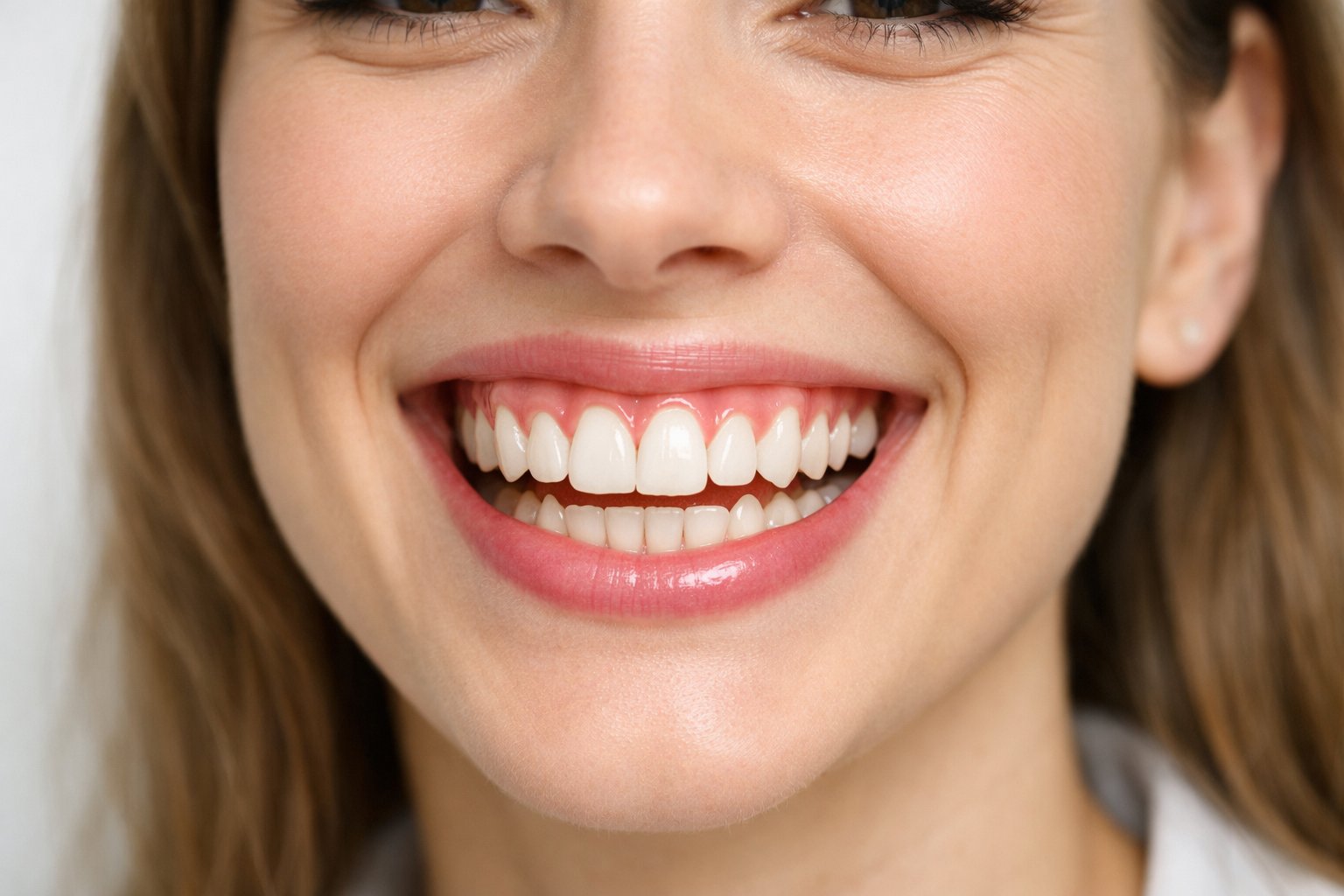
A gummy smile happens when too much gum tissue shows above the upper teeth when smiling.
This can result from excess gum tissue, how teeth grow in, lip movement, or jaw structure.
Excess Gum Tissue and Gingival Overgrowth
Excessive gum tissue is one of the main causes of gummy smiles.
Gingival hyperplasia occurs when the gums grow larger than normal and cover more of the teeth.
Several factors can lead to gingival overgrowth.
Certain medications, including phenytoin (for seizures), immunosuppressants like cyclosporine, and some blood pressure medications, cause the gums to enlarge.
Gum enlargement can also result from gum disease and periodontal disease.
Gum inflammation from plaque buildup can make the problem worse.
Poor oral hygiene allows bacteria to irritate the gums, causing them to swell and grow.
When gums stay inflamed for long periods, the tissue can permanently enlarge.
Some people naturally have more gum tissue covering their teeth, which creates the appearance of shorter teeth even when the teeth are normal size.
Abnormal Tooth Eruption and Tooth Size
How teeth emerge from the gums affects how much gum tissue shows when smiling.
Altered passive eruption happens when teeth don’t fully emerge from the gum line during tooth eruption.
The teeth may be normal size, but excess gum and bone tissue cover them.
Dentoalveolar extrusion occurs when the teeth and the bone that holds them sit too far down.
This makes the gums appear more prominent when smiling.
Small teeth or short teeth can also contribute to a gummy appearance.
When teeth are shorter than average, more gum tissue shows in proportion to the teeth.
The teeth themselves may be properly positioned, but their size creates an imbalance with the surrounding gums.
Lip Anatomy and Movement Factors
The upper lip plays a major role in how much gum we see.
A short upper lip doesn’t cover as much of the gums when smiling, revealing more gum tissue.
A hyperactive upper lip moves too far upward when smiling.
The muscles that lift the lip, called the levator labii superioris and levator labii superioris alaeque nasi, can pull the lip higher than normal.
This exposes more gum tissue even when the teeth and gums are properly proportioned.
We measure lip length and movement to understand how much these factors contribute.
Some people have both a short lip and excessive lip movement, which makes the gummy appearance more noticeable.
Jaw Development and Skeletal Causes
Jaw development issues often cause gummy smiles.
Vertical maxillary excess (VME) is the most common skeletal cause.
This condition involves overgrowth of the upper jaw, where the maxilla (upper jaw bone) grows too long vertically.
When the upper jaw is too long, it pushes the gums and teeth downward.
This creates excess gum display even when the teeth, gums, and lips are otherwise normal.
VME can range from mild to severe.
The position and growth pattern of the jaw bones develop during childhood and teenage years.
Genetics play a strong role in determining jaw size and shape.
Diagnosis and Evaluation

A dentist examines several measurements and relationships between your gums, teeth, and lips to determine what causes excessive gingival display.
These assessments help identify whether the issue stems from your gums, teeth, jaw, or lip muscles.
Dental Examination and Measurements
During your visit to a dental clinic, we measure how much gum tissue shows when you smile naturally.
A gummy smile typically means more than 3-4 millimeters of gum appears above your upper teeth.
We also check your gum-to-tooth ratio.
Healthy gums should cover about 1-3 millimeters of each tooth’s crown.
If your gums cover too much of the tooth surface, your teeth look shorter than normal.
The dentist examines your oral hygiene and gum health during this process.
They look for signs of inflammation or overgrowth that might contribute to excess gingival display.
We take measurements of your tooth length and width to understand if the proportions are typical.
X-rays help us see your jaw structure and tooth roots.
These images show whether your upper jaw extends too far forward or if your teeth haven’t fully emerged from the gums.
Assessing Gum, Tooth, and Lip Relationships
We observe how your upper lip moves when you smile and talk.
Some people have a hyperactive lip muscle that lifts too high and exposes more gum tissue than usual.
The distance between your nose and upper lip matters too.
A shorter distance often means your lip travels farther upward when you smile.
We measure your teeth to see if they’re shorter than average, which can make gums appear more prominent even with healthy gums of normal size.
Your bite alignment gets checked as well.
We look at how your upper and lower teeth fit together and whether your jaw position affects gum visibility.
Treatment Options for Gummy Smile Correction
Dentists can address a gummy smile through several methods ranging from simple injections to surgical procedures.
The right treatment depends on what causes the excess gum display and how much correction is needed.
Non-Surgical Treatments
Botox offers a quick fix for some gummy smile cases.
We inject small amounts of botulinum toxin into the upper lip muscles to limit how high the lip rises when smiling.
This treatment works best when an overactive lip causes the gummy appearance.
The results last about three to four months.
We need to repeat the injections to maintain the effect.
Botox takes about two weeks to show full results and requires no recovery time.
Orthodontic treatment can help when teeth positioning contributes to a gummy smile.
We use braces or clear aligners to move teeth into better positions.
Sometimes we combine orthodontics with small devices called temporary anchorage devices or TADs that help move teeth more precisely.
This approach works when teeth sit too high in the gums or when jaw alignment needs adjustment.
Treatment typically takes 12 to 24 months depending on the complexity.
Gum-Focused Procedures
Crown lengthening removes excess gum tissue to expose more of the tooth surface.
We perform this gingivectomy procedure to reshape the gum line and create better proportions between teeth and gums.
Gum contouring is a periodontal procedure that sculpts the gum tissue for a more balanced smile.
We use lasers or surgical tools to carefully remove and reshape the gums.
The procedure usually requires local anesthesia and heals within one to two weeks.
These treatments provide permanent results for gummy smiles caused by excess gum tissue.
We sometimes combine them with veneers or other cosmetic dentistry options to improve tooth shape and size at the same time.
Lip Repositioning and Muscle Modification
Lip repositioning surgery limits how far the upper lip can rise during smiling.
We remove a small strip of tissue inside the mouth where the lip connects to the gums.
Then we reattach the lip in a lower position.
This lip repositioning procedure takes about an hour and we perform it under local anesthesia.
Recovery takes one to two weeks with some swelling and discomfort.
The results are permanent and reduce gum display by several millimeters.
We sometimes modify the muscles that control lip movement instead of repositioning the entire lip.
This approach gives us more control over the final result.
Surgical and Orthodontic Solutions
Jaw surgery corrects gummy smiles caused by excess vertical jaw growth. Our team performs orthognathic surgery to reposition the upper jaw bone and reduce visible gum tissue.
This option works best for severe cases related to jaw structure. The surgery uses general anesthesia and requires several months of recovery.
We often combine jaw surgery with orthodontic treatment to align the teeth after moving the jaw. This combination provides permanent results and can improve facial proportions.
Osseous surgery reshapes the bone under the gums for smile correction. We use this approach less frequently, but it provides excellent results for specific anatomical issues.
Most patients need only one surgical procedure to achieve their desired outcome.
Frequently Asked Questions
Orthodontics can correct some gummy smiles. Surgical procedures offer permanent solutions, and costs vary widely based on the chosen treatment method.
Can a gummy smile be corrected with orthodontics?
Orthodontic treatment can correct a gummy smile in certain cases. Braces or clear aligners work best when teeth positioning or jaw alignment causes the issue.
We see good results when the upper teeth have erupted too far down or when the jaw needs repositioning. The orthodontist moves the teeth upward into the bone to reduce gum visibility.
This approach takes 18 to 36 months on average. Not all gummy smiles respond to orthodontics alone, especially when excess gum tissue or lip movement is the cause.
What are the surgical options for gummy smile treatment?
Lip repositioning surgery limits how high the upper lip moves when smiling. The surgeon attaches the lip to a lower position to cover more of the gums.
Gingivectomy removes excess gum tissue to expose more of the tooth surface. We use this when extra gum tissue covers the teeth.
Jaw surgery, or orthognathic surgery, repositions the upper jaw bone. This option works for cases where the jaw has grown too long vertically.
The surgeon cuts and repositions the bone, then secures it with plates and screws.
Are there non-surgical methods to reduce a gummy smile?
Botox injections can temporarily reduce a gummy smile by relaxing the upper lip muscles. The treatment limits how high the lip rises when smiling.
Results last three to four months before we repeat the injections. Each session takes about 10 minutes and causes minimal discomfort.
Dermal fillers placed in the upper lip can add volume and reduce gum visibility. Some people combine Botox with fillers for better results.
How much does it typically cost to correct a gummy smile?
Botox treatment costs $300 to $800 per session. Repeat treatments are needed three to four times per year to maintain results.
Orthodontic treatment ranges from $3,000 to $8,000 depending on complexity. Lip repositioning surgery costs $3,000 to $5,000 on average.
Gingivectomy procedures cost $500 to $3,000 per session. Jaw surgery represents the most expensive option at $20,000 to $40,000.
Most dental insurance plans classify gummy smile correction as cosmetic and do not provide coverage. Some plans cover orthodontics or jaw surgery if we document functional problems.
What are the potential risks associated with gummy smile correction surgery?
Lip repositioning surgery can cause scarring, infection, or asymmetry. Some patients have difficulty moving their upper lip naturally after the procedure.
Gingivectomy risks include infection, uneven gum lines, and tooth sensitivity. In some cases, the gums grow back and require additional treatment.
Jaw surgery carries risks like nerve damage, infection, and blood loss. Numbness in the lip or chin can occur temporarily or permanently.
Recovery time varies by procedure. Botox requires no downtime, while jaw surgery needs six to twelve weeks for initial healing.
Do any celebrities openly advocate for or against gummy smile correction?
We have not found evidence of celebrities actively campaigning against gummy smile correction.
Some celebrities, such as Nicole Kidman and Miley Cyrus, have gummy smiles and have not publicly pursued correction.
They have spoken in interviews about embracing their natural features.
Other public figures have chosen to undergo treatment but have not made public statements about it.
📞 Contact Kaufman Dentistry Today
Give us a call at (310) 838-7780 to schedule your appointment and take the first step towards a stunning smile.
You can find us at 10760 Washington Blvd., Culver City, CA 90232. We look forward to welcoming you to our practice and helping you achieve the smile of your dreams!