
What Happens During a Dental Exam
A routine dental exam covers more than most people expect. During a dental exam, your dental team reviews your medical history, examines your teeth and gums, takes X-rays if needed, screens for oral cancer, and provides a professional cleaning.
Most appointments last between 45 minutes and an hour. The exact time depends on your oral health and how long it has been since your last visit.
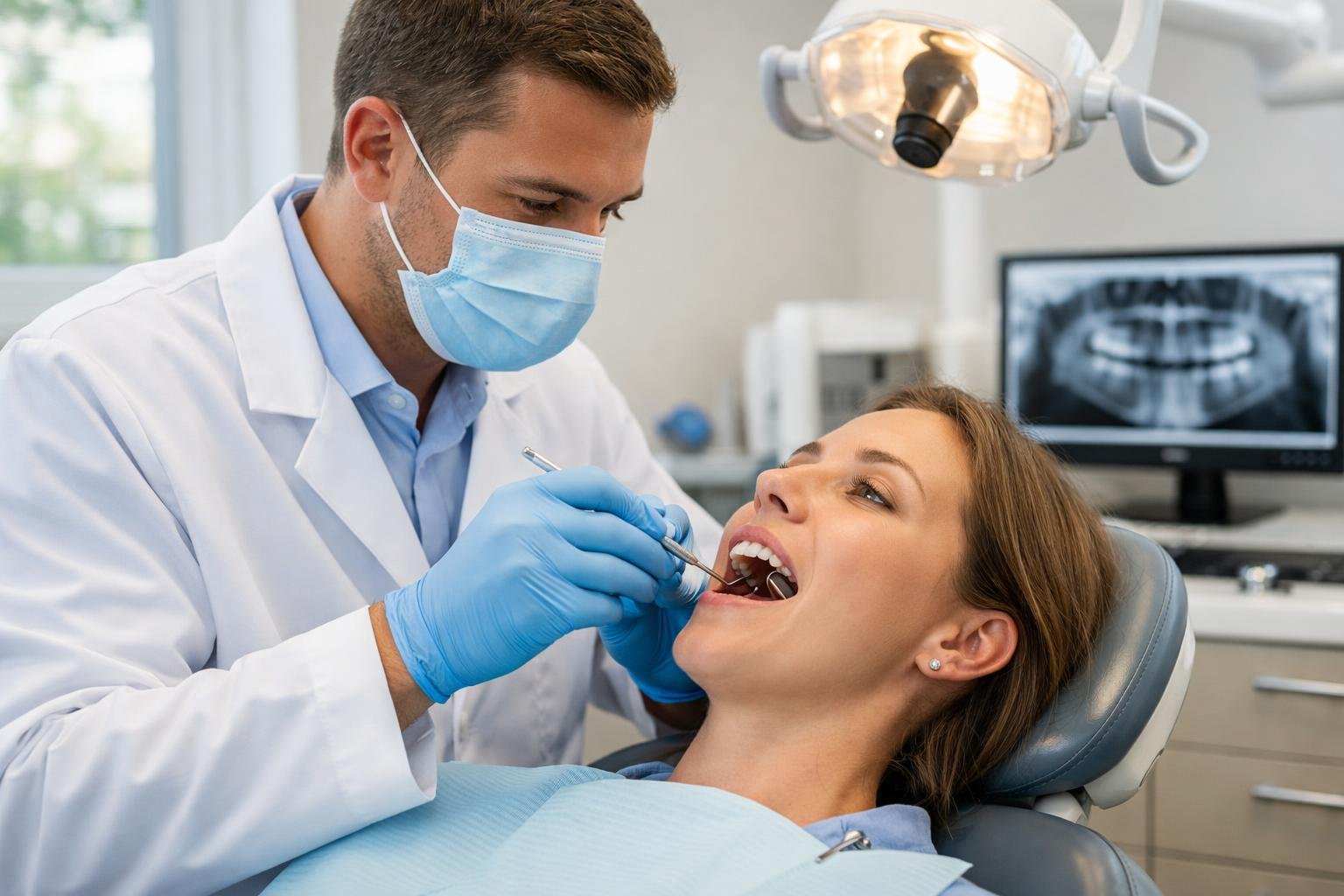
Preventive dental care helps catch small problems before they become larger and more expensive. Your dentist uses a checkup to get a complete picture of your oral health, not just your teeth.
Many people feel anxious about dental appointments because they do not know what to expect. Knowing each step ahead of time makes the visit feel easier.
Key Takeaways
- A dental exam has several steps, including a health history review, a physical oral examination, and X-rays when needed.
- The cleaning portion removes plaque and tartar that brushing cannot reach.
- Dentists check for many conditions, including cavities, gum disease, teeth grinding, and oral cancer.
What Happens During a Dental Exam Step by Step

A dental appointment follows a consistent sequence. The dentist gathers your background information, examines your mouth, and discusses findings and next steps.
Reviewing Your Medical And Dental History
At the start of your exam, the dental team asks about your current medications, any health conditions, and changes since your last visit. This information helps the dentist understand how your overall health affects your oral health.
New patients fill out intake forms with their dental history. Returning patients give updates only.
Oral Examination Of Teeth, Gums, And Soft Tissues
The dentist examines each tooth for signs of decay, cracks, or wear. They also check the soft tissues inside your mouth, including cheeks, tongue, and the roof and floor of your mouth.
This exam is thorough but not uncomfortable. The dentist uses a small mirror and probe to see hard-to-reach areas.
Gum Measurements And Periodontal Screening
The dentist or hygienist uses a periodontal probe to measure the depth of spaces between your teeth and gums. Healthy gum pockets usually measure between 1 and 3 millimeters.
Deeper measurements can show early gum disease. The dental team records these numbers at each visit to track changes.
Dental X-Rays When Needed
Dentists take X-rays only when needed. X-rays show cavities between teeth, bone loss, root problems, and impacted teeth that are not visible during a visual exam.
New patients usually get a full set of X-rays. Established patients have X-rays taken every one to two years, or more often if there is a concern.
Oral Cancer Screening
The dentist checks your lips, tongue, throat, and the inside of your cheeks for unusual spots, lumps, or discoloration. This screening takes just a minute or two.
Early detection of oral cancer improves treatment outcomes. Most patients have no symptoms when a concern is first found during a routine exam.
Discussing Findings And Next Steps
After the exam, the dentist explains what they found and recommends any treatments. You can ask questions about tooth sensitivity, changes you have noticed, or other concerns.
If you need treatment, the team provides an estimate and helps you schedule follow-up appointments.
What Happens During The Cleaning Part Of The Visit
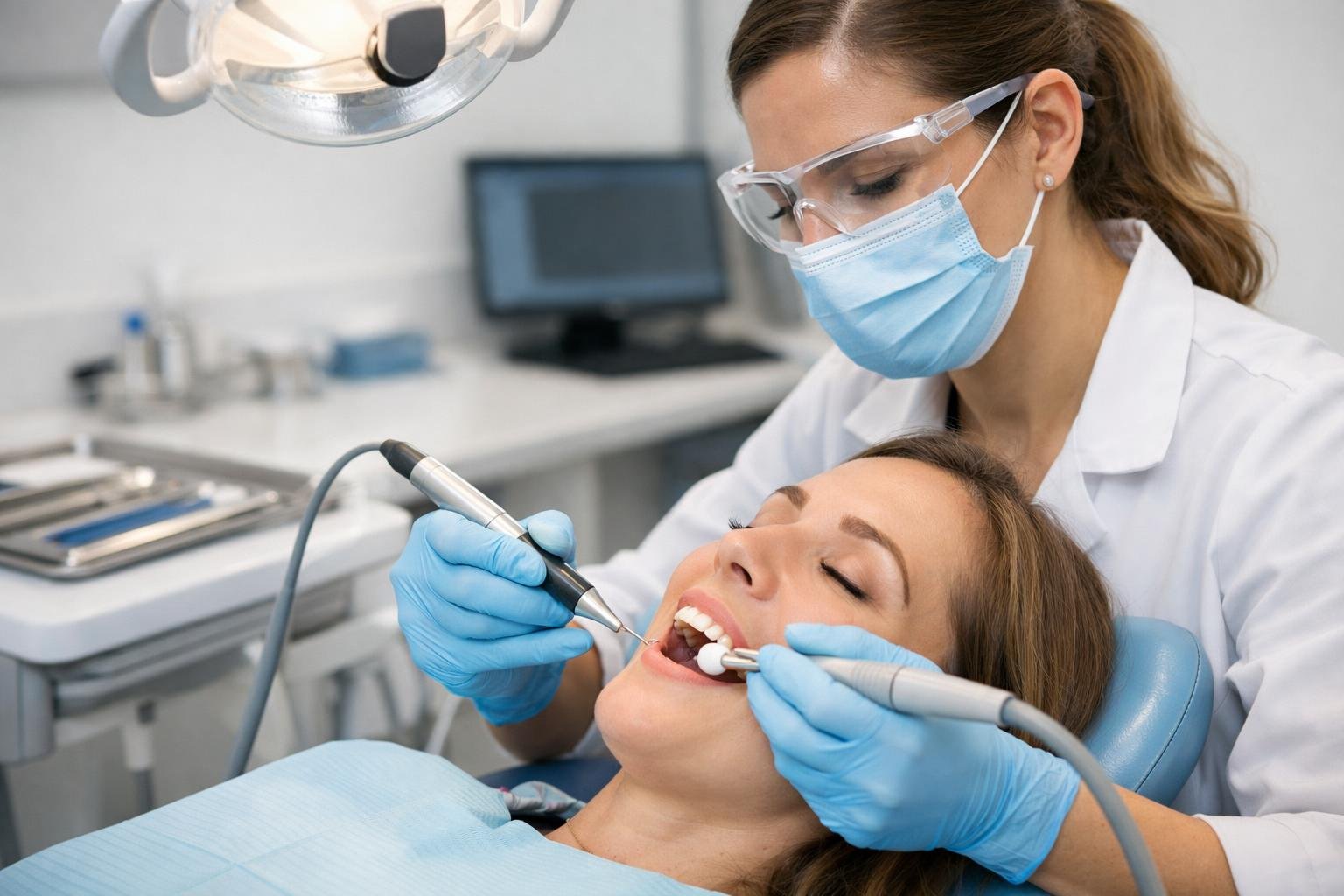
A dental hygienist usually handles the cleaning, either before or after the dentist’s exam. Professional cleaning removes buildup that brushing and flossing at home cannot eliminate.
How A Dental Hygienist Removes Plaque And Tartar
The hygienist uses specialized tools to scrape away plaque and hardened tartar from your teeth and along the gumline. Tartar forms when plaque is not removed and hardens over time. You cannot remove tartar with a toothbrush at home.
This process is called scaling. You may feel mild sensitivity, especially near the gums, but it should not hurt.
Scaling, Polishing, And Flossing
After scaling, the hygienist polishes your teeth with a gritty paste and a rotating brush or rubber cup. This removes surface stains and leaves your teeth smooth.
Smooth teeth are harder for plaque to stick to. The hygienist then flosses between every tooth and checks for bleeding or tenderness, which gives them more information about your gum health.
Fluoride Treatment And Other Preventive Treatments
The hygienist may offer a fluoride treatment at the end of the cleaning. Fluoride comes as a gel, foam, or varnish applied to your teeth. It strengthens enamel and protects against tooth decay.
Not everyone gets fluoride every visit. The hygienist and dentist recommend it based on your cavity risk and age.
What Dentists Are Checking For During The Exam

Dentists check many parts of your oral health during an exam. They look for early warning signs so they can treat issues before they get worse.
Cavities, Tooth Decay, And Worn Enamel
Cavities are common findings at a dental exam. The dentist uses a probe to check for soft spots on your enamel and looks at X-rays for decay between teeth.
Worn enamel shows up as flat or thin tooth surfaces and can cause sensitivity. Early decay can sometimes be managed without a filling if caught soon enough.
Signs Of Gum Disease And Bleeding Gums
Gum measurements help the dentist find gingivitis and more advanced gum disease. Bleeding during probing or cleaning often signals inflammation, which is an early sign of gum disease.
Untreated gingivitis can progress to periodontitis, which causes bone loss around teeth. Early treatment makes a big difference.
Bite Issues, Tooth Grinding, And Tooth Sensitivity
The dentist checks how your upper and lower teeth fit together when you bite. Uneven wear often points to tooth grinding, or bruxism, which many people do while sleeping.
The dentist also checks for tooth sensitivity. This can be caused by enamel erosion, receding gums, or cracked teeth.
Hidden Problems Such As Impacted Teeth
Dentists use X-rays to find problems they cannot see during a visual exam. Impacted teeth, especially wisdom teeth, are a common example.
They also look for cysts, bone changes, and infections at the root of a tooth. Regular X-rays help dentists catch these issues early.
How Often You Need Exams And How To Prepare
Most dental guidelines recommend a routine dental checkup every six months for adults and children with good oral health. The cleaning, exam, and preventive treatments usually happen during the same visit.
When To Schedule A Routine Dental Checkup
Most people should see the dentist twice a year. This schedule lets dentists catch problems early and keep tartar under control.
If it has been more than a year since your last dental visit, schedule an appointment soon instead of waiting for symptoms.
Who May Need More Frequent Visits
Some people need to visit every three to four months instead of every six. This includes people with active gum disease, frequent cavities, dry mouth, or conditions like diabetes that affect oral health.
Your dentist will recommend how often you should visit based on your needs.
At-Home Oral Hygiene Between Appointments
What you do at home between visits affects what your dentist finds at your next exam. Brush twice a day with fluoride toothpaste and floss properly to remove plaque before it hardens.
A good home routine keeps your gums healthy and makes your cleaning appointment easier.
What Parents Should Know About A Pediatric Dentist Visit
Children’s dental exams follow the same steps as adult exams but are adjusted for kids. Pediatric dentists check for issues related to growing teeth, such as spacing, bite development, and the change from baby teeth to permanent teeth.
The American Academy of Pediatric Dentistry recommends a child’s first dental visit by age one or when the first tooth appears.
Frequently Asked Questions
What does a dentist typically check during a routine visit?
During a routine dental exam, the dentist checks for cavities, gum disease, tooth wear, bite alignment, and oral cancer. They review X-rays if needed to find problems not visible during the exam. The hygienist checks plaque and tartar during the cleaning.
How is a dental exam different from a teeth cleaning?
A dental exam is when the dentist checks your oral health. The cleaning is when the hygienist removes plaque, tartar, and stains. Both usually happen during the same visit.
What types of dental examinations are commonly performed?
Common types include comprehensive exams for new patients, periodic exams for returning patients, and limited exams for specific concerns. Comprehensive exams are the most thorough and include a full set of X-rays. Periodic exams are shorter and build on your previous record.
How much does a dental checkup cost without insurance?
A dental checkup without insurance usually costs between $75 and $200 for the exam. Cleaning fees add another $75 to $200. X-rays can add $25 to $250 depending on how many you need. Prices vary by location and office.
What documents or forms are included in a dental examination report?
A dental examination report includes your medical and dental history forms, gum measurements, X-rays, and a treatment plan if needed. Some offices also include a summary of findings and preventive care recommendations. These records stay on file and are updated at each visit.
Can a dentist detect signs of serious conditions such as lymphoma during an oral exam?
During a dental exam, a dentist can find unusual lumps, lesions, or swollen lymph nodes in the head and neck area.
A dentist cannot diagnose lymphoma. However, they can notice suspicious changes and refer the patient to a physician or specialist.
📞 Contact Kaufman Dentistry Today
Give us a call at (310) 838-7780 to schedule your appointment and take the first step towards a stunning smile.
You can find us at 10760 Washington Blvd., Culver City, CA 90232. We look forward to welcoming you to our practice and helping you achieve the smile of your dreams!