
What Causes Jaw Pain? Common Reasons And Next Steps
Jaw pain can sneak up on you. At first, it might seem minor, but suddenly you’re skipping your favorite foods, struggling to speak, or tossing and turning at night. Maybe it’s a dull ache near your ear, a quick stab when you bite down, or that annoying stiffness when you wake up. Either way, it’s hard to ignore.
Why does it matter? Jaw pain can come from a dental problem, a joint issue, muscle tension, or even sinus pressure. Each one calls for a different approach, so figuring out the cause is the first step.

People are often surprised at how many parts work together for jaw function. Teeth, gums, joints, muscles, sinuses, and nerves all crowd into a small area.
If any one of them gets irritated or injured, pain can spread in confusing ways. Pinpointing the real source usually takes a proper evaluation.
Key Takeaways
- Jaw pain has a lot of possible causes, from grinding and infections to joint issues or sinus congestion.
- Specific symptoms like clicking, swelling, or pain with chewing can help narrow things down.
- Most cases get better with simple care, but if pain sticks around or gets worse, you should see a professional.
How The Jaw Works
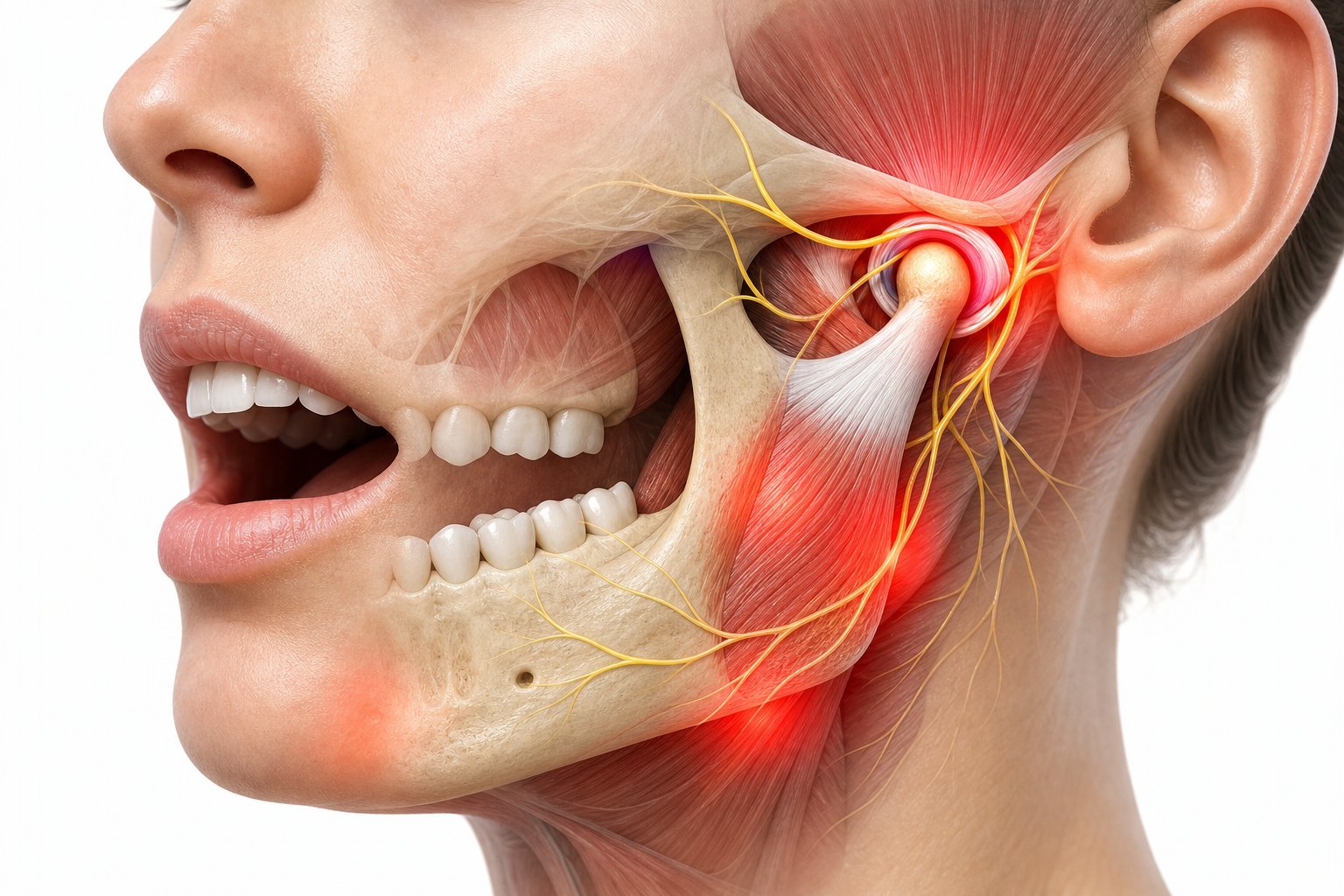
The jaw isn’t just a hinge. It’s a complex system that depends on joints, muscles, teeth, and bite alignment to handle chewing, speaking, and swallowing without discomfort.
The Role Of The Temporomandibular Joints
The temporomandibular joints, or TMJ, connect your lower jaw to your skull. You’ve got one on each side, right in front of your ears.
These joints let your jaw move up and down, side to side, and forward and back. Each joint has a little cartilage disc that cushions the bones and keeps movement smooth.
According to experts, the TMJ gets used constantly. All that action makes it prone to wear, inflammation, and injuries.
Muscles, Teeth, And Bite Alignment
The chewing muscles, or muscles of mastication, attach to the lower jaw and work closely with the joints. When you grind, clench, or hold your jaw in a bad position, these muscles can get overworked. They can develop trigger points that send pain to your jaw, temples, and even your neck.
Your teeth and how they fit together matter, too. If you’re missing teeth, have worn teeth, or your bite is off, chewing forces get unevenly distributed. This can strain the joint and muscles over time.
Even a small change, like a filling that’s a bit too high, can shift pressure through your whole jaw system.
Common Sources Of Discomfort
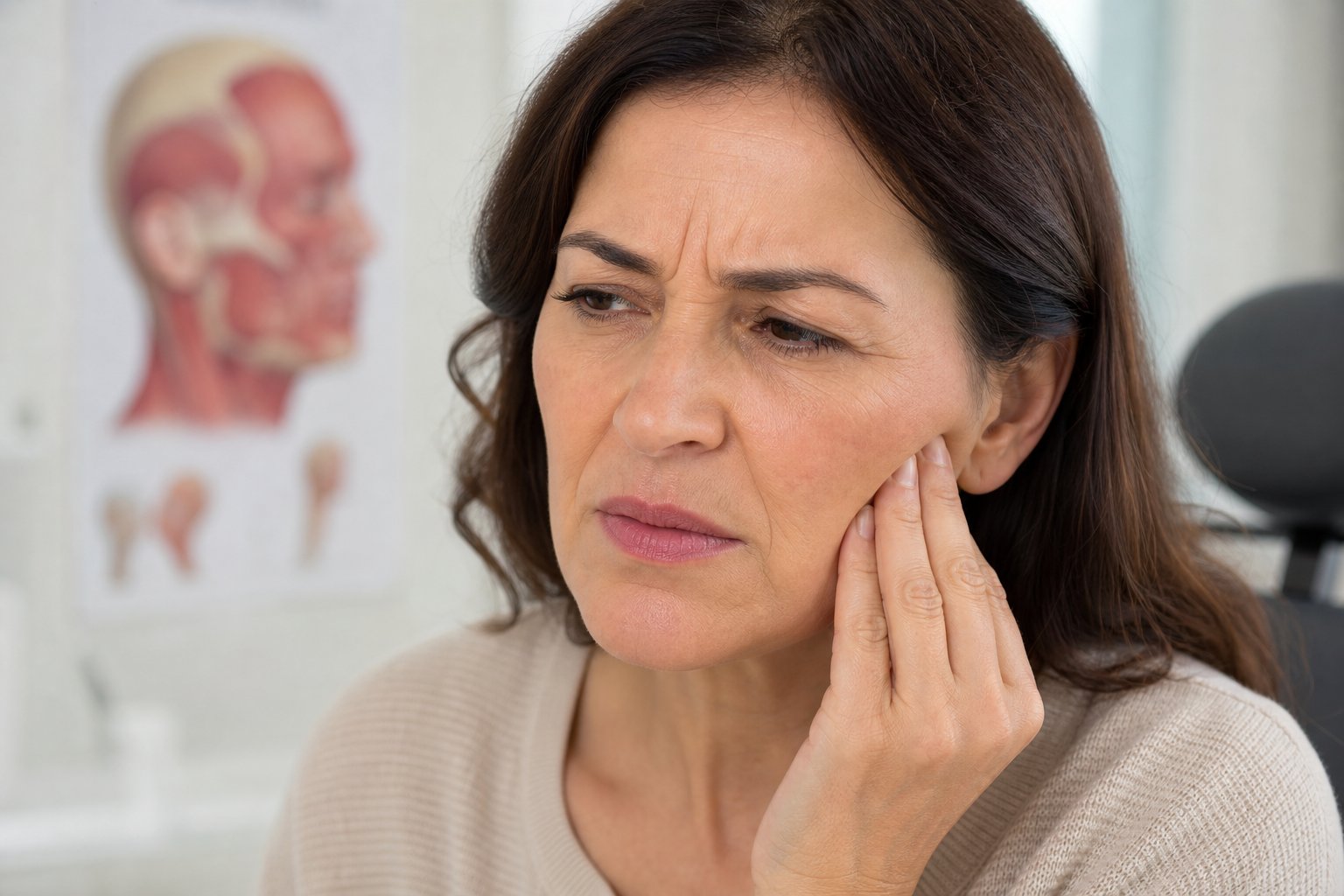
Jaw pain doesn’t come from just one thing. Cleveland Clinic points out that TMJ disorder is the most common cause, but dental infections, grinding habits, and sinus issues are also frequent culprits.
Teeth Grinding And Clenching
Bruxism, grinding or clenching your teeth, flies under the radar for a lot of people. Most folks do it at night without realizing. All that pressure tires out your jaw muscles and puts too much load on the TMJ.
People often wake up with soreness, headaches, and worn tooth surfaces.
Stress is usually the main trigger. Health.com points out that anxiety and tension tend to show up in the jaw, especially at night.
Tooth Infections And Gum Problems
An abscessed tooth or advanced gum disease can cause jaw pain that spreads beyond the tooth itself. Bacterial infections inflame the bone and soft tissue, and this often feels like a deep ache along one side of your jaw.
This pain usually throbs and might come with sensitivity to hot or cold, swollen gums, or a bad taste. Dental infections won’t go away on their own. You’ll need treatment.
TMJ Disorders
TMJ disorders cover a bunch of problems involving the joint or nearby muscles. Inflammation, disc displacement, and arthritis can all play a part.
Pain might show up near your ear or spread to your face and neck. People who grind their teeth, have a misaligned bite, or have had jaw injuries are more likely to develop TMJ issues.
Clicking or popping, sometimes with pain, is common.
Sinus Pressure And Ear-Related Issues
Your upper back teeth sit close to the maxillary sinuses. When those sinuses get inflamed from a cold, allergies, or infection, the pressure can feel like a toothache or jaw pain.
Usually, the pain is across your cheekbones and upper jaw, not in one specific tooth.
Problems with your ears, like infections or eustachian tube issues, can also send pain into your jaw. The ear and jaw share nerve pathways, so telling them apart without an exam isn’t always straightforward.
Symptoms That Can Point To The Cause
Noticing when your jaw hurts, what makes it better or worse, and what other symptoms show up can help you and your dentist figure out what’s going on before any tests or imaging.
Pain With Chewing Or Yawning
If your jaw hurts when you chew or open wide, something mechanical is probably going on. It usually means the joint, disc, or jaw muscles are stressed.
WebMD says pain triggered by movement is a classic sign of TMJ involvement.
If chewing on one side helps, that often points to a problem with a tooth or joint on the sore side.
Clicking, Popping, Or Locking
Hearing clicks or pops when you move your jaw suggests the disc inside the TMJ might be slipping out of place. Clicking without pain is common and not always a big deal.
If you get pain, limited motion, or your jaw locks open or closed, it’s time to get checked out.
Locking, even for a moment, usually means the disc has moved more than it should.
Swelling, Tenderness, Or Headaches
If your jawline looks swollen, hurts when you press on it, or you get headaches in your temples, something’s probably inflamed. Swelling plus fever could mean infection. Swelling alone usually points to muscle fatigue or joint irritation.
Headaches from jaw tension often get mistaken for migraines or tension headaches. If you wake up with jaw soreness and headaches, grinding is a likely culprit.
When To Seek Prompt Evaluation
Jaw pain isn’t always an emergency, but sometimes you really shouldn’t wait. Where the pain is, how bad it feels, and any other symptoms can tell you if you need help right away.
Signs Of Infection Or Injury
If you notice swelling, fever, redness, or a nasty taste near a tooth or along the jaw, it could be an infection. Dental abscesses can spread quickly if bacteria reach the bone or deeper tissues.
If your jaw hurts after a fall, accident, or hit to the face, get checked out even if it doesn’t seem too bad. Sometimes jaw fractures aren’t obvious at first, and waiting can make things worse.
Persistent Or Worsening Symptoms
If jaw pain hangs around for more than a few days, keeps coming back, or is getting worse, see a professional. Pain that lasts beyond a few days might be more than muscle soreness.
If pain spreads to your chest, left arm, or throat along with jaw pain, get emergency help. That could be a heart problem.
Trouble Opening The Mouth Normally
If you can’t open your mouth as wide as usual, or if it catches or locks, don’t wait. Mayo Clinic recommends seeing someone if you can’t open or close your jaw completely. This could mean the disc is out of place or the joint is damaged, and it might get worse without treatment.
Ways Jaw Pain Is Evaluated And Managed
Finding out what’s causing jaw pain takes a real evaluation. Usually, it starts with an exam, maybe some imaging, and then a treatment plan that fits the cause.
Dental Exam And Imaging
A dentist will start with a thorough exam, checking for tooth decay, gum disease, bite problems, and signs of grinding. They’ll press on the TMJ and muscles to spot tenderness or limited movement.
Digital X-rays can show bone changes, abscesses, or joint problems. If things get complicated, you might need a cone beam CT scan or MRI to look at the disc and soft tissue. At practices like Kaufman Dentistry in Culver City, digital X-rays are routine. They’re faster, use less radiation, and help with accurate diagnosis.
Conservative Relief Options
Most jaw pain gets better with simple, non-invasive care. First-line options include:
- Occlusal splints or night guards to ease grinding at night
- Anti-inflammatory meds to calm swelling in joints and muscles
- Warm or cold compresses for quick relief on sore spots
- Soft foods to let your jaw rest and recover
- Jaw exercises and physical therapy; Verywell Health says these can help reduce inflammation and improve movement
Stress reduction helps if clenching or grinding is tied to anxiety. Mindfulness and breathing exercises can make a real difference.
Reducing Strain In Daily Life
Managing jaw pain isn’t just about treatment. What you do every day matters for recovery and for keeping pain from coming back.
Habits That Can Aggravate The Jaw
A lot of everyday habits put extra strain on your jaw joint and muscles.
-
Chewing gum over and over loads the joint and keeps those muscles working nonstop.
-
Biting nails or chewing on pens puts uneven pressure on the joint and stresses it out.
-
Eating hard or chewy foods like raw carrots, bagels, or tough meats can make things worse if your jaw already feels irritated.
-
Cradling a phone between your ear and shoulder tenses up both your neck and jaw muscles at the same time.
-
Sleeping on your stomach or pressing your jaw into a pillow twists your neck and bumps up jaw tension.
People often overlook how stress can make you clench your jaw during the day, even if you’re not grinding your teeth. If you just notice it and try to let your jaw relax every so often, it can honestly help a lot.
Practical Steps To Support Recovery
Try putting a warm compress on your jaw for ten to fifteen minutes. It relaxes the muscles and gets blood moving in the area.
Keep your teeth a little apart and your lips together when you’re not eating. That’s the resting position that puts the least strain on your jaw joint.
Jaw relaxation exercises like gentle massage or slow, controlled stretching can loosen up chronic tightness, especially if you make them a habit.
Switching to softer foods for a while, getting enough sleep, and handling stress with regular physical activity all make it easier for your body to heal.
If your dentist gave you a night guard, wear it every night. It’s honestly one of the best ways to protect your jaw joint while you sleep.
Frequently Asked Questions
Why does my jaw hurt on one side near the ear?
Jaw pain on just one side near the ear happens a lot with TMJ disorder. The joint on that side gets inflamed or the disc can shift out of place.
Sometimes it’s a tooth problem on that side, or maybe an ear infection, or just tight chewing muscles. A dental exam is the best place to start if you want to figure out what’s going on.
What can cause sudden jaw pain without an obvious injury?
Sudden jaw pain that seems to come out of nowhere can happen if you’ve got a tooth abscess, a sinus infection, or a TMJ flare-up you didn’t know you had.
Eureka Health points out that sudden, severe jaw pain, especially if you also feel chest pressure or shortness of breath, could be a cardiac emergency. Most of the time, though, it’s dental or musculoskeletal.
Why do I wake up with a sore jaw on one side?
If you wake up with a sore jaw on one side, you’re probably grinding or clenching your teeth at night. Dentists call this bruxism.
Your jaw muscles work overtime while you sleep, which leaves them tired and sore by morning. Wearing a night guard can take a lot of the pressure off, and your dentist can look for wear patterns on your teeth to confirm it.
What causes jaw pain when opening the mouth?
If it hurts to open your mouth wide, the temporomandibular joint or the muscles around it are usually involved. Disc displacement, inflammation, or muscle tightness can all make it tough to open your mouth comfortably.
If your jaw clicks, catches, or keeps you from eating or speaking normally, Mayo Clinic suggests getting it checked out.
What could cause pain under the ear and behind the jaw bone on the left side?
Pain just under the ear and behind your jaw bone can come from the parotid gland, which sits right there, or from the styloid process, or even the TMJ itself.
Swollen lymph nodes from an infection can make that area tender too. Since so many things are packed into that spot, a proper exam with some poking around or imaging is usually needed to pin down the cause.
Why does my jaw hurt more when chewing or talking?
When you chew or talk and your jaw hurts more, something in your jaw is probably getting stressed or overloaded. This often points to TMJ dysfunction, an inflamed joint disc, or just muscles that have been working too hard.
Sometimes, you’ll also feel sharper pain if you’ve got a tooth abscess or a cracked tooth. When you put pressure on the bad tooth, the pain just shoots up. It helps a lot if you keep track of which foods or jaw movements really set off the pain. That way, your dentist can figure out what’s going on much faster.
📞 Contact Kaufman Dentistry Today
Give us a call at (310) 838-7780 to schedule your appointment and take the first step towards a stunning smile.
You can find us at 10760 Washington Blvd., Culver City, CA 90232. We look forward to welcoming you to our practice and helping you achieve the smile of your dreams!