
CEREC Same Day Crowns Explained For Patients
If you’ve ever needed a dental crown, you probably remember the traditional process. You go in for one appointment to prepare the tooth and take impressions, then wear a temporary crown for a few weeks, and finally return for a second appointment to get the permanent restoration.
CEREC technology changes all of that. With CEREC, you get a permanent crown in a single visit, the same day your tooth is prepared.
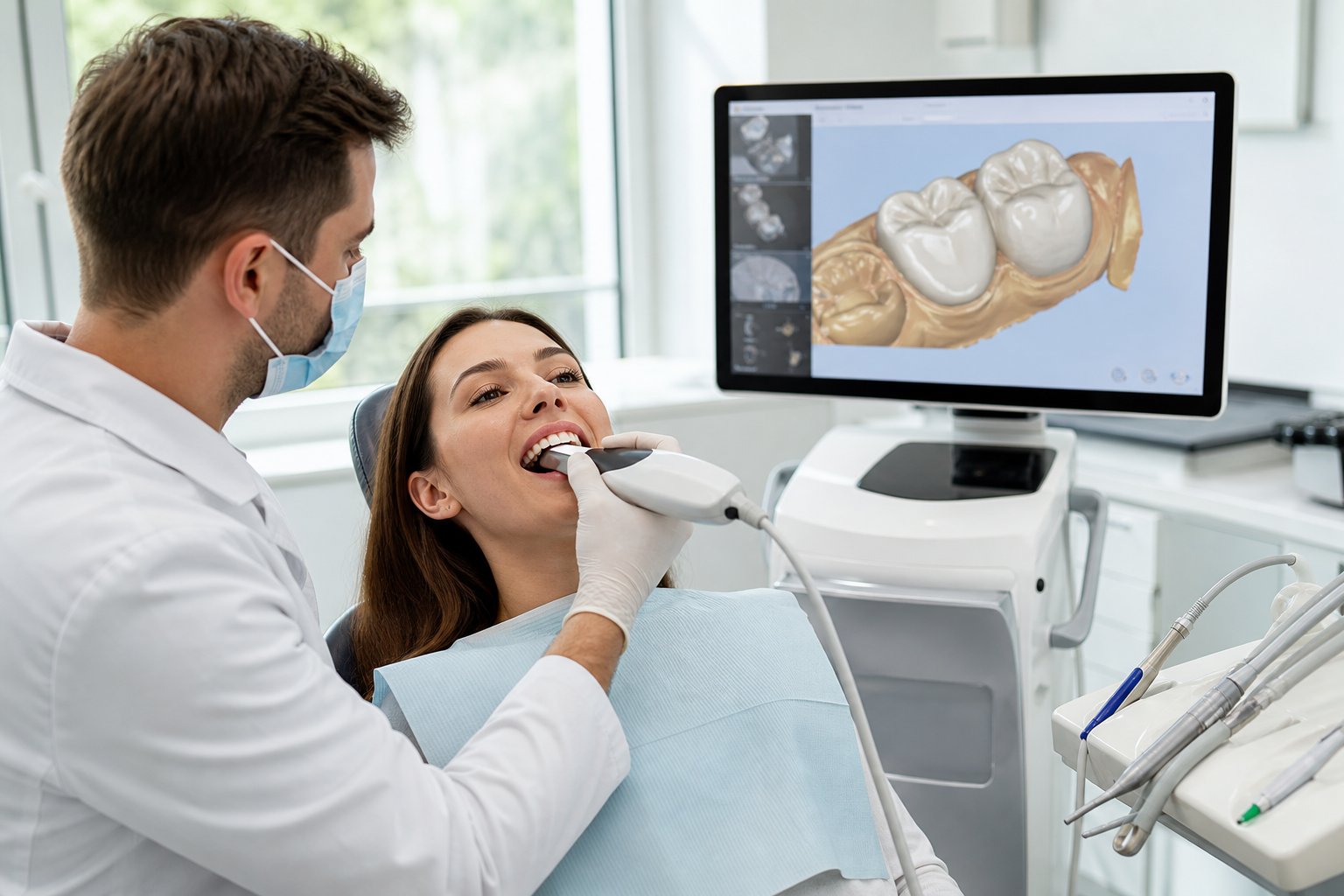
CEREC stands for Chairside Economical Restoration of Esthetic Ceramics. Dentists use a CAD/CAM system to digitally scan your tooth, design a custom crown on a computer, mill it from a ceramic block right in the office, and bond it permanently.
They don’t send anything to an outside laboratory. You end up with a restoration that fits well, looks natural, and skips the awkward temporary crown phase.
Same-day crowns have been around for a while, but more dentists now use them as the technology gets better and easier to access. If you’ve had a traditional two-visit crown before, you’ll probably notice that the one-appointment approach is much less disruptive and more comfortable.
Key Takeaways
- Dentists design, mill, and place CEREC crowns in a single appointment using in-office digital technology.
- You don’t have to deal with temporary crowns, lab wait times, or a second visit.
- With good care, CEREC crowns can last 15 years or more and work just as well as traditional lab-made crowns.
What CEREC Technology Does
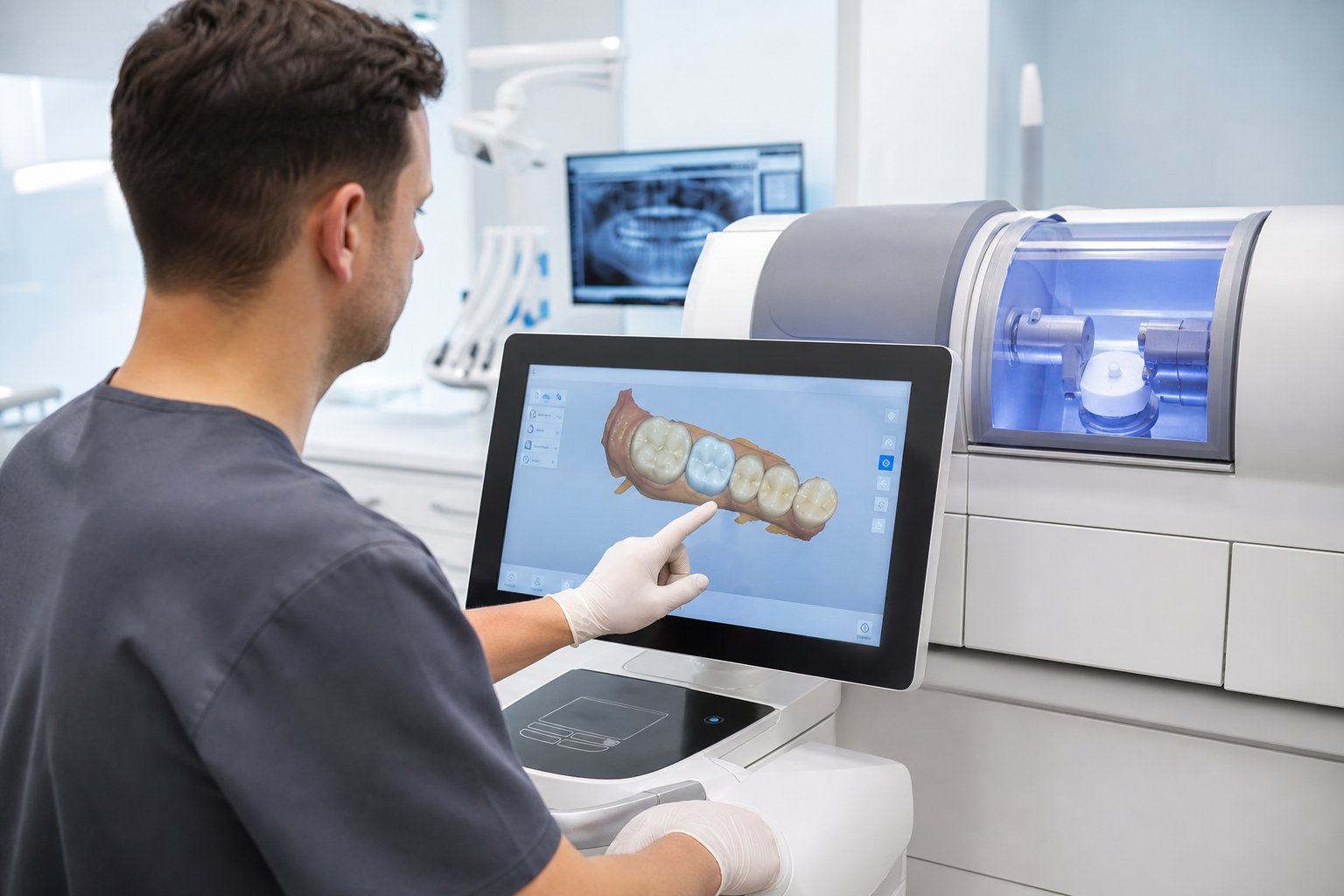
CEREC combines three main technologies into one workflow: digital scanning, computer-aided design, and precision milling. Each step flows right into the next.
That’s how same-day delivery happens.
How Digital Scanning Replaces Traditional Impressions
Instead of stuffing a tray of impression material into your mouth and waiting for it to set, the dentist uses a small handheld wand. This device captures thousands of data points from your prepared tooth and the teeth around it.
Within seconds, a super-accurate 3D digital model pops up on the screen.
Most patients find this method more comfortable, especially if they gag easily. It also tends to produce measurements that are just as accurate, if not better, than traditional impressions.
The digital file is ready for the next step instantly. No waiting for a mold to be poured or shipped.
How In-Office Milling Creates A Restoration
After the dentist finalizes the design on-screen, they send the file to a milling unit right in the office. They load a small ceramic block into the machine, and it carves the crown using precise cutting tools. This usually takes about 15 to 25 minutes.
The dentist picks a ceramic material that matches the color and translucency of your natural teeth. Some dentists add a bit of staining and glazing after milling to get the shade and surface just right before placing the crown.
Why Treatment Can Be Finished In One Visit
Since scanning, milling, and bonding all happen in the same office visit, you don’t have to coordinate with an outside dental lab. No more two-to-three-week waiting periods.
Dentists also keep direct control over the whole process. If something needs adjusting, they can fix it on the spot.
How The Appointment Typically Works
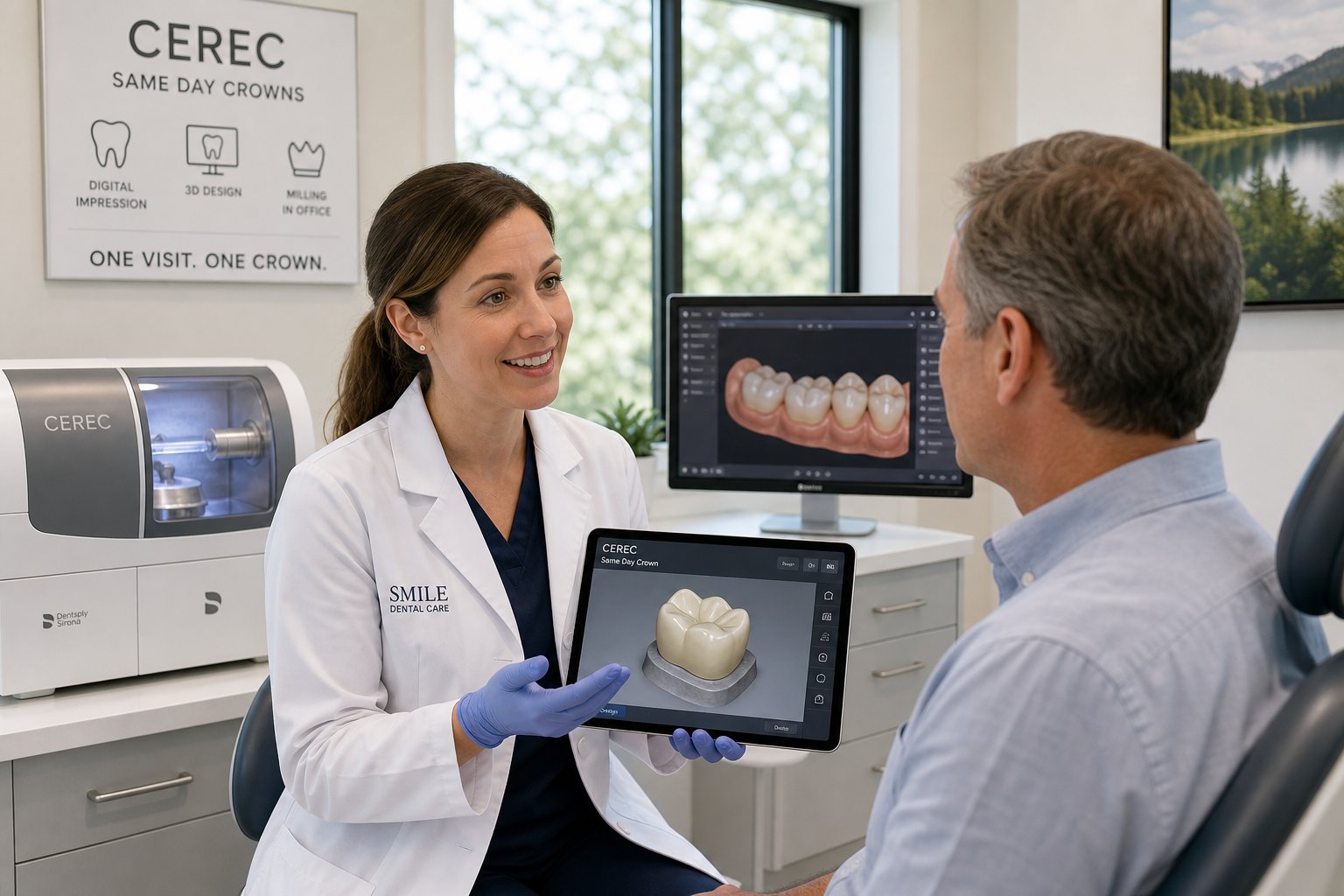
A CEREC appointment usually follows a set sequence, but the total time depends on the tooth, how complex the restoration is, and how much prep the tooth needs.
Most appointments last between 90 minutes and two and a half hours.
Exam And Treatment Planning
The appointment starts with an exam of the tooth that needs work. The dentist checks X-rays, looks for decay or structural problems, and decides if a same-day crown is the best choice.
If they find significant decay, they remove it first. You’ll also talk about material options, shade, and what to expect next.
This is a good moment to ask any questions you have.
Tooth Preparation And Digital Design
Once you’ve agreed on the plan, the dentist numbs the area and shapes the tooth to create a solid base for the crown. Tooth prep for a CEREC crown is pretty similar to traditional crown prep.
The dentist aims to remove enough structure for a strong, well-fitting crown but not more than needed.
After prepping, the dentist takes a digital scan and generates a 3D model. They use design software to shape the crown, making sure it fits with neighboring teeth and your bite. Then they send the file to the milling unit.
Placement, Fit Check, And Bonding
The dentist seats the milled crown on your tooth and checks the fit. If needed, they make minor adjustments using finishing tools.
A step-by-step CEREC appointment guide points out that this adjustment phase is normal and doesn’t mean anything’s wrong.
Once the fit is right, the dentist bonds the crown permanently with dental adhesive. They clean the area, check your bite one last time, and you leave with a finished crown.
Benefits Patients Often Notice
The practical perks of same-day crowns really stand out if you’ve ever had a traditional crown. The differences in time, comfort, and convenience are hard to miss.
Fewer Visits And No Temporary Crown
Temporary crowns can be annoying. They might loosen, pop off while eating, or cause sensitivity before you get the real crown.
With CEREC, you skip that whole step.
Cutting out the hassle of a second appointment is a big deal if you have a busy schedule, family responsibilities, or dental anxiety. You only take time off once.
Comfort, Convenience, And Time Savings
Most people find digital scans way more comfortable than goopy impressions, especially if their gag reflex is sensitive. You also don’t have to baby a temporary crown for weeks.
Convenience is a top reason patients pick CEREC. Walking in with a damaged tooth and leaving with a permanent crown the same day, there’s something really satisfying about that.
Precision And Natural-Looking Results
The CAD/CAM design process lets the dentist shape the crown precisely, so it fits and looks right. Ceramic materials can match your other teeth really well, giving a natural look.
Since the dentist designs and places the crown in the same session, they can fix any fit issues right away. No surprises two weeks later.
Limitations And When Another Option May Be Better
CEREC is pretty versatile, but it doesn’t fit every situation. It’s good to know where it might not be the best choice.
Cases That May Need A Lab-Made Crown
Some teeth with a lot of structural loss, severe bite problems, or special cosmetic needs might do better with a lab-made crown. Dental technicians can layer porcelain by hand for more complex shades and effects.
If you need a full-mouth reconstruction or are getting several restorations at once, a lab might be the way to go. A comparison of CEREC and traditional crowns points out that the best option depends on your specific situation, not just a general preference.
Bite, Tooth Position, And Material Considerations
Back teeth that do a lot of chewing need strong materials. While CEREC ceramics are tough, some heavy-duty molar cases call for zirconia or metal-based crowns, which labs handle better.
Where the tooth sits matters too. Severely rotated or tipped teeth can make scanning and design tricky, which might affect how well a same-day crown fits.
Why A Dentist May Recommend An Onlay Instead
Sometimes an onlay is a smarter, more conservative choice. It covers less tooth than a full crown, which is good if the damage doesn’t go all the way to the gum line.
CEREC works well for onlays, and many dentists use it for both crowns and onlays.
At places like Kaufman Dentistry in Culver City, they offer same-day onlays as well as crowns. This gives you options based on what your tooth actually needs, not just the most involved fix.
Durability, Care, And Expected Lifespan
A lot of patients wonder if CEREC crowns last as long as traditional ones. In most cases, they do, assuming they’re made and cared for properly.
What Affects Long-Term Performance
CEREC crowns usually last 10 to 15 years on average. Some people get even longer out of them with good habits.
How long a crown lasts depends on where it is in your mouth, how well the dentist prepared and bonded it, the ceramic used, and whether you clench or grind your teeth.
Back molars take more stress and may wear out faster. A well-made crown on a solid tooth almost always lasts longer than a poorly done one, no matter the technology.
Daily Habits That Protect The Restoration
Brush twice a day and floss regularly to prevent decay at the margin where crown meets tooth. That spot is always the weak point over time.
Try not to use your teeth as tools or bite hard things like ice or hard candy. Sticky foods can be rough on crowns too.
If you grind your teeth at night, talk to your dentist about a custom night guard. It really helps reduce stress on the crown.
When To Call The Dental Office
Let your dental office know if you notice more sensitivity to hot or cold, a change in your bite, visible chips, or if the crown feels loose. These aren’t usually emergencies, but catching small problems early can save you a lot of hassle.
Routine checkups let your dentist keep an eye on the crown before anything major goes wrong.
Questions To Ask Before Choosing This Treatment
Heading into a same-day crown appointment with specific questions helps you know what to expect and if this treatment is right for you.
Whether The Tooth Is A Good Candidate
Ask your dentist if your tooth is a good fit for a CEREC crown or if a lab-made one would be better. Things like how much tooth is left, where the tooth sits, and the best material all matter.
If you’ve had a crown on this tooth before or there’s decay under an old restoration, let your dentist know. The best dentists explain their reasoning instead of just defaulting to same-day for everyone.
What The Cost And Insurance Coverage May Look Like
Same-day crowns usually cost about the same as traditional crowns, but the exact price depends on the tooth, material, your insurance, and the practice.
Always ask for an estimated out-of-pocket cost before the appointment.
Most dental insurance plans cover CEREC crowns the same way as regular crowns. Ask if the office bills insurance directly and if they have a clear fee schedule.
What Technology And Experience Matter Most
Not every CEREC system comes from the same generation, and honestly, the dentist’s skill matters just as much as the equipment. It’s a good idea to ask how long the dentist has used the system and how many same-day restorations they usually place each month.
Dentists who really know the design software and milling unit tend to get better results. When practices use this technology as part of their daily routine, you’re more likely to walk away with a crown that fits well and lasts.
Frequently Asked Questions
What is a CEREC crown and how does it work?
A CEREC crown is a ceramic dental restoration that the dentist designs, mills, and places in just one appointment using CAD/CAM technology.
The dentist scans the prepared tooth, designs the crown on a computer, mills it from a ceramic block right in the office, and bonds it on the spot. No need to send anything to an outside lab.
What happens during a same-day crown appointment from start to finish?
Your visit starts with an exam and treatment planning. Next comes numbing, tooth prep, and a digital scan.
The dentist designs your crown using software, and the milling unit carves it from ceramic. After checking the fit and making any tweaks, the dentist bonds the crown in place. Most appointments take about 90 minutes to two and a half hours.
How long do CEREC crowns typically last compared to traditional lab-made crowns?
CEREC crowns usually last 10 to 15 years on average, and sometimes even longer if you take good care of them.
That’s pretty similar to traditional crowns, though lifespan depends a lot on oral hygiene, bite forces, and which material you choose.
Are same-day crowns as strong and durable as conventional crowns?
For most people, yes. Modern CEREC ceramic materials hold up well to normal chewing, and studies back up their durability.
If you have teeth that take a lot of stress, like heavily loaded molars or if you grind your teeth, the dentist might suggest a different material or a crown made in a lab.
What materials are used for same-day crowns, and which is best for my tooth?
Most CEREC crowns come from lithium disilicate or feldspathic porcelain blocks. Dentists pick these because they look a lot like natural teeth.
Some systems use zirconia too. The best choice really depends on where the tooth is, how much of it is left, and what you want it to look like. Your dentist will consider all of that when making a plan.
Who is a good candidate for a same-day crown, and when is a lab crown recommended instead?
Most people who need a single crown on a tooth with enough structure left can usually get CEREC.
Dentists might suggest a laboratory-made crown if your case involves tricky shade matching or if you’ve lost a lot of tooth structure.
Some folks need full-mouth rehabilitation, or maybe your dentist wants to use a material that just isn’t possible to make in the office. In those situations, a lab crown makes more sense.
📞 Contact Kaufman Dentistry Today
Give us a call at (310) 838-7780 to schedule your appointment and take the first step towards a stunning smile.
You can find us at 10760 Washington Blvd., Culver City, CA 90232. We look forward to welcoming you to our practice and helping you achieve the smile of your dreams!