
Can A Crowned Tooth Still Get A Cavity?
A dental crown covers and protects a damaged tooth, but it doesn’t make that tooth immune to decay. People often assume the crown acts as a permanent shield against cavities, and that belief sometimes leads to skipped cleanings or relaxed brushing around a crowned tooth.
The natural tooth structure beneath a dental crown can still develop a cavity, especially where the crown meets the gum line. Bacteria don’t care if a tooth has a crown or not. They just keep doing their thing everywhere in your mouth: feeding on sugars, making acid, and attacking tooth enamel.
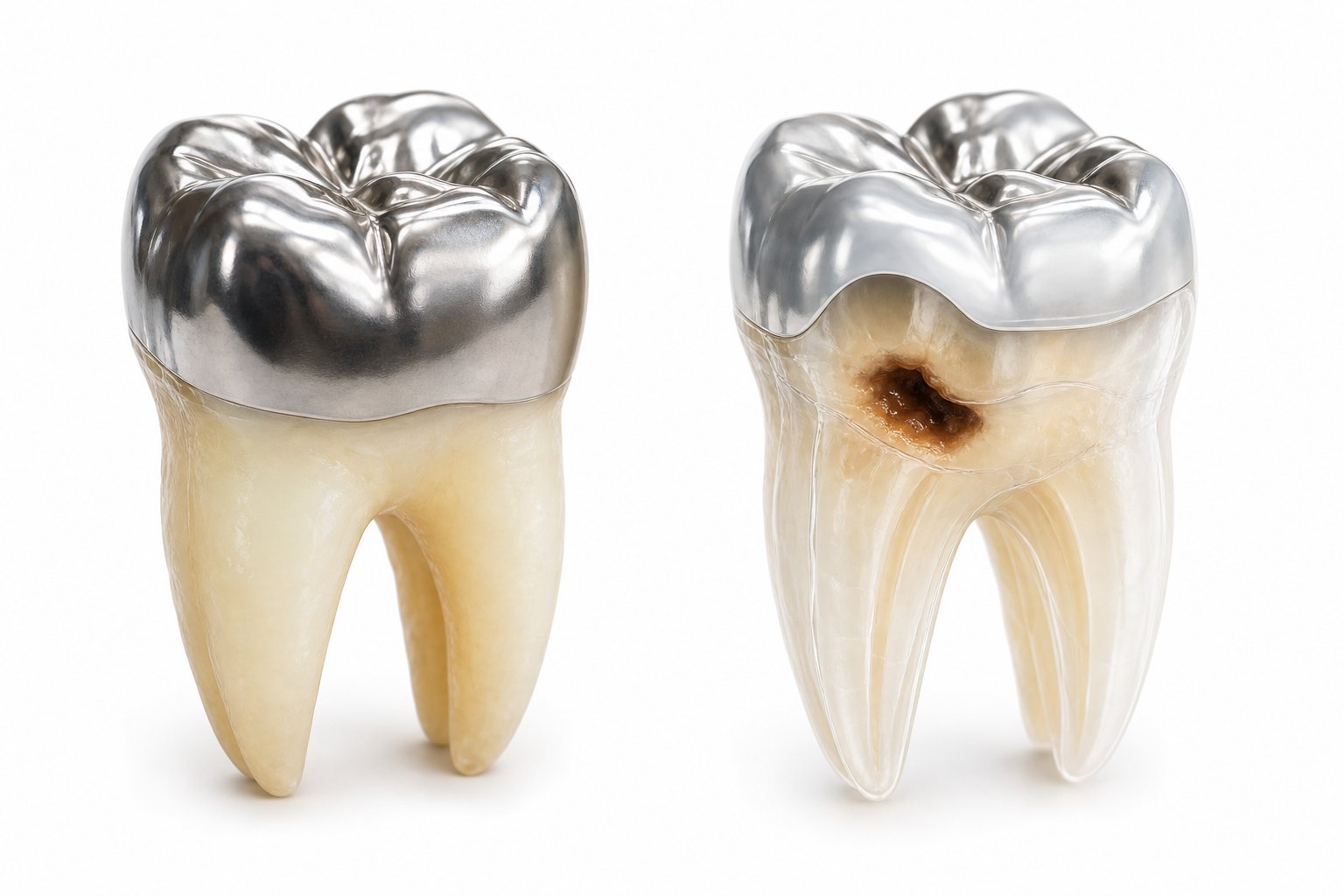
If you understand where and why decay forms under or around a crown, you can take better care of your restoration and catch problems before they get out of hand.
Key Takeaways
-
A dental crown itself can’t decay, but the natural tooth underneath it definitely can.
-
The edge where the crown meets your tooth is the spot most likely to develop a cavity.
-
Regular dental checkups and daily brushing near the gum line are your best defenses.
The Short Answer And Why It Happens
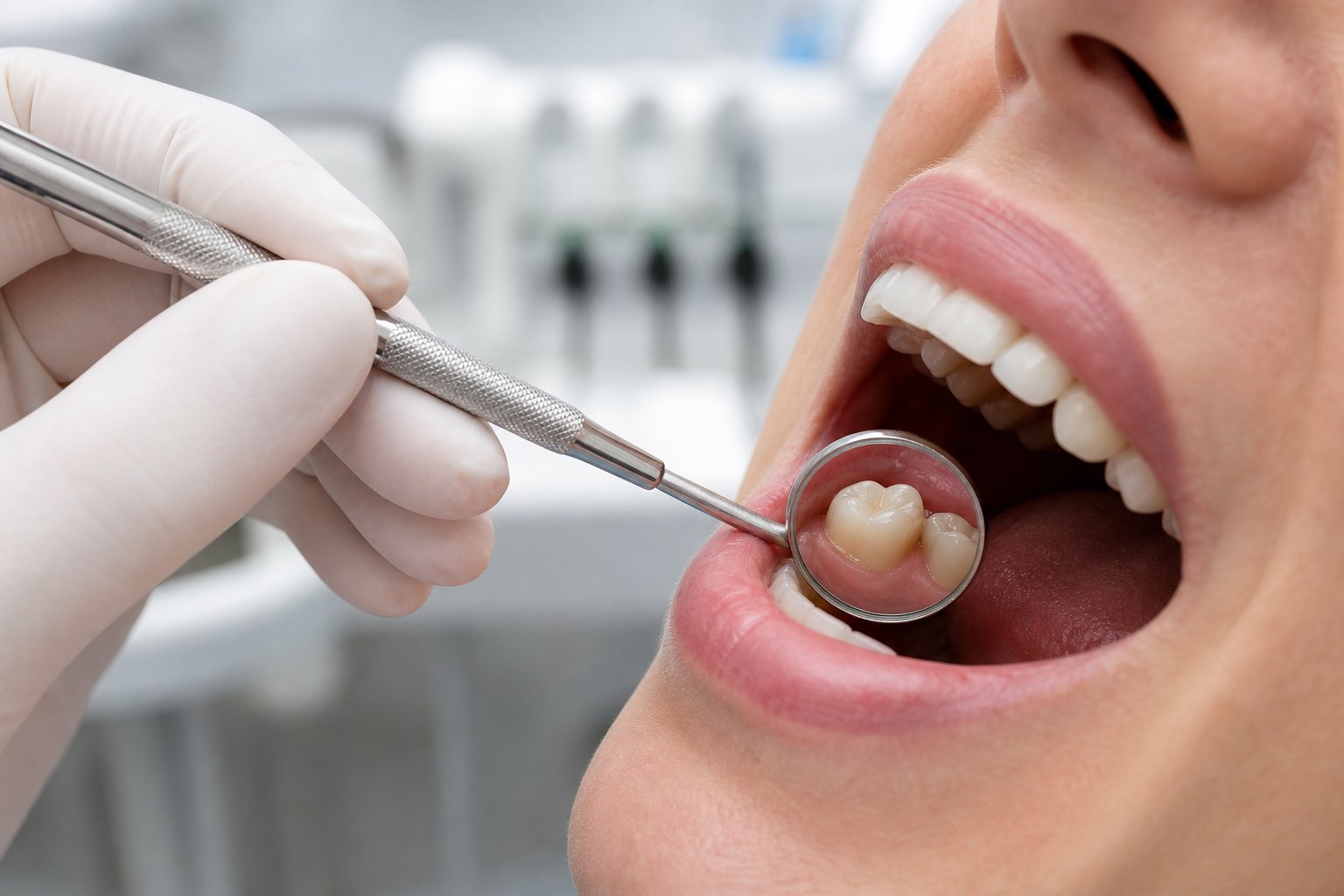
A crowned tooth can still get a cavity. The crown material resists decay, but the tooth underneath does not.
Plaque and biofilm build up around the crown just like anywhere else in your mouth, and the natural tooth underneath stays at risk.
Why The Crown Itself Does Not Decay
Dentists make dental crowns from porcelain, ceramic, metal, or combinations of those. Bacteria can’t break down these materials because they don’t have organic structure.
Acid from oral bacteria doesn’t affect the crown material. That’s why the crown stays intact while the tooth beneath it can quietly deteriorate.
Where Bacteria Reach The Natural Tooth
The crown doesn’t actually fuse to the tooth. There’s a thin margin where the crown’s edge meets the tooth surface.
Bacteria can sneak into that junction, especially if the seal weakens over time or if plaque builds up there. Once bacteria reach the natural tooth at that margin, decay can start just like it does on any other tooth.
How Plaque And Biofilm Start The Process
Plaque is a sticky biofilm of bacteria that forms on every tooth surface throughout the day. When you eat sugars or starches, those bacteria produce acids that attack tooth enamel.
Plaque tends to collect at the gum line and along the crown margin. If you don’t brush and floss it away regularly, the acid exposure adds up and creates the right conditions for decay under a crown.
The Most Vulnerable Areas Around A Crown
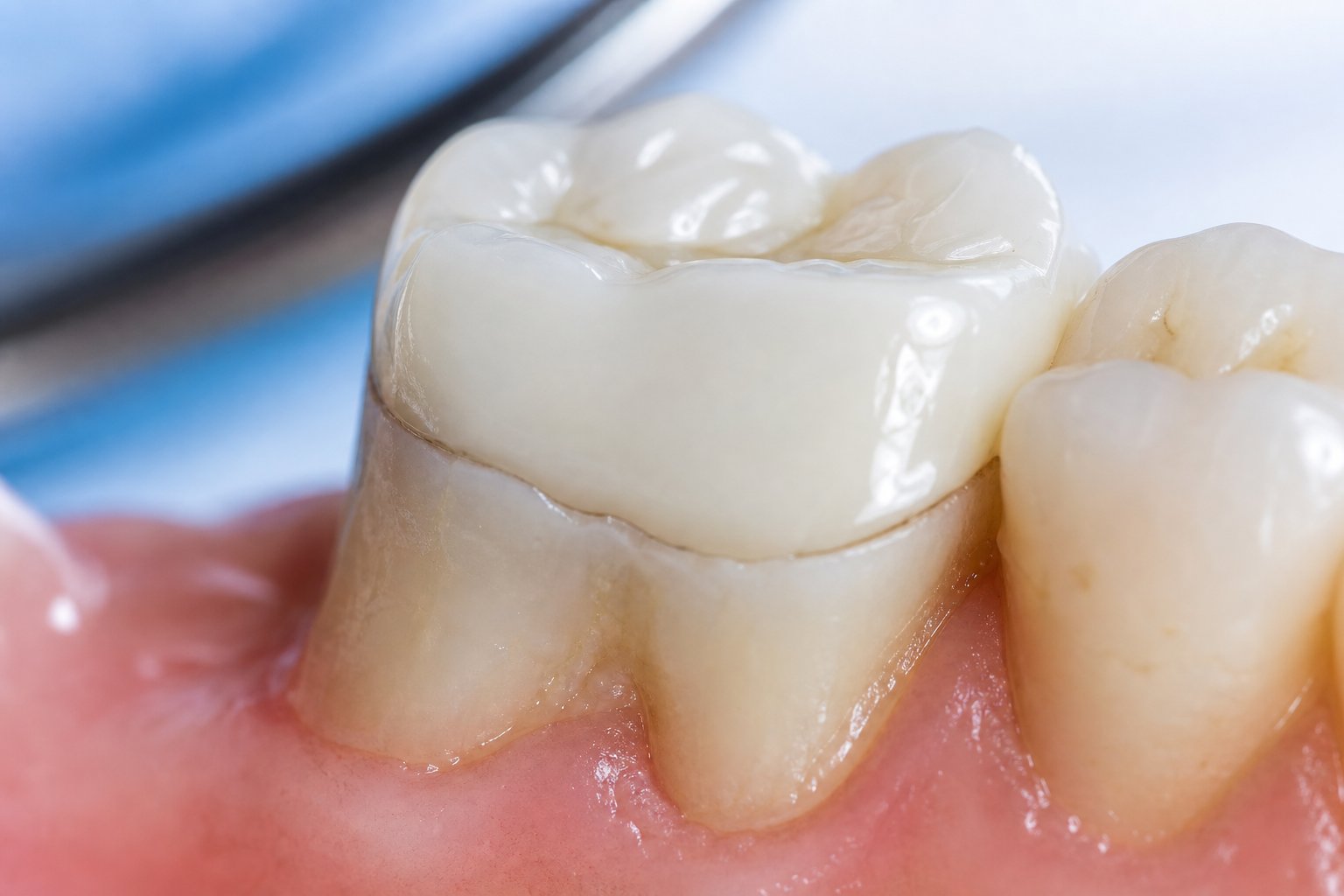
Not every area around a crowned tooth carries the same risk. The crown margin and the root surface near the gum line are usually where decay starts under or around a crown.
Both spots sit close to or below the gum line, which makes them harder to clean and easier for bacteria to hide.
Why The Crown Margin Matters
The crown margin is the thin border where the edge of the dental crown meets your natural tooth. This spot is the most structurally vulnerable part of any dental restoration.
Even a perfectly fitted crown has a microscopic seam at this edge. Bacteria can settle into that seam, produce acid, and start decay at the base of the crown before you notice anything is wrong.
How Crown Margins Change Over Time
A crown that fits perfectly on the day you get it might not fit quite as well years later. Normal wear, small shifts in bite alignment, and the breakdown of the cement that holds the crown in place can all open up the crown margin a little.
As the gap gets bigger, bacteria find it easier to reach the natural tooth underneath. That’s why older crowns have a higher risk of developing a cavity under the crown than newer ones.
Gum Recession And Exposed Root Surfaces
Gum recession exposes the root surface of a tooth below the crown margin. Root surfaces don’t have the same protective enamel that covers the top part of a tooth.
This makes them softer and much more likely to get attacked by acid. Gum disease, rough brushing, and aging can all cause recession.
When the root gets exposed near a crown, the risk of decay goes up a lot. The area needs extra attention during your daily cleaning routine.
Warning Signs That Need A Dental Exam
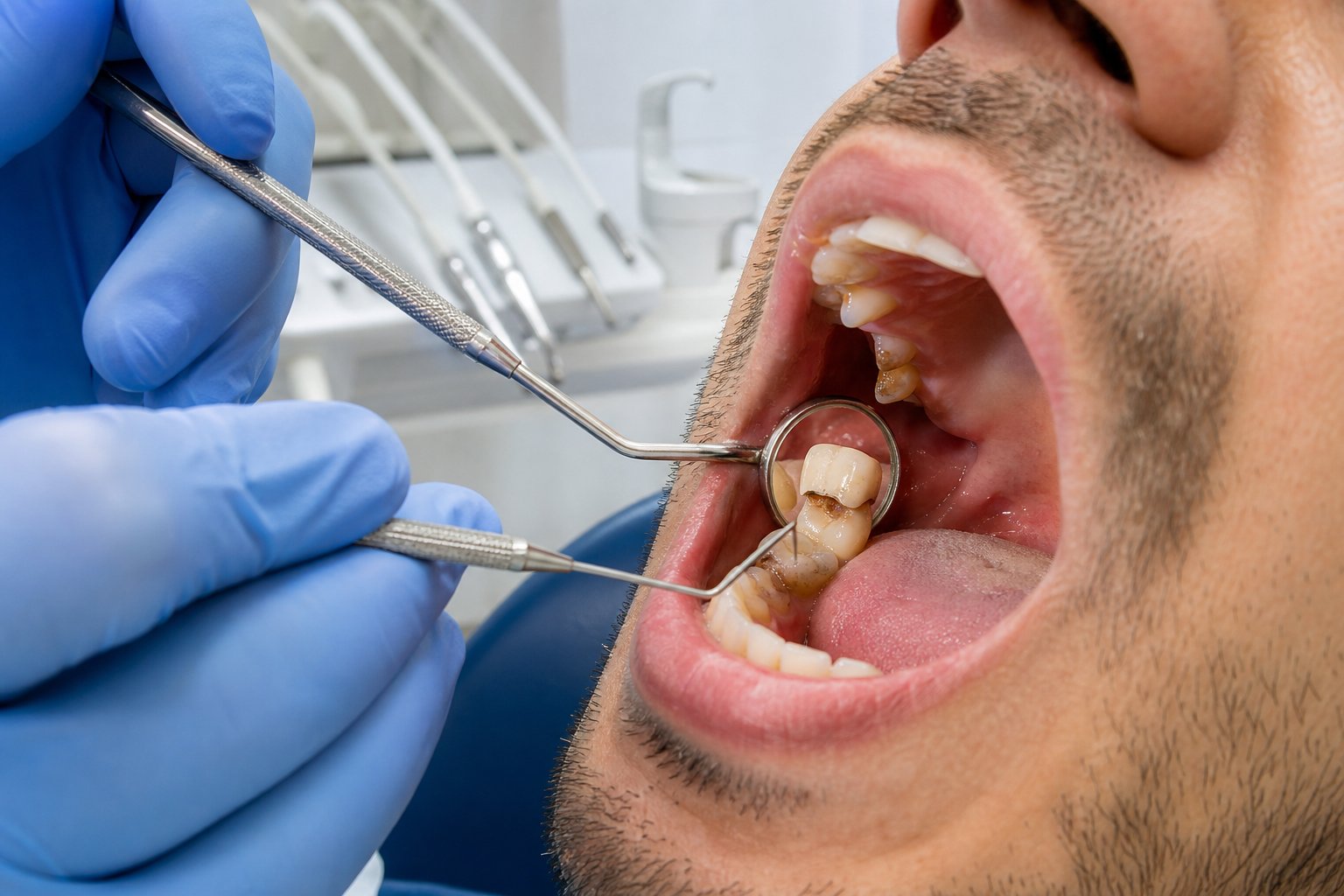
Decay under a dental crown often develops quietly at first, which makes regular dental checkups so important. When symptoms finally show up, they usually point right to a problem at or beneath a crowned tooth.
Tooth Sensitivity To Heat, Cold, Or Sweets
New or worsening sensitivity in a crowned tooth is one of the most common early warning signs. If the tooth reacts sharply to cold drinks, hot foods, or sweets, it might mean decay is moving closer to the nerve.
Sensitivity that sticks around after you remove the trigger is especially important to mention to your dentist. If a crowned tooth had a root canal and still feels sensitive, that’s a clear signal to schedule a dental exam.
Pain With Biting Or Chewing
If you feel discomfort when biting down or chewing on a crowned tooth, it could mean decay, a crack, or a failing crown.
Pain that stays in one tooth and shows up when you put pressure on it should prompt a dental checkup. Don’t just wait for it to go away. Decay under a crown usually gets worse, not better, and early treatment is usually simpler.
Bad Taste, Swelling, Or A Loose Crown
A bad taste that lingers around a crowned tooth might mean bacteria have gotten underneath and decay or infection is there. Swollen or tender gum tissue near the crown is another warning sign.
A loose crown is especially urgent since the seal protecting the tooth underneath is gone. If your crown feels like it’s shifting or lifting, call your dentist quickly to keep bacteria from getting to the tooth beneath.
How Dentists Confirm Decay Under A Crown
Dentists can’t always see decay under a crown just by looking. The crown blocks the view of the tooth structure it covers, so dentists use clinical tools and diagnostic imaging during regular visits to find hidden problems.
What A Dental Checkup Can Reveal
During a checkup, your dentist examines the crown margin with a probe and a mirror. They look for soft spots at the margin, gaps between the crown and tooth, and changes in gum tissue health.
Your dentist will also ask about any symptoms you’ve noticed. A sensitive gum line, discoloration at the crown edge, or a crown that rocks a little can all point to decay or a failing seal.
When Dental X-Rays Are Helpful
Dental x-rays are often the best way to spot a cavity under a crown. Since the crown can hide decay from view, x-rays let your dentist see the bone, the root, and the area where the crown meets the tooth.
Bitewing x-rays, which you usually get at routine checkups, are especially good for spotting early decay at crown margins. Dentists might compare new x-rays with older ones to track any changes.
Why Early Detection Protects The Tooth
Dentists can save more tooth structure if they catch decay under a crown early. If decay stays at the margin or upper part of the tooth, a new crown or small repair often solves the problem.
If decay spreads deeper toward the root or pulp, more involved treatment is needed. Regular dental visits every six months give your dentist a better chance to catch problems while they’re still small.
Treatment Options Based On The Extent Of Damage
Treatment for a cavity under a crown depends on how far the decay has gone. Dentists sometimes can’t see the full extent until they remove the old crown and look at the tooth directly.
When A New Crown Or Small Repair May Work
If decay is caught early and hasn’t reached the inner tooth, the fix is usually straightforward. Your dentist removes the old crown, cleans out the decay, and prepares the tooth for a new restoration.
Sometimes, if there’s not much tooth left, a filling material helps build the tooth back up before placing a new crown. Practices with in-office milling technology, like Kaufman Dentistry in Culver City, can often finish this whole process in a single visit.
When Root Canal Treatment Becomes Necessary
If decay reaches the pulp, the soft tissue in the center with nerves and blood vessels, root canal treatment is usually needed before a new crown goes on. The dentist removes the infected pulp, cleans the canals, and seals the tooth.
Then a new crown restores function and protects what’s left of the tooth structure. A root canal doesn’t mean you’ll lose the tooth; in many cases, it lets you keep the tooth for years or even decades.
When Extraction And A Dental Implant Are Considered
If decay destroys too much of the tooth to support a new crown, or if infection spreads to the surrounding bone, extraction might be the best option. Once the tooth is out, a dental implant is usually the most durable long-term replacement.
An implant acts and looks like a natural tooth and doesn’t have the same decay risk. Your dentist will explain your options so you can make an informed decision for your situation.
How To Protect Crowned Teeth Long Term
Protecting a crowned tooth takes the same discipline as caring for any other tooth, and sometimes a bit more. The crown margin, gum line, and root surface near the crown all need daily attention and regular professional care to stay healthy.
Daily Oral Hygiene At The Gumline
Brushing at the gum line is where most people slip up, but it’s the most important area around a crowned tooth. Use a soft-bristled toothbrush and angle the bristles toward the gum line to clean where the crown meets the tooth and gum.
Brush for at least two minutes, twice a day. Flossing matters just as much. Gently slide floss beneath the gum line on both sides of the crowned tooth to remove plaque that brushing misses.
Smart Tools And Products For Home Care
Fluoride toothpaste helps strengthen the natural tooth around the crown margin and makes it harder for acid to do damage. Adding a fluoride mouthwash gives extra protection, especially if you’re at higher risk for decay.
A water flosser can be great for cleaning around crowns because it flushes bacteria from places regular floss might miss. If your crowned tooth is next to tight contact points, interdental brushes designed for small spaces can help too.
Diet, Grinding, And Professional Maintenance
Cutting back on sugary foods and acidic drinks gives bacteria less to feed on. If you grind your teeth at night, talk to your dentist about getting a custom night guard.
Grinding puts a lot of stress on your crown. Over time, it can open up the margin and let bacteria sneak in.
Book professional cleanings and checkups every six months. Your dentist removes tartar during a dental cleaning, which you just can’t do at home.
Regular dental visits let your dentist keep an eye on your crown margin before any problems get out of hand.
Frequently Asked Questions
How can you tell if there is decay forming beneath a dental crown?
Early decay under a crown usually doesn’t cause obvious symptoms. Your dentist checks the crown margin and uses dental x-rays during your routine visits, so keeping up with appointments really matters.
What symptoms might indicate a cavity developing under a crown?
You might notice new sensitivity to cold, heat, or sweets. Sometimes, pain when biting or chewing pops up.
A lingering bad taste near the crowned tooth can be a clue. Swollen or tender gum tissue around the crown is another sign.
If your crown feels loose or shifts when you bite, that’s definitely a warning.
How common is tooth decay under a crown, and what increases the risk?
Tooth decay under a crown happens more often than people think, especially with older crowns where the cement isn’t sealing as well.
The risk goes up if you slack on oral hygiene, eat a lot of sugar, have dry mouth, deal with gum recession, or skip dental visits.
Can dental X-rays reliably detect a cavity under a crown?
Usually, yes. Bitewing x-rays during your regular dental checkups are the best non-invasive way to find decay at or beneath the crown margin.
Dentists compare your current x-rays to previous ones to catch any changes.
Can a cavity under a crown be treated without replacing the crown?
Most of the time, your dentist needs to remove the existing crown to clean out the decay. Once they take off the crown, it usually can’t be reused.
You’ll likely need a new crown after the decay is gone and your tooth is ready.
Can a dentist drill through an existing crown to repair decay underneath?
Most dentists don’t recommend drilling through a crown to reach decay underneath. The crown’s hard material makes it tough to drill cleanly.
Trying to drill through can weaken the crown and mess with its structure. Dentists usually remove and replace the crown to treat decay below it.
📞 Contact Kaufman Dentistry Today
Give us a call at (310) 838-7780 to schedule your appointment and take the first step towards a stunning smile.
You can find us at 10760 Washington Blvd., Culver City, CA 90232. We look forward to welcoming you to our practice and helping you achieve the smile of your dreams!