
How Long Does Teeth Whitening Last?
You leave the office with a noticeably brighter smile, and for the first few days you catch yourself checking it in every mirror. Then a practical question creeps in: how long is this going to last, and is there anything you can do to stretch it? It is one of the most common questions we hear after whitening at our Culver City office, and the honest answer depends far more on what happens after the appointment than on the treatment itself.
Professional teeth whitening usually lasts between one and three years, and many patients keep a bright shade even longer with a little maintenance. Results fade gradually as new surface stains build up from coffee, tea, wine and tobacco, not because the whitening “wears off” overnight. If you are deciding between options, our guide to which at home whitening treatments are worth it is a good companion to this article, and a professional dental cleaning is the best first step before any whitening.
Key Takeaways
- In office whitening typically lasts one to three years; drugstore strips and rinses fade in a few months.
- Whitening changes the color inside the enamel, but new stains land on the surface every day, which is why results slowly dim.
- Coffee, tea, red wine, dark sauces and tobacco are the biggest reasons results fade early.
- A custom take home tray lets you touch up in a few nights instead of starting over.
- Whitening does not work on crowns, veneers or fillings, so plan any cosmetic work around it.
Why Whitening Results Fade
Understanding what whitening actually does makes the lifespan question much easier to answer. Tooth whitening uses a peroxide gel that passes through the enamel and breaks apart the pigment molecules that have collected there over the years. That change is real and it does not reverse on its own.
New stains arrive every day
What does change is the surface. Every cup of coffee, glass of wine or bite of tomato sauce leaves a trace of pigment on the enamel. On their own those traces are invisible, but they add up week after week. A freshly whitened smile is a clean canvas, and the same habits that stained it the first time slowly stain it again. Our article on how to avoid coffee and tea stains covers the biggest offenders in detail.
Enamel wear shows the layer underneath
Enamel is naturally a little translucent, and the dentin underneath is yellow. As enamel thins with age, acid or grinding, more of that yellow shows through no matter how clean the surface is. This is why some patients notice their teeth looking darker in their forties and fifties even with good habits. The causes are covered in the most common causes of tooth enamel erosion, and protecting enamel is part of protecting your whitening.
How Long Each Whitening Option Lasts
Not every whitening method starts from the same place, so they do not fade at the same rate either. Here is what patients can realistically expect.
In office professional whitening
A professional session uses a stronger, dentist supervised gel and lifts several shades in a single visit. Because it reaches deeper into the enamel, the result holds the longest, usually one to three years. Patients who avoid heavy staining habits and keep up their cleanings sit at the top of that range.
Custom take home trays
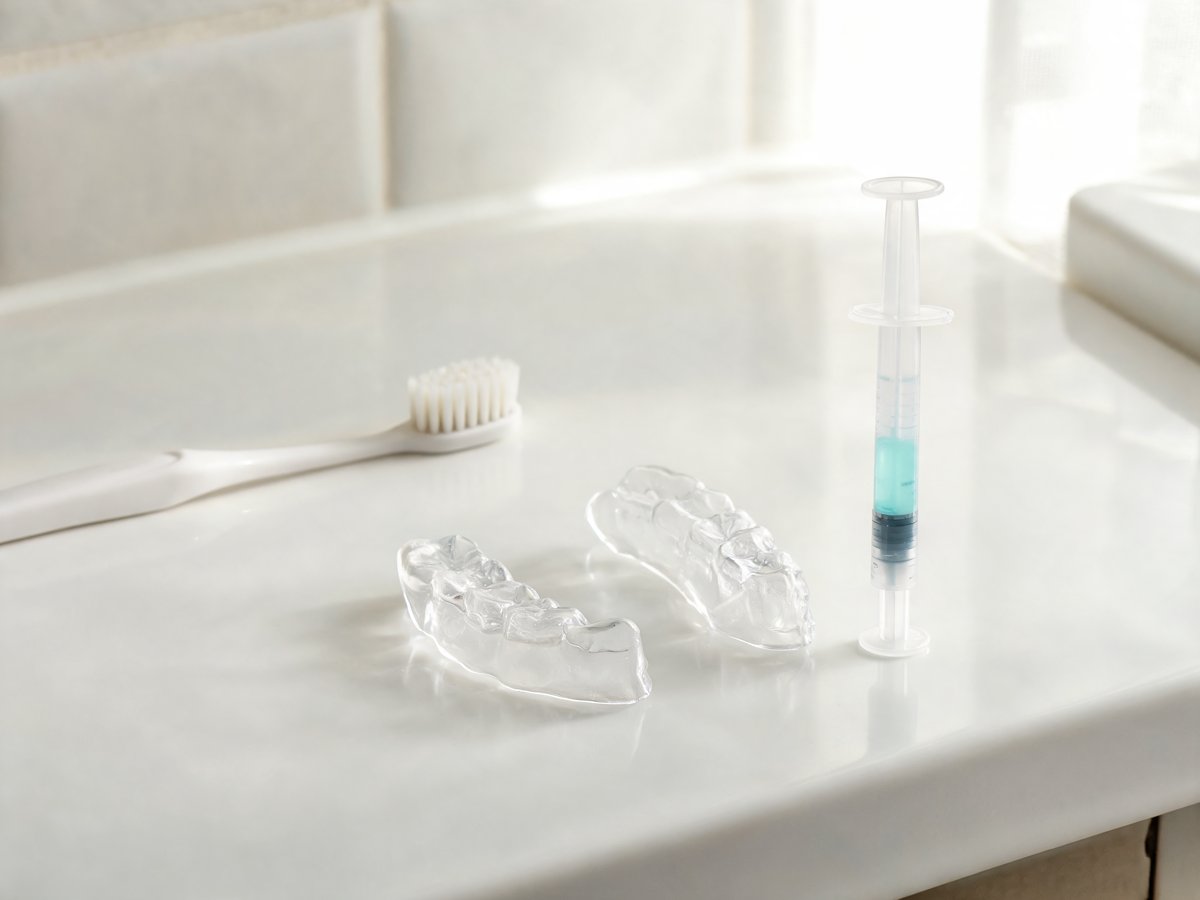
Trays made from an impression of your teeth hold a professional strength gel against every surface evenly. Used over one to two weeks, they reach a result close to an in office session, and they have one big advantage: you keep the trays. A couple of nights of touch up every few months keeps the shade steady for years.
Strips, pens and whitening toothpaste
Drugstore products use a much lower concentration of peroxide, so they change the shade less and the change fades faster, often within a few months. Whitening toothpastes mostly polish surface stain and do not change the color of the enamel itself. They are useful for maintenance, not as a replacement for treatment. If you are curious about the DIY end of things, we looked at natural ways to whiten your teeth and which ones actually help.
Habits That Shorten Your Results
The first 48 hours after whitening matter most. The enamel is slightly more porous right after treatment, so it picks up pigment more easily. After that window closes, it comes down to everyday habits.
- Coffee, black tea and red wine, especially sipped slowly over an hour
- Dark sodas, sports drinks and juices, which stain and soften enamel at the same time
- Tomato sauce, soy sauce, curry, berries and balsamic vinegar
- Smoking and vaping, which stain quickly and deeply, as we explain in how smoking affects your teeth
- Skipping cleanings, which lets tartar build up and hold stain against the tooth

How to Make Whitening Last Longer
Rinse or sip smart
You do not have to give up coffee. Drinking it in one sitting instead of nursing it, using a straw for iced drinks, and rinsing with water afterward all cut the contact time between pigment and enamel. Wait about thirty minutes before brushing after anything acidic so you are not scrubbing softened enamel.
Keep your professional cleanings
A hygienist polishes away the surface stain that home brushing leaves behind, which is often all it takes to bring a whitened smile back to its original shade. Two visits a year is the minimum, and our teeth cleaning and prevention page explains what a visit includes.
Touch up before you need to start over
Patients with custom trays can do a short touch up when they notice the shade slipping, usually every four to six months. A few nights of gel is far easier on the teeth than a full course every couple of years, and it keeps the smile at a consistent brightness rather than swinging between white and dull.
Manage sensitivity so you keep going
Some patients stop maintaining their results because whitening made their teeth zing. That is usually fixable with a sensitivity toothpaste, shorter sessions or a gentler gel. Our guides to teeth whitening for sensitive teeth and tips for people with sensitive teeth walk through the options, and the ADA has a helpful overview of why teeth become sensitive.
When Whitening Is Not the Answer
Whitening gel only changes natural enamel. Crowns, veneers, bonding and tooth colored fillings keep the shade they were made in, so whitening around them can leave a mismatch. If you are planning cosmetic work, we whiten first and then match the new restorations to the brighter shade. Our comparison of bonding vs veneers covers the choices.
Teeth with deep gray discoloration from an old injury or certain medications also respond poorly to gel. For those, porcelain veneers or composite bonding give a predictable, lasting result, and they are part of the broader options we cover in the best cosmetic dentistry treatments.
Frequently Asked Questions
How often can I whiten my teeth?
Most patients do well with a full treatment every one to two years and light touch ups in between. Whitening more often than your teeth need can cause sensitivity without adding brightness, so we tailor the schedule to your shade and habits.
Does whitening damage enamel?
Professional whitening used as directed does not damage enamel. The temporary sensitivity some people feel comes from the gel reaching the nerve through tiny pores in the tooth, and it settles within a day or two.
Why did my teeth look whiter right after treatment than a week later?
Teeth dehydrate slightly during whitening, which makes them look extra bright for a day or so. As they rehydrate the shade settles to its true result. That settled shade is the one that lasts.
Can I whiten if I have crowns or veneers?
You can whiten the natural teeth around them, but the restorations will not change color. If they were matched to a darker shade, they may stand out afterward. We plan the order of treatment so everything ends up matching.
Is professional whitening worth it over strips?
If you want a noticeable change that lasts more than a season, yes. Strips can freshen a smile a shade or two for a few months. Professional whitening lifts several shades, protects the gums during treatment, and gives you the tools to maintain it. Our older post on the best way to whiten your teeth still holds up on the basics.
📞 Contact Kaufman Dentistry Today
Whether you are thinking about whitening for the first time or want to bring an older result back to life, our father and son team will tell you honestly which option fits your teeth and your habits. We have brightened Culver City smiles for decades and we plan every treatment to last.
Call us at (310) 838 7780 or visit us in Culver City. Get directions here.