
Do I need a root canal?
Tooth pain that just won’t quit, that weird zing of sensitivity that sticks around long after you finish your coffee, or even a strange little bump on your gum—these aren’t things you want to ignore. They’re usually your body’s way of waving a red flag that something’s wrong inside a tooth.

Catching the signs you need a root canal early gives you the best shot at saving your tooth and dodging more complicated dental work. Root canal symptoms can be pretty obvious and painful, or sometimes they’re sneaky and easy to shrug off.
Either way, the sooner you act, the better your chances.
Root canals have a reputation for being scary, but honestly, dental care today makes the whole thing a lot easier than most people expect. Most of the pain comes from the infection itself, not the treatment.
Key Takeaways
-
Persistent tooth pain, lingering sensitivity, and visible gum changes are early warning signs you really shouldn’t ignore.
-
Waiting too long lets infection spread and puts your tooth at a much higher risk of being lost.
-
Getting a prompt dental check and a modern root canal procedure can actually relieve pain and protect your mouth for the long haul.
The Earliest Warning Signs To Watch For

Pain that just hangs around, sensitivity that won’t fade, and discomfort when you bite down are some of the first signs a tooth might need a root canal.
These symptoms often show up before you can see any damage, which is why you should really pay attention to how your teeth feel.
Persistent Tooth Pain And Persistent Toothache
A persistent toothache is probably the most obvious sign. Unlike normal sensitivity that disappears quickly, persistent tooth pain tends to stick around, sometimes throbbing or aching even when you’re not eating or drinking.
Severe tooth pain that comes and goes during the day is another red flag. Even if it lets up for a while, the problem is still there and it usually gets worse if you wait.
Sensitivity To Hot Or Cold That Lingers
Everyone gets a little zing from hot or cold now and then. What’s not normal is when that sensitivity lingers for several seconds or even minutes after the temperature change.
That kind of tooth sensitivity usually means the nerve inside the tooth is involved. When the pulp gets inflamed or infected, even small temperature changes can set off a long, uncomfortable reaction.
Pain When Chewing Or Pain When Biting
If chewing or biting down makes a tooth hurt, don’t ignore it. Sharp or aching pain in one spot when you eat could mean the nerve or pulp is in trouble.
Sometimes, the tooth looks fine on the outside. This pain can sneak up slowly, so people often blame it on a sore jaw or tough food at first.
Tooth Sensitivity After Pressure Or Touch
Some people notice tenderness when they press on a tooth with their tongue or finger, or if the dentist taps it during an exam. This is different from general gum soreness.
It’s a pretty direct sign that the tissue inside or around the root is inflamed. If you notice this along with other symptoms, the odds you need a root canal jump way up.
Visible Changes That Can Signal Infection
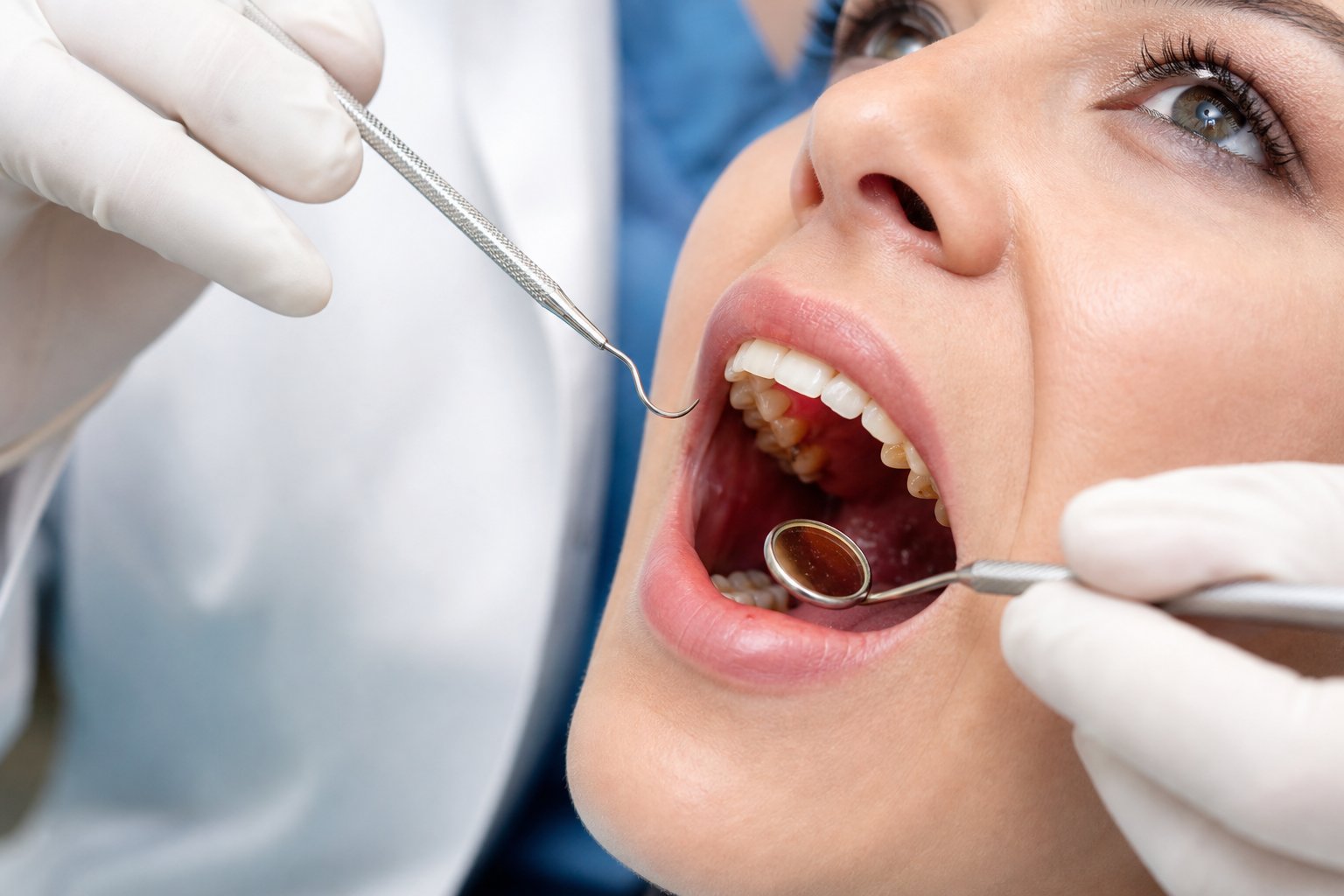
A tooth infection doesn’t always stay hidden. Swelling, color changes, or odd bumps on your gums can be visible clues that bacteria have reached deeper into the tooth or bone.
Swollen Gums And Gum Tenderness
Swollen gums near one tooth often mean an infection has spread past the pulp. Gum tenderness that feels different from your usual gum sensitivity, especially when it’s in just one spot, is worth noticing.
If those tender gums are warm or look redder than usual, that could be a sign of an active infection. This is different from the kind of swelling you get from brushing too hard.
Tooth Discoloration Or A Darkening Tooth
A tooth that turns grayish, brownish, or just looks darker than its neighbors could be showing internal damage. Tooth discoloration like this happens when the blood supply inside the pulp is disrupted or the tissue starts breaking down.
This doesn’t always hurt, so it’s easy to miss. If a tooth darkens for no obvious reason, you should bring it up with your dentist.
Pimple On The Gums Or A Gum Boil
A pimple on the gums, sometimes called a gum boil, is a really clear sign of infection. It usually looks like a small, raised bump—white or yellow—near the root of the problem tooth.
That bump is actually a sinus tract, a little channel the body makes to drain infection. It might ooze fluid or come and go, but if you spot this, there’s an active tooth infection that needs a dentist’s help.
Facial Swelling And Other Signs Of A Dental Abscess
A dental abscess can make swelling spread beyond the gums to your face, jaw, or even neck. Swelling like this means the infection is getting serious and may be spreading to other tissues.
Sometimes, a dental abscess comes with fever or that sick, run-down feeling. These are urgent symptoms. If you notice facial swelling, you really need to see a dentist right away.
Why These Symptoms Happen Inside The Tooth
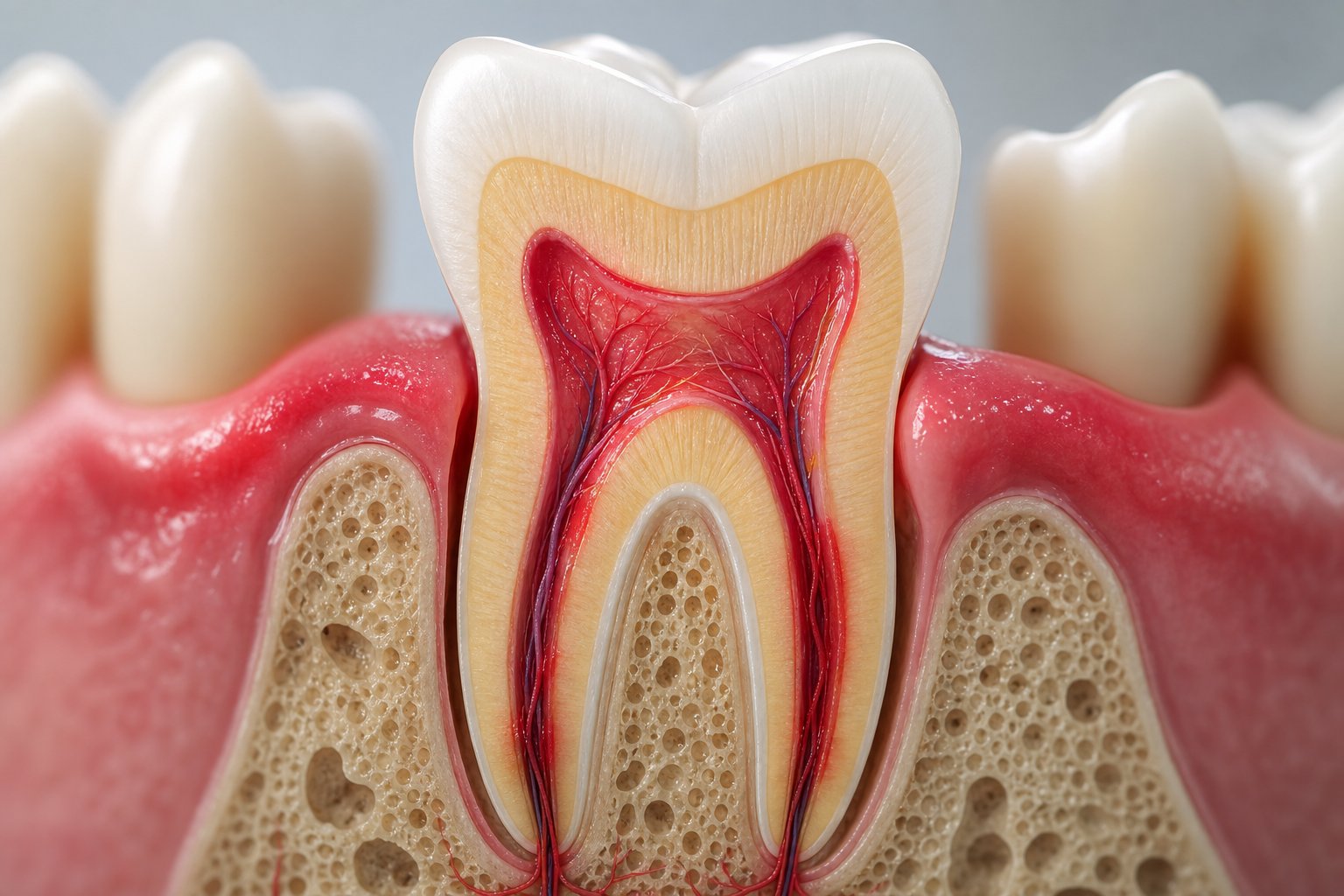
These symptoms don’t just show up for no reason. They all trace back to what’s happening inside the tooth, especially in the pulp and the nerves.
Understanding how tooth damage progresses helps explain why these signs pop up and why root canal treatment sometimes becomes the only way out.
How Tooth Decay Reaches The Pulp
Tooth decay starts at the surface and works its way in. If you catch it early, a filling usually does the trick.
If decay gets ignored, it eats through the enamel and dentin until it reaches the pulp at the tooth’s center.
Once bacteria hit the pulp, they reach the nerve, blood vessels, and connective tissue inside the root. At that point, a filling can’t fix the problem.
Inflamed Pulp, Infected Pulp, And Nerve Damage
When bacteria get into the pulp, the tissue gets inflamed. That inflammation causes the lingering pain and sensitivity.
If you don’t treat it, the inflammation turns into infection. Bacteria then break down the tissue inside the tooth.
Nerve damage follows, which can make the tooth hurt, go numb, or both. Dentists use root canal treatment to remove the damaged tissue and clean out the canals where infection has settled in.
How A Cracked Tooth Or Chipped Tooth Raises Risk
Decay isn’t the only way the pulp gets damaged. A cracked or chipped tooth can give bacteria a direct path to the inside.
Even a small crack can go deep enough to expose the pulp. That’s why you should let a dentist check out any chip or crack, even if it doesn’t hurt yet.
Trauma can damage the pulp without any obvious crack, so regular dental checkups really help catch these issues early.
When To Call A Dental Professional Right Away
Not every dental problem is an emergency. Still, some warning signs mean you should call your dentist the same day instead of waiting.
Acting at the right time can make the difference between a simple fix and a much bigger problem.
Symptoms That Should Not Wait
If you have severe tooth pain that won’t let up, facial swelling that spreads to your jaw or neck, a fever with dental pain, or a gum boil that’s draining, don’t wait. These signs mean a tooth infection might be spreading.
You should also call if a tooth suddenly feels very loose with no clear reason, or if sensitivity gets so bad you can’t eat or drink. These symptoms usually point to major nerve damage or a deep infection.
Why Delaying Care Can Lead To Dental Complications
If you put off treatment, the infection gets more time to spread. What starts in the pulp can move into the bone and even reach other teeth.
Delaying care makes problems bigger and costlier to fix. In some cases, the infection can become a whole-body health issue.
The bacteria from dental abscesses don’t always stay put, so waiting is a real risk.
How Prompt Treatment Helps Save Your Tooth And Prevent Tooth Loss
The main goal of a root canal is to save your tooth. If you act quickly, the tooth and root are usually healthy enough for a crown or filling after the infection is gone.
Prompt treatment gives you a much better shot at keeping your tooth for years.
If you wait too long, the tooth might not be savable and you could end up needing an extraction instead.
Losing a tooth brings its own headaches, like shifting teeth and changes in your bite. Keeping up with good oral hygiene and regular dental checkups gives you the best shot at catching problems before they turn into tooth loss.
What To Expect During Diagnosis And Treatment
A lot of people get nervous about root canals, probably because they’re not sure what actually happens. In reality, modern root canal therapy is pretty straightforward and usually way less uncomfortable than the infection itself.
Dental Evaluation And Digital Imaging
Your dentist will start by asking about your symptoms and doing a thorough exam of the problem tooth.
Digital X-rays play a big part here. Dentists use them to see how far the infection has gone, the shape of the root canals, and if there are any changes in the bone.
These images help the dentist decide if a root canal is needed and how to do it. Offices like Kaufman Dentistry use digital X-rays as a standard, which means less radiation and more accurate results.
What Happens During A Root Canal Procedure
Once you have a diagnosis, the root canal procedure follows a pretty set order.
The dentist opens the tooth, removes the infected or inflamed pulp, and then cleans and shapes the canals. They flush out bacteria and debris from inside.
After cleaning, they seal the canals with a special filling to keep infection from coming back. The whole point is to get rid of the pain and protect the tooth.
Local Anesthesia, Temporary Filling, And Final Restoration
Dentists use local anesthesia before starting, so you shouldn’t feel pain during the procedure. Most people are surprised by how comfortable it actually is once you’re numb.
Sometimes, you’ll get a temporary filling if the treatment takes more than one visit. When the root canal is finished, the dentist places a permanent restoration, usually a crown, to seal and strengthen the tooth.
When Pulp Capping, Extraction, Or A Dental Implant May Be Discussed
Not every situation ends with a root canal. If the pulp is only slightly affected and the problem is caught early, your dentist might suggest pulp capping.
That technique tries to keep the living pulp instead of removing it, but it only works in certain cases.
If the tooth is too damaged or the infection is too far along, extraction may be the only choice. In that case, a dental implant is usually the best way to replace the lost tooth.
Your dentist will talk you through your options and help you decide what makes sense for your situation.
How To Lower Your Risk Going Forward
The same steps that lower your chances of needing a root canal also support your overall oral health. Small, steady habits really add up over time. If you catch small problems early, you can usually stop them from turning into big ones.
Daily Oral Hygiene Habits That Matter
Brush twice a day and floss once daily to remove plaque and bacteria. These two habits protect you from the kind of deep decay that can reach the pulp.
Focus on technique, not just routine. Brush for at least two minutes, angle the bristles toward the gumline, and swap out your toothbrush every three months. These tweaks make a difference.
Routine Visits And Early Treatment Of Small Problems
Brushing and flossing at home only go so far. Regular dental visits let your dentist spot early signs of decay, cracks, or infection before you even notice symptoms. Small cavities that get filled early usually don’t turn into root canal problems.
Try to get cleanings and exams at least twice a year. Honestly, people who need root canals often realize later they skipped regular appointments for a while.
Using Fluoride Toothpaste And Protecting Vulnerable Teeth
Fluoride toothpaste makes enamel stronger and helps your teeth resist acid from bacteria. Using it every day is one of the simplest ways to protect your teeth.
If you grind your teeth at night, wear a custom nightguard to prevent cracks and enamel wear. Playing contact sports? A mouthguard lowers your risk of trauma that could affect the pulp. Protecting your teeth ahead of time is so much easier than fixing damage later.
Frequently Asked Questions
What symptoms indicate that a root canal may be necessary?
You’ll usually notice ongoing tooth pain, sensitivity to hot or cold that sticks around, pain when chewing, or swollen gums near a certain tooth. Sometimes the tooth gets darker, or you spot a pimple-like bump on your gum. If you have any of these, schedule a dental visit soon.
How can I tell the difference between needing a root canal and needing a filling?
If decay stays in the outer layers of a tooth, a filling is enough. But when decay, a crack, or trauma lets bacteria reach the pulp, you’ll need a root canal. The big difference is whether the nerve or pulp tissue is involved. Your dentist will check with an exam and X-rays to be sure.
How does a dentist confirm whether a root canal is needed?
Your dentist will ask about your symptoms and tap or press on the tooth to check for sensitivity. They’ll take digital X-rays to look at the root and the bone around it. Sometimes they’ll use a cold or heat test to see how the pulp reacts. These checks together show if the pulp is inflamed, infected, or dying.
Can an X-ray reliably show if a tooth needs a root canal?
Dentists use X-rays to spot deep decay, bone loss at the root tip, and changes inside the root canal. Digital X-rays give a clear look at the damage. Still, very early pulp problems might not show up, so dentists also rely on what you’re feeling and sensitivity tests.
What are the early warning signs of nerve damage or infection in a tooth?
You might feel a dull or throbbing ache that comes and goes, or notice lingering sensitivity to hot or cold. Mild gum tenderness near a tooth or a tooth that feels off when you bite down can be early signs. Paying attention to these changes gives you the best shot at catching a problem before it gets worse.
How can I tell whether a tooth should be treated with a root canal or removed?
Most dentists usually recommend a root canal if your tooth is still strong enough to hold a filling or crown after clearing the infection.
If your tooth is just too damaged to fix, or the infection has really eaten away at the bone, or if you keep having problems even after treatment, they might suggest removing it instead.
Your dentist will look at everything going on with your tooth and talk you through what makes sense for your situation. They’ll weigh the pros and cons with you, so you can decide what feels right.
📞 Contact Kaufman Dentistry Today
Give us a call at (310) 838-7780 to schedule your appointment and take the first step towards a stunning smile.
You can find us at 10760 Washington Blvd., Culver City, CA 90232. We look forward to welcoming you to our practice and helping you achieve the smile of your dreams!