
Can a Dental Bridge Be Replaced?
A dental bridge fills the gap left by one or more missing teeth, and a well-made one can serve you for well over a decade. But no dental restoration is permanent, and at some point most people with a bridge start wondering what happens when it wears out.
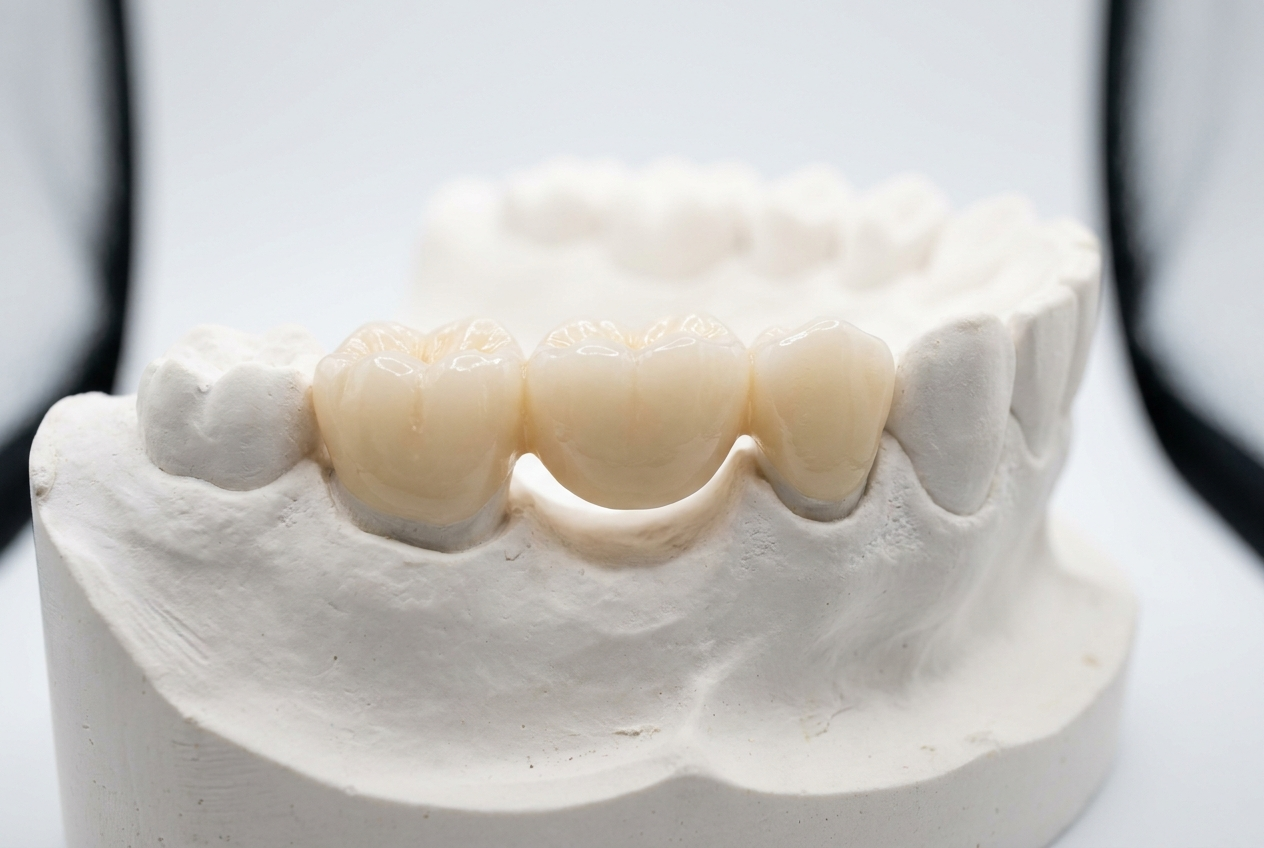
A dental bridge can be replaced, and most bridges are replaced at least once in a patient’s lifetime. The bigger question is usually not whether replacement is possible, but whether the supporting teeth underneath are still healthy enough to hold a new one.
That is the part your dentist is really evaluating when they look at an aging bridge. The porcelain is rarely the problem.
Here is how long bridges typically last, the signs that yours is failing, what the replacement appointment actually involves, and when a different restoration makes more sense.
Key Takeaways
-
Bridges are replaceable, and needing a new one after 10 to 15 years is normal rather than a sign that something went wrong.
-
The health of the supporting teeth matters far more than the condition of the bridge itself, and decay under a crown is the usual culprit.
-
Cleaning underneath the bridge every day is the single biggest factor in how long the next one lasts.
The Short Answer And Why Replacement Is So Common
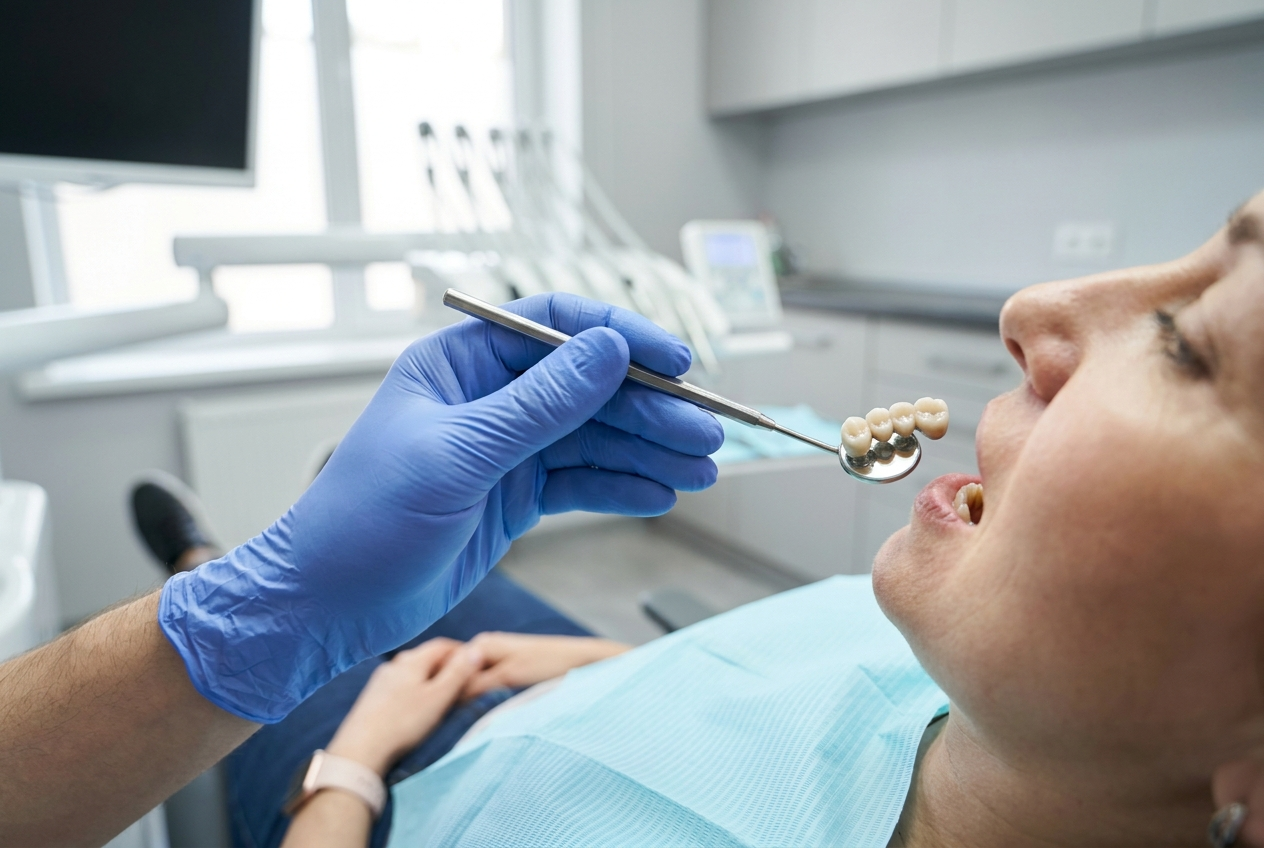
Yes, a dental bridge can be removed and replaced with a new one. Dentists do this routinely, and in most cases it is a planned procedure rather than an emergency.
How Long A Bridge Usually Lasts
Most traditional dental bridges last somewhere between 10 and 15 years. Plenty go longer, and some need attention sooner, depending on where the bridge sits and how well the area underneath gets cleaned.
Back teeth take far more force than front teeth, so a bridge replacing molars works harder than one replacing an incisor. That difference alone can account for several years of lifespan.
Why Replacement Is Normal And Not A Failure
People sometimes assume a bridge needing replacement means their dentist did something wrong, or that they neglected their teeth. Usually neither is true.
A bridge is a fixed appliance sitting in a warm, wet environment, absorbing hundreds of pounds of bite force every day for years. Cement breaks down, gums recede, and bite alignment shifts as other teeth move.
What Your Dentist Is Actually Checking
At each checkup your dentist probes the margin where the bridge meets each supporting tooth, looks for movement, and checks the gum tissue around the false tooth in the middle.
X-rays do the rest, since the metal or porcelain hides the tooth structure underneath from view. This is the same reason routine exams catch bridge problems long before you feel anything.
Signs Your Dental Bridge May Need Replacing

Bridges rarely fail all at once. The warning signs build gradually, which is why most problems are caught at a routine visit rather than in a panic.
Pain Or Sensitivity In The Supporting Teeth
The teeth on either side of the gap, called abutment teeth, carry the load. New sensitivity to hot, cold, or sweets in one of those teeth deserves attention.
Sensitivity often means decay has reached the natural tooth beneath the crown that anchors the bridge. It is one of the most common reasons a bridge comes out.
A Bridge That Feels Loose Or Shifts
A bridge should feel completely solid. If you can feel it rock, lift, or click when you bite down, the cement seal has probably broken on at least one side.
This one is worth calling about promptly. Once the seal opens, bacteria reach the tooth underneath and decay moves quickly in a space you cannot clean.
Gum Changes And Dark Spaces Underneath
A visible gap between the bridge and your gum line usually means the gums have receded. Besides being noticeable on front teeth, that space traps food and becomes very hard to keep clean.
Persistent redness or bleeding around a bridge can point to gum disease developing in the area, and recession around a bridge tends to accelerate once it starts.
Chips, Cracks, Or A Worn Chewing Surface
Porcelain can chip, and years of chewing gradually flatten the biting surface. A small chip is sometimes polished and left alone.
Larger fractures, or wear significant enough to change how your teeth meet, usually mean it is time for a new bridge. The same forces that crack natural teeth apply here.
What Actually Causes A Bridge To Fail
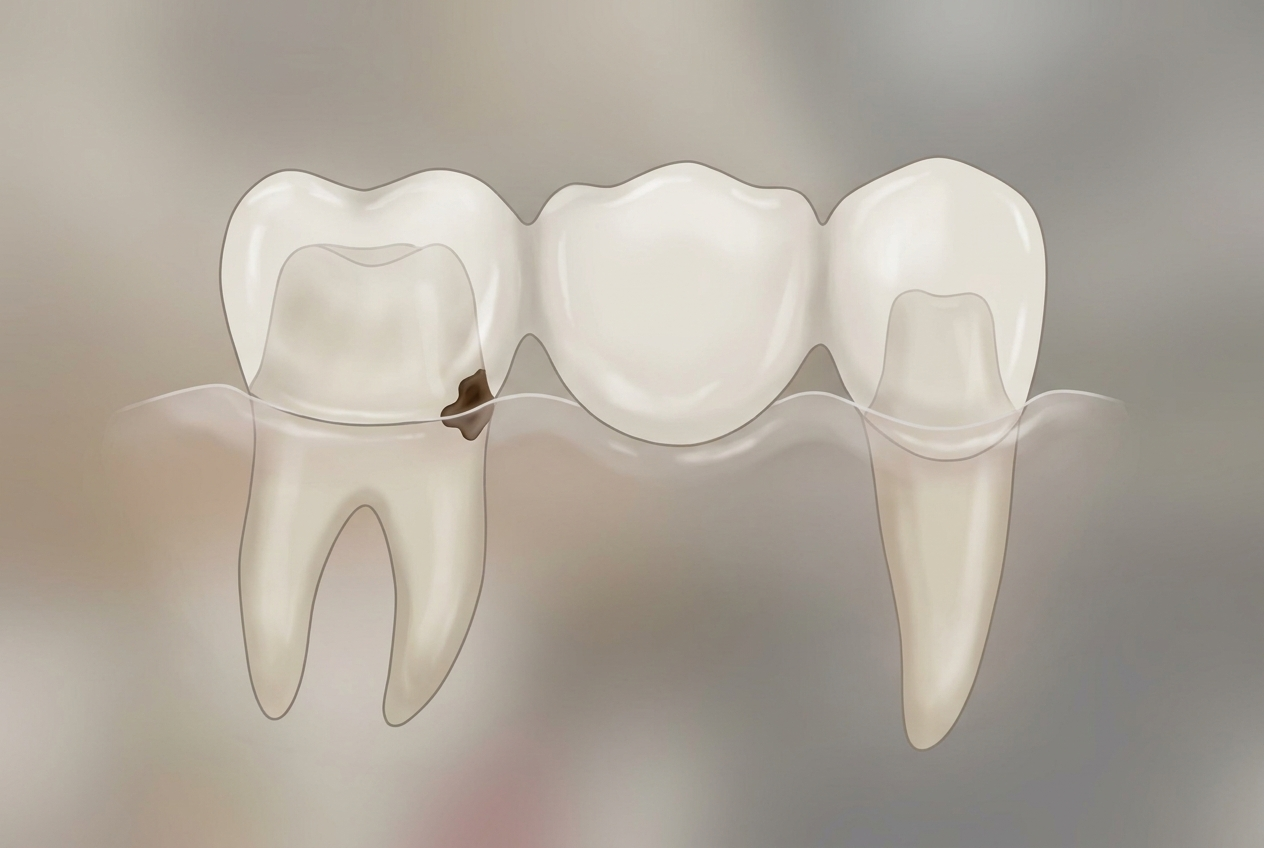
Knowing the underlying causes explains why your dentist recommends what they recommend, and shows you what is realistically within your control.
Decay In The Abutment Teeth
This is the leading cause. The margin where each supporting crown meets the natural tooth is a microscopic seam, and it sits right at the gum line where plaque collects.
Because the crowns hide the tooth structure underneath, this decay is often invisible until it appears on an x-ray.
Gum Disease And Bone Loss
A bridge depends on the stability of its supporting teeth, and those teeth depend on the bone holding them. When gum disease erodes that bone, the abutment teeth loosen and the bridge loses its foundation.
This is why skipping professional cleanings shortens the life of a bridge more than almost anything else.
Grinding And Heavy Bite Forces
Nighttime clenching and grinding puts sustained pressure on a bridge that it was never designed to absorb. Over months and years, that stress cracks porcelain or works the cement seal loose.
If you grind, a custom night guard protects the new bridge and costs far less than replacing it early.
Ordinary Material Wear
Even with excellent care, cement slowly dissolves and porcelain gradually wears. Bridges placed decades ago also used older materials and techniques than what is available now.
Sometimes a bridge is replaced simply because a modern tooth-colored restoration will fit better, look better, and last longer than what is currently in place.
How The Replacement Process Works
Replacing a bridge follows a predictable sequence, though what your dentist finds after removal can change the plan.
Removing The Old Bridge
Your dentist numbs the area, then sections and lifts the old bridge off the supporting teeth. In nearly all cases the old bridge cannot be reused, since removing it destroys the cement seal and often the restoration itself.
Evaluating What Is Underneath
This is the step that determines everything else. With the bridge off, your dentist can finally see the abutment teeth directly and assess how much healthy structure remains.
Any decay is cleaned out. If a tooth has lost significant structure, a build-up gives the new bridge something solid to grip, and occasionally decay has reached the nerve and root canal treatment is needed first.
Impressions And The New Bridge
Once the supporting teeth are prepared, your dentist takes an impression, traditionally with putty and increasingly with a digital scanner. A temporary bridge protects the teeth while the permanent one is made.
At the fitting appointment your dentist checks the fit, the bite, and the shade before cementing it. Offices with in-office milling technology can sometimes shorten this timeline considerably.
When Something Other Than A Bridge Makes More Sense
Replacement is not always like for like. Sometimes the better answer is a different restoration entirely.
When An Implant-Supported Bridge Fits Better
If the abutment teeth have been through several rounds of repair, anchoring the next bridge to them may just repeat the cycle. An implant-supported bridge rests on titanium posts in the jawbone instead of natural teeth.
That takes the load off neighboring teeth entirely, and implants cannot decay. Implants also tend to last longer, though they require adequate bone and a longer treatment timeline.
When A Removable Option Is Reasonable
If several teeth in the same area are compromised, a removable partial denture may restore more function at lower cost than an extensive fixed bridge.
It is less convenient day to day, but it does not depend on the health of two specific teeth, which is an advantage when those teeth are questionable.
When An Abutment Tooth Cannot Be Saved
Occasionally a supporting tooth is too damaged to keep. If it needs extraction, the span of the gap changes and the treatment plan changes with it.
Your dentist may discuss a longer bridge, implants, or a graft first, since bone loss follows extraction and affects what is possible later.
How To Make Your Next Bridge Last Longer
The habits that protect a new bridge are specific, and they are not quite the same as caring for a normal set of teeth.
Clean Underneath It Every Day
The false tooth in the middle of a bridge sits against your gum, and ordinary floss cannot get under it. This is the spot that decides how long the bridge lasts.
A floss threader or superfloss lets you pass floss beneath the span and clean along the gum. A water flosser works well here too, and many people find it easier to stick with.
Protect It From Grinding And Hard Foods
Ask about a night guard if you clench or grind. During the day, be cautious with ice, hard candy, and popcorn kernels, which chip porcelain quickly.
Keep Up With Checkups
Decay at a crown margin is invisible to you and often painless until it is advanced. Regular exams and x-rays are the only reliable way to catch it early.
Caught early, the fix is usually a new bridge. Caught late, it can mean losing a supporting tooth and moving to a much larger treatment plan.
Frequently Asked Questions
How many times can a dental bridge be replaced?
There is no fixed limit. What matters is how much healthy tooth structure remains in the supporting teeth, since each replacement removes a little more.
After two or three cycles, many dentists start discussing implants instead.
Can the same bridge be re-cemented instead of replaced?
Sometimes. If a bridge comes off intact, the teeth underneath are healthy, and the fit is still good, re-cementing is occasionally possible.
More often the bridge loosened because of decay or a poor fit, and re-cementing would seal the problem in.
Does replacing a bridge hurt?
The procedure is done with local anesthetic, so you should not feel pain during it. Some tenderness in the gums and supporting teeth for a few days afterward is normal.
If the teeth needed extensive work, sensitivity can last a little longer.
What happens if I leave a failing bridge alone?
Decay under a loose bridge progresses in a space you cannot brush or floss. Left long enough, it can destroy the supporting teeth to the point where they cannot be saved.
That turns a bridge replacement into extractions and implants, which is a much larger undertaking.
Will insurance cover a replacement bridge?
Many dental plans cover replacement, but most apply a time limit, commonly five to ten years since the original was placed. Coverage varies a great deal between plans.
Our office can help you check your benefits before treatment begins.
How do I know whether to choose a bridge or an implant this time?
It depends on the condition of your supporting teeth, how much bone you have, your timeline, and your budget. Implants generally last longer and spare neighboring teeth, while bridges are faster and less involved.
An exam with x-rays is the only way to know which applies to your situation.
📞 Contact Kaufman Dentistry Today
Give us a call at (310) 838-7780 to schedule your appointment and take the first step towards a stunning smile.
You can find us at 10760 Washington Blvd., Culver City, CA 90232. We look forward to welcoming you to our practice and helping you achieve the smile of your dreams!