
What Does Sedation Dentistry Feel Like?
For a lot of people the hardest part of a dental visit is not the procedure. It is the hours before it, imagining sounds and sensations, and the moment of sitting down in the chair. Sedation dentistry exists for exactly that feeling, yet the idea of being sedated raises its own questions. Will I be asleep? Will I know what is happening? What will it feel like? We hear those questions every week at our Culver City office, and the honest answers are reassuring.
Sedation dentistry feels like deep relaxation, not unconsciousness. With nitrous oxide you feel light and calm within minutes and completely normal within minutes of it stopping. With oral sedation you feel drowsy and detached, often dozing through the visit and remembering little of it. IV sedation goes a step further, with most patients feeling as though the appointment lasted a few minutes. We compare the three in comparing sedation options, and if nerves are the main issue, why anxious patients consider sedation is a good place to start.
Key Takeaways
- Sedation calms you; it does not knock you out. You can breathe on your own and respond to simple requests.
- Nitrous oxide feels light and floaty and wears off before you leave the chair.
- Oral sedation feels like a heavy, sleepy calm and usually means you remember very little.
- IV sedation is the deepest option we offer, with the least memory of the visit.
- Local anesthetic is still used, so the tooth itself is numb no matter which sedation you choose.
First, What Sedation Is Not
Most of the fear around sedation comes from mixing it up with general anesthesia, the kind used for major surgery where a machine helps you breathe. Dental sedation is different. The American Dental Association describes it as a range from minimal to deep, and everything we do in the office sits in the range where you breathe on your own and can be roused easily.
Sedation also does not replace numbing. The tooth is still anesthetized so there is no pain. Sedation takes care of the part that numbing cannot: the tension, the racing thoughts and the awareness of every sound.
What Nitrous Oxide Feels Like
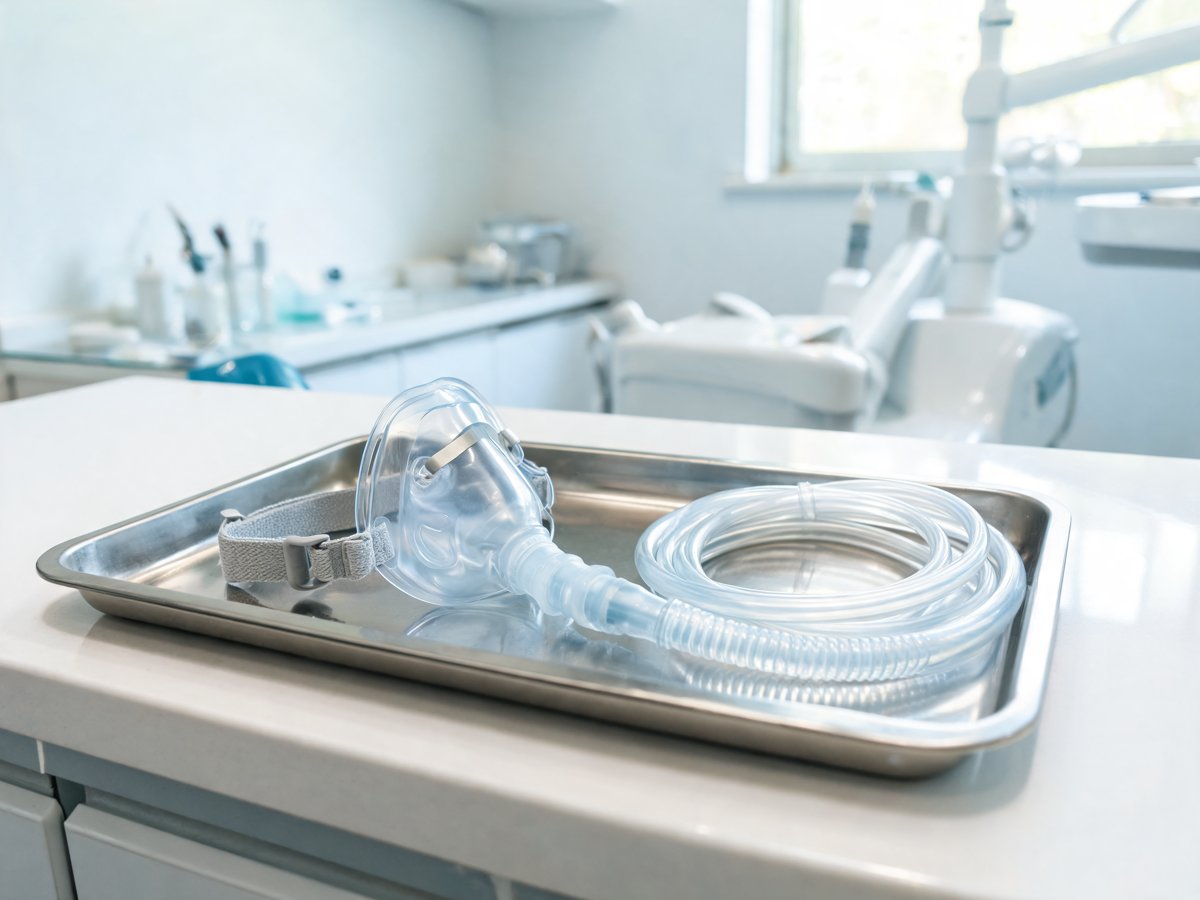
Nitrous oxide, the laughing gas most people have heard of, comes through a small soft mask over your nose. Within two or three minutes you feel a warm, tingling lightness, often in the hands and feet first. Sounds seem farther away. Worries that felt enormous in the waiting room start to feel unimportant.
You stay awake and in control
You can hear us, answer questions and tell us if anything is uncomfortable. Some patients feel a bit giggly, which is where the nickname comes from. Others simply feel pleasantly heavy, like the moment before a nap. We adjust the level in real time, so if it ever feels like too much, it is turned down in seconds. The science behind it is covered in how nitrous oxide works.
It wears off before you stand up
At the end of the visit you breathe pure oxygen for a few minutes and the gas clears completely. Most patients drive themselves home and go back to work. That quick recovery is why nitrous is our most common choice for cleanings, fillings and patients with mild anxiety.
What Oral Sedation Feels Like
Oral sedation means taking a prescribed pill, usually about an hour before your appointment, so that by the time you sit down you are already deeply relaxed. This is the option we describe in what is oral conscious sedation.
A heavy, sleepy calm
Patients describe it as feeling wrapped in a blanket. Your limbs feel heavy, your eyelids want to close, and time gets fuzzy. Many people doze through the whole procedure and are surprised when we tell them it is over. You are still technically awake and can respond if we ask you to open wider or turn your head, but you will not feel alert.
Little or no memory of the visit
The medications used for oral sedation cause a gentle amnesia, so most patients remember arriving and leaving and almost nothing in between. For people whose anxiety is rooted in a bad past experience, that gap is often the biggest relief.
You will need a ride
The drowsiness lasts several hours after the appointment. You must have someone drive you home, and the rest of the day is for resting. By the next morning you feel normal.

What IV Sedation Feels Like
IV sedation delivers the medication through a small line in the arm or hand, which lets us reach a deeper and more precise level of relaxation than a pill. It is the choice for longer procedures such as wisdom teeth removal, dental implant surgery or a full mouth reconstruction done in fewer visits.
It feels like the visit took minutes
Within a minute or two of the medication starting, you feel a wave of calm and then a dreamy drift. Patients consistently tell us a two hour appointment felt like ten minutes. You keep breathing on your own and a team member monitors your oxygen, pulse and blood pressure the entire time.
Recovery is quiet and slow
You will feel groggy and a little unsteady for the rest of the day, so a ride home and a calm afternoon are required. Eat lightly, skip alcohol, and expect to feel yourself again by the following day.
What About the Numbing Itself?
For many patients the anxiety is specifically about the injection. Sedation helps here too, because a relaxed patient barely registers it, and our single tooth anesthesia system delivers the anesthetic slowly and precisely so there is little of the pressure people remember from years ago. Even routine care like a root canal is comfortable under this combination.
Choosing the Right Level
The best sedation is the lightest one that lets you get through the visit calmly. Someone who tenses up during a professional cleaning may only need nitrous. Someone who has avoided the dentist for years because of fear often does best with oral or IV sedation for the first big visit, then steps down as confidence returns. We also teach simple techniques from 5 ways to reduce dental anxiety and how to combat dental anxiety that make every visit easier, sedated or not.
Your health history matters as well. Certain medications, sleep apnea and some heart or lung conditions change which options are safe, so we review everything before your appointment. Cost varies by level, and our overview of how dental payment plans work explains how patients spread it out.
Frequently Asked Questions
Will I be asleep?
Not in the surgical sense. With nitrous you are fully awake and relaxed. With oral or IV sedation you may drift in and out of a light sleep, but you can be roused and you keep breathing on your own throughout.
Will I feel any pain?
No. The tooth is numbed with local anesthetic in addition to the sedation. Sedation makes the numbing comfortable and the rest of the visit easy.
Will I say or do anything embarrassing?
This is a common worry and it almost never happens. Sedated patients are quiet and relaxed. Even if you did say something silly, our team has heard it all and thinks nothing of it.
Can I eat before sedation?
For nitrous, a light meal a couple of hours before is fine. For oral and IV sedation we give specific instructions about fasting, usually nothing to eat for several hours beforehand. We go over all of it when the appointment is booked.
How long until I feel normal?
Nitrous clears in about five minutes. Oral and IV sedation leave you drowsy for the rest of the day, and you feel like yourself the next morning.
📞 Contact Kaufman Dentistry Today
If fear has kept you away from the dentist, sedation may be the thing that finally makes care feel possible. Our father and son team has helped anxious Culver City patients through everything from cleanings to full reconstructions, and the first step is simply a conversation.
Call us at (310) 838 7780 or visit us in Culver City. Get directions here.