
Are Dental Implants Worth the Cost?
Nobody flinches when we describe how a dental implant works. The flinch comes with the price quote. Implants are usually the most expensive way to replace a tooth, and patients deserve a straight answer to the fair question that follows: is it actually worth it?
For most patients, yes. A dental implant costs more upfront than a bridge or partial denture, but it is the only replacement that protects your jawbone, does not touch your healthy teeth, and routinely lasts 25 years or more. Spread over its lifetime, an implant is often the cheapest option per year. See how long dental implants last and our local guide to dental implants in Culver City for the foundation, then let us walk through the honest math.
Key Takeaways
- Implants cost more on day one, but their lifespan often makes them the cheapest option per year of service.
- An implant is the only tooth replacement that stops the jawbone loss that follows extraction.
- Bridges and dentures typically need replacement every 5 to 15 years. Implants routinely pass 25.
- Implants do not require grinding down healthy neighboring teeth the way a bridge does.
- Payment plans make the upfront cost manageable for most budgets.

What You Are Actually Paying For
An implant is not one thing. It is a titanium root placed surgically into the jaw, a connector called an abutment, and a custom crown built to match your bite and your smile. The fee also covers 3D imaging, surgical planning, sterile placement, and months of monitored healing while the implant fuses with your bone. If bone has already thinned, bone grafting may be part of the plan too.
In other words, you are paying for a small piece of engineered anatomy and the expertise to install it so well that your body accepts it as its own. Material choices matter as well, and we compare them in zirconia vs titanium implants.
The Lifetime Math: Implant vs the Alternatives
Implant vs bridge
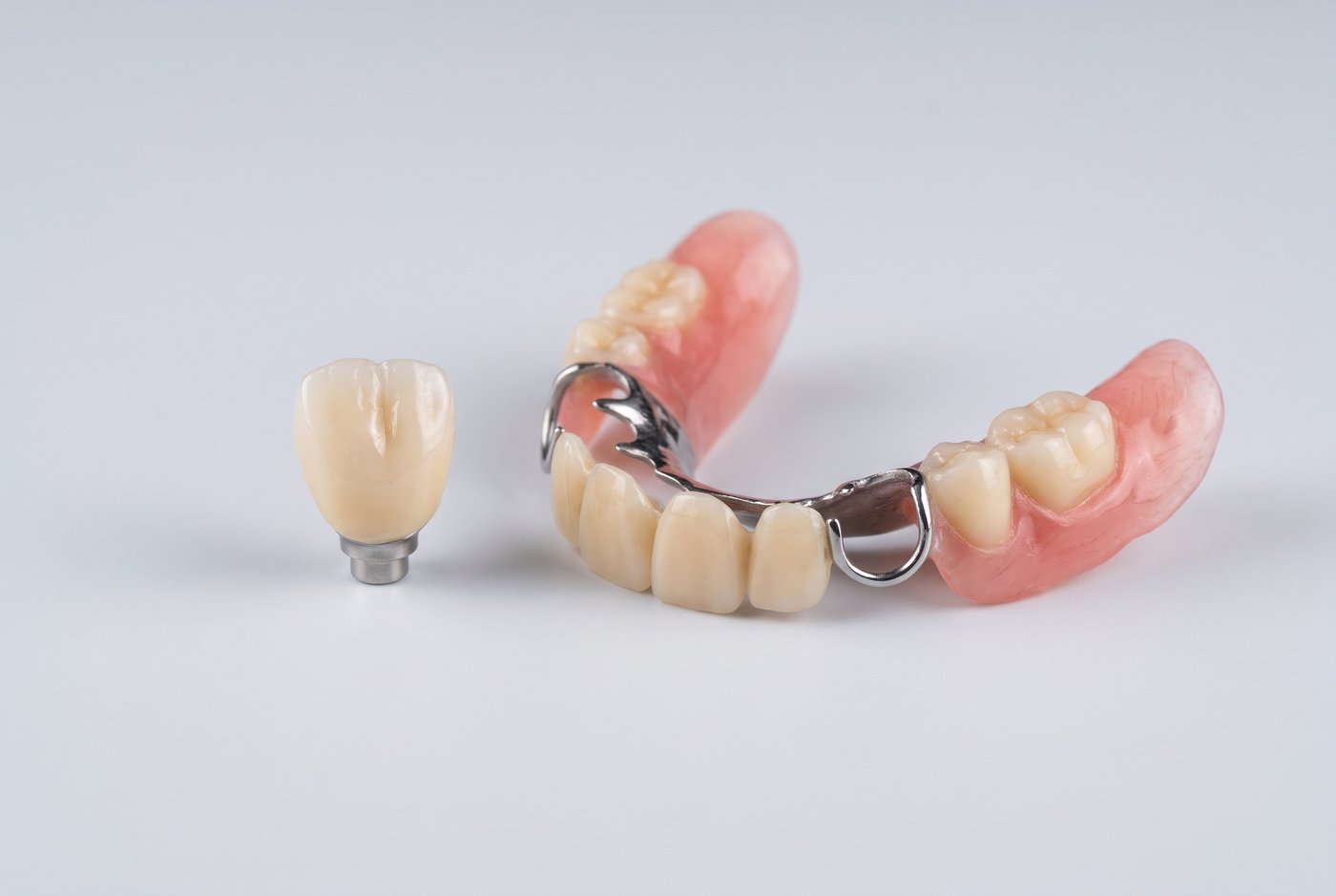
A bridge is cheaper upfront and faster to complete. But it requires grinding down the two healthy teeth beside the gap to serve as anchors, and those teeth then carry extra load and extra decay risk for the rest of their lives. Bridges also age: as we cover in can a dental bridge be replaced, most need replacement within 5 to 15 years. Buy two or three bridges over the decades and the implant quietly becomes the cheaper choice, without ever touching your neighboring teeth.
Implant vs partial denture
A removable partial is the lowest cost option on day one and the highest maintenance option every day after. It moves when you chew, it comes out at night, it needs relines as your jaw changes, and it accelerates the bone loss underneath it. Our comparison of dental implants vs dentures goes deeper, and how to fix missing teeth without implants lays out every alternative honestly.
The cost nobody quotes: doing nothing
Leaving a gap is not free. The jawbone under a missing tooth starts shrinking within months, neighboring teeth drift and tip into the space, and the opposing tooth grows out of position. We explain the mechanics in why bone loss happens after tooth extraction. Fixing that chain reaction later costs far more than replacing the tooth now.
When an Implant Is NOT the Right Answer
Honesty cuts both ways. Implants need adequate bone, healthy gums, and a patient who can commit to good hygiene. Uncontrolled diabetes and heavy smoking lower success rates. Sometimes a well made bridge genuinely is the better call, particularly when the neighboring teeth already need crowns anyway. A proper exam settles the question, and we never recommend an implant a patient does not need. Start with a thorough exam and an honest conversation.
Making the Cost Manageable
Very few patients pay for an implant in one lump sum. Insurance increasingly contributes toward implant crowns, and financing spreads the remainder into monthly amounts most budgets can absorb. Our guide to how dental payment plans work explains the options, and our front desk walks every patient through the numbers before anything is scheduled. What you should expect from any office is a clear itemized quote with no surprises.
Recovery is also gentler than most people fear. Most patients are back to normal routines within days, as we describe in what to expect after dental implant surgery, and sedation options are available for anxious patients.
Frequently Asked Questions
Why do implant prices vary so much between offices?
Differences in imaging technology, implant brand and materials, the surgeon’s experience, and what is bundled in the quote. A low headline price that excludes the abutment, crown, or imaging is not actually low. Always compare complete, itemized quotes.
Does insurance cover dental implants?
More plans contribute than people expect, especially toward the crown portion. Coverage varies widely, so we verify your specific benefits before treatment and tell you exactly what your plan pays.
Is one implant per missing tooth always required?
No. Several missing teeth in a row can often be restored with an implant supported bridge, which uses two implants to carry three or four teeth. It is a smart way to get implant benefits at a lower total cost.
How painful is getting an implant?
Most patients report less discomfort than they expected, often comparing it favorably to a tooth extraction. The placement is done under local anesthetic, sedation is available, and typical recovery involves a few days of mild soreness managed with over the counter medication.
📞 Contact Kaufman Dentistry Today
The real answer to “is it worth it” lives in your specific mouth, your bone, and your budget. Come in for an exam and we will give you the honest version, including when a cheaper option is genuinely the better one. Our father and son team has guided Culver City families through these decisions for decades.
Call us at (310) 838 7780 or visit us in Culver City. Get directions here.