
How Do You Floss Under a Dental Bridge?
A new bridge feels great. You can chew on that side again and the gap in your smile is gone. Then you reach for the floss and realize something has changed: the teeth in the bridge are joined together, so the floss will not slide down between them the way it used to.
TL;DR
You floss under a dental bridge by threading floss underneath it instead of pushing it down between the teeth. A floss threader or pre-cut super floss lets you pull floss under the false tooth and clean along the gum and the sides of the supporting teeth. A water flosser or small interdental brushes also work well. Cleaning under your bridge every day protects the teeth that hold it up, which is what keeps a bridge lasting.
Key Takeaways
- A bridge is a single connected piece, so floss has to go under it rather than between the teeth.
- Floss threaders and super floss are the simplest tools for most people.
- Water flossers and interdental brushes are good options if your hands get tired or the space is tight.
- The supporting teeth under the crowns can still get cavities and gum disease, so the gumline around them needs daily cleaning.
- Bleeding, a bad taste, or food that keeps getting trapped are signs to have the bridge checked.
Why Cleaning Under a Bridge Matters
A traditional bridge is made of crowns on the teeth next to the gap, called abutment teeth, joined to a false tooth, called a pontic, that sits on top of the gum. Food and plaque collect in the small space under the pontic and along the edges of the crowns. If that plaque stays there, it can inflame the gums and cause decay on the supporting teeth, right where the crown meets the tooth. Our post on whether a crowned tooth can still get a cavity explains why that edge is a weak spot.
Those supporting teeth are the foundation of the whole bridge. When they stay healthy, the bridge can last many years. When they get decay or gum disease, the bridge often has to be redone, which we cover in can a dental bridge be replaced?
The Tools That Make It Easier
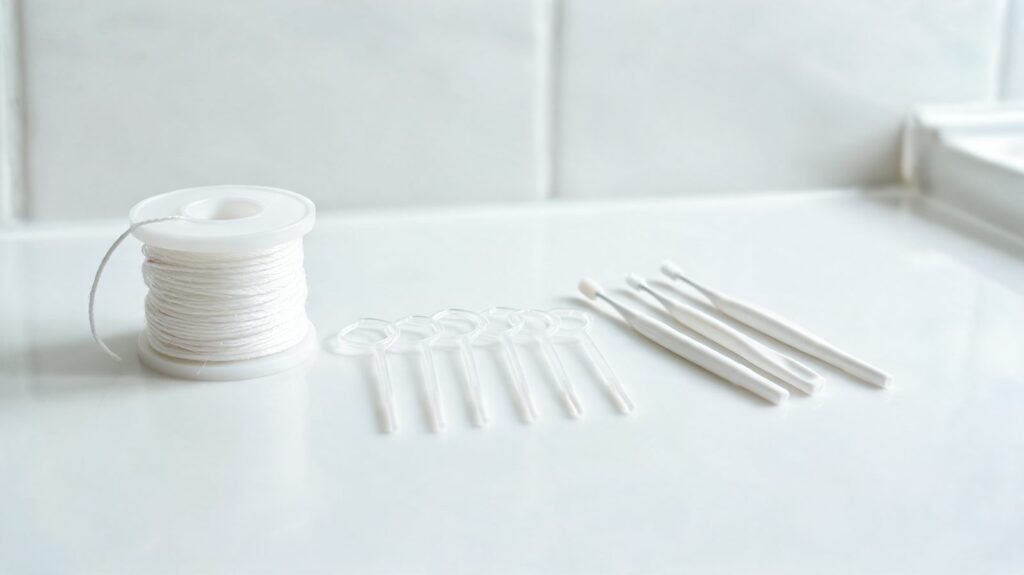
Floss threaders
A floss threader is a small, flexible plastic loop, a bit like a sewing needle. You pass regular floss through the loop, then push the stiff end of the threader under the bridge from the front and pull it through to the back. The floss follows, and now it is underneath the bridge where you can clean.
Super floss
Super floss comes in pre-cut pieces with a stiff end, a spongy middle section and a regular floss end. The stiff end threads under the bridge like a threader, the spongy part cleans the wider space under the false tooth, and the regular floss cleans along the sides of the supporting teeth.
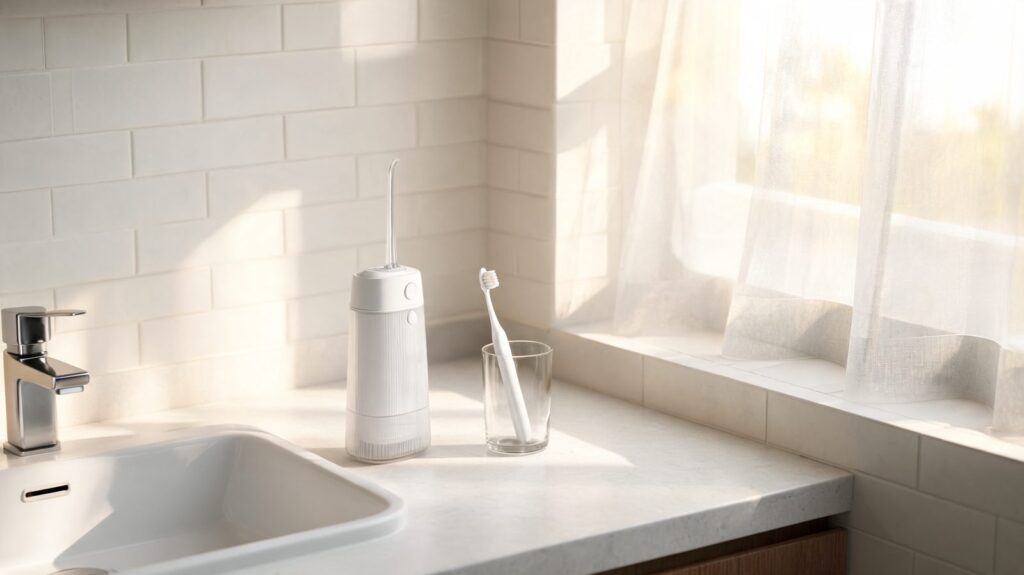
Water flossers
A water flosser sprays a thin stream of water that can rinse food and plaque from under a bridge and along the gumline. Many people find it easier than threading floss, especially with limited hand movement. Use it as a helpful addition, and ask us whether it is enough on its own for your bridge.
Interdental brushes
Small cone or cylinder shaped brushes can slip into the spaces beside and under a bridge where there is room. They come in different sizes, so it helps to ask which size fits your bridge. Our guide on choosing the right toothbrush and toothpaste has more on picking cleaning tools.
How to Floss Under a Bridge, Step by Step
Here is the method most people use with a threader or super floss:
- Thread it. Push the stiff end of the threader or super floss under the bridge, between the false tooth and the gum, from the cheek side toward the tongue side.
- Pull it through. Pull until the floss runs underneath the false tooth, with an end in front and an end behind.
- Clean under the false tooth. Slide the floss gently back and forth along the underside of the pontic to remove trapped food and plaque.
- Clean the supporting teeth. Curve the floss around the side of each supporting tooth and slide it gently up and down at the gumline, where the crown meets the tooth.
- Pull it out and repeat. Pull the floss out to the side and do the same for any other spaces in your bridge.
- Floss the rest of your teeth. Finish with your normal flossing everywhere else.
Be gentle. Snapping floss into the gum can hurt it, and a light, steady motion cleans just as well. If you are new to flossing in general, our post on why flossing is just as important as brushing is a good refresher, and the American Dental Association’s MouthHealthy site explains how to floss too.
Not sure which cleaning tool fits your bridge? We are happy to show you at your next visit. Call (310) 838 7780 or send us a message and our Culver City team will get back to you.
How Often Should You Clean Under Your Bridge?
Once a day is the goal, the same as regular flossing, plus brushing twice a day. Many people find nighttime easiest, because there is less rush and it clears away the day’s food before sleep. Keep your regular checkups and cleanings too, so we can check the gum around the bridge and clean spots that are hard to reach at home. Our teeth cleaning and prevention page explains what those visits include.
Signs Your Bridge Needs a Checkup
- Gums around the bridge that bleed, look red or feel swollen
- A bad taste or bad breath that keeps coming back from one spot
- Food that gets trapped under the bridge every time you eat
- Sensitivity or pain in one of the supporting teeth
- A bridge that feels loose or moves when you bite
Bleeding gums can be a sign of gum disease, which we describe in signs you might have gum disease. A loose bridge should be seen soon, before the supporting teeth are damaged.

Implant Supported Bridges Need Cleaning Too
If your bridge is held up by dental implants instead of natural teeth, the same idea applies: clean underneath and around the implants every day. Implants cannot get cavities, but the gum and bone around them can still become inflamed from plaque. Our post on implant supported bridges explains how they differ from traditional bridges.
Have a bridge that is due for a checkup? Call (310) 838 7780 or send us a message and our Culver City team will get back to you.
Frequently Asked Questions
Can you use regular floss under a bridge?
Yes, with a floss threader. The threader carries regular floss under the bridge so you can clean the underside of the false tooth and the sides of the supporting teeth.
Is a water flosser enough for a dental bridge?
A water flosser is very helpful for rinsing under a bridge, and some people use it in place of a threader. Ask your dentist whether it is enough for your bridge or whether you should also use floss or small brushes.
Why does my bridge smell when I floss under it?
An odor usually means food and plaque have been collecting under the bridge. Daily cleaning often fixes it. If the smell or a bad taste keeps coming back, have the bridge and the supporting teeth checked.
Can teeth under a bridge get cavities?
Yes. The supporting teeth are natural teeth under the crowns, and decay can start where the crown meets the tooth. Daily cleaning at the gumline and regular checkups help prevent it.
How long does a dental bridge last?
Many bridges last for years, and how well you clean around the supporting teeth makes a big difference. Our post on how long a dental bridge lasts covers what affects its lifespan.
Does flossing under a bridge hurt?
It should not hurt. Go slowly and avoid snapping the floss into the gum. If your gums are sore or bleed every time, let us know so we can check them.
📞 Contact Kaufman Dentistry Today
If you have a bridge and want to make sure you are cleaning it the right way, come see us. We will check the supporting teeth and gums and show you the tools that work best for your bridge.
Call us at (310) 838 7780, send a message through our contact page, or visit us at 10760 Washington Blvd. in Culver City. Get directions here.